 Chuckanut Exterior
 Why Bellingham Homes Wear Differently
Bellingham sits where Puget Sound moisture, Whatcom County rainfall, and a marine air layer all meet at once. That combination is harder on a house exterior than most homeowners realize until they're standing in front of a siding panel that's swelling at the seams or a roof valley that never quite dries out between storms. Salt-laden air moving off the water accelerates corrosion on fasteners, flashing, and any metal trim that isn't rated for it. Add in the long stretches of drizzle that define a Whatcom County fall and winter, and you get exterior surfaces that spend a large share of the year damp rather than dry.
Then there's moss. Bellingham's tree cover, shade patterns, and moisture combine to create a moss season that can run much of the year on north-facing roof slopes and shaded siding. Moss isn't just cosmetic — it holds water against the surface underneath it, and sustained contact with damp organic growth is exactly the condition that rots wood trim, delaminates weaker siding products, and shortens the life of asphalt shingles.
None of this means a house in Bellingham is doomed to constant repair. It means the materials and installation details matter more here than they would in a drier inland climate. We build our recommendations around what actually survives this specific mix of salt air, driving rain, and moss pressure — not around what looks good on a showroom sample.
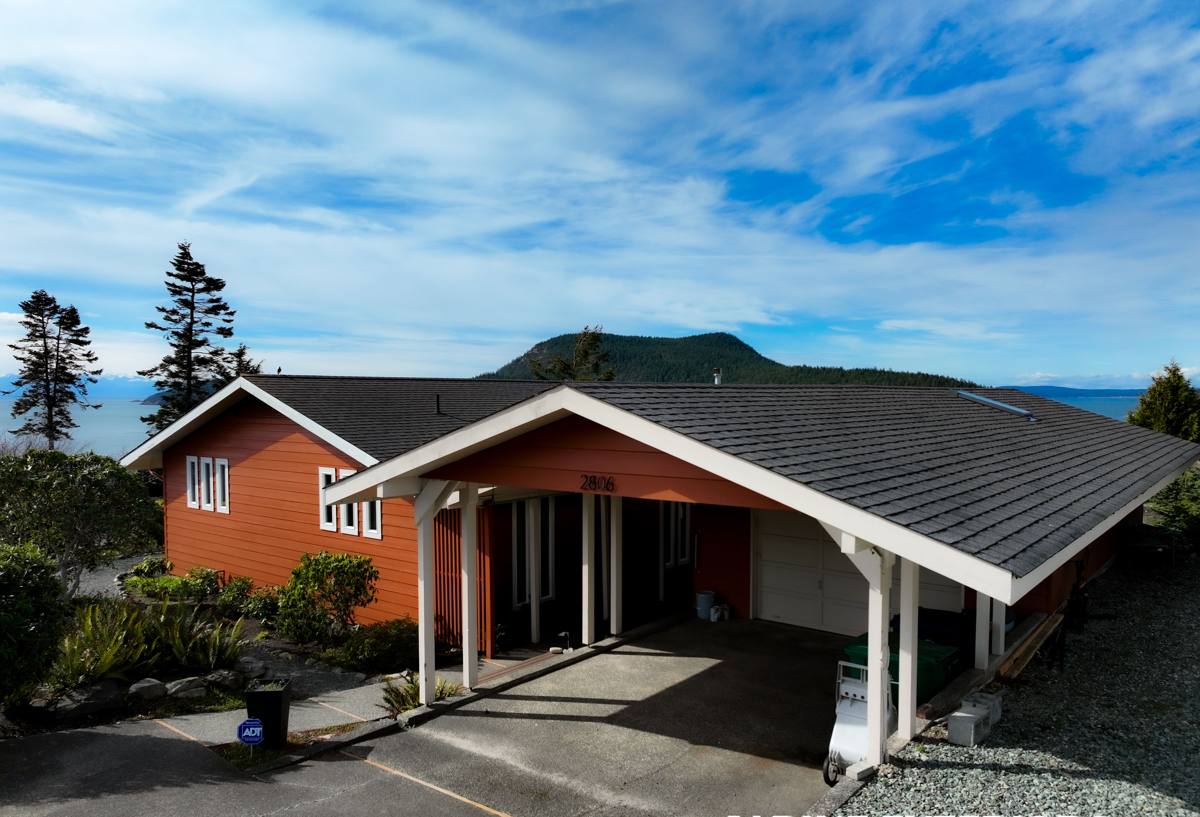
What We See on Bellingham Exteriors
Siding
On older homes we regularly find water intrusion at butt joints and corner trim where caulking has failed and never been maintained. On homes with wood-based siding products, we see soft spots and delamination concentrated on the north and west elevations — the sides that get the least sun and the most driving rain off the Sound. Vinyl siding in this climate tends to hold up structurally but shows chalking, fading, and warping from repeated wet-dry cycling faster than owners expect.
Roofing
Moss growth on shaded slopes is the single most common issue we're called out for. Left alone, moss mats lift shingle edges, trap moisture underneath, and accelerate granule loss. Metal flashing in valleys and around penetrations is the other weak point — in a salt-air environment, the wrong flashing material or fastener corrodes years before the shingles themselves are due for replacement.
Decks
Decks take the most direct hit from Bellingham's wet season. Ledger board connections, joist tops, and any spot where two boards meet horizontally are where we find rot first, because those are the places water sits longest instead of shedding off.
Siding: Why We Standardize on James Hardie
We install James Hardie fiber cement siding exclusively. We don't install vinyl, LP SmartSide, Cemplank, Allura, or primed wood species like spruce or cedar, and we think Bellingham homeowners deserve an honest explanation of why — not just a sales pitch.
Wood-based and engineered-wood siding products can perform well in the right climate, and some homeowners genuinely like the look and are willing to keep up with the maintenance. But in a climate that stays wet as long as Bellingham's does, engineered wood siding depends on an intact factory coating and careful field sealing at every cut edge to keep moisture out. Once that coating is compromised — by a scratch, a poorly sealed joint, or years of moss holding water against the surface — the wood substrate underneath is exposed to exactly the conditions it's most vulnerable to. Vinyl avoids that particular failure mode but brings its own trade-offs: it moves with temperature swings, it can crack in cold snaps, and it's a petroleum product that doesn't hold color or resist impact the way fiber cement does.
James Hardie fiber cement is non-combustible and dimensionally stable, meaning it doesn't swell, warp, or rot the way wood-based products can when they take on moisture. The ColorPlus factory finish is baked on and backed by its own finish warranty, which matters in a climate where a field-painted or field-primed surface gets tested by rain more months than not. Hardie's HZ5 product line is engineered specifically for climates with sustained moisture exposure and freeze-thaw cycling, which describes a Bellingham winter reasonably well. The transferable warranty also gives homeowners real protection if they sell — a meaningful factor in a market where buyers are increasingly asking what the siding is and how old it is.
We're not going to tell you every alternative product fails. We're telling you that after years of doing exterior work in this specific climate, Hardie is the product we're willing to put our name behind and warranty.
Comparing Common Siding Options in a Marine Climate
| Material | Moisture Behavior | Maintenance | Typical Finish Life |
|---|---|---|---|
| James Hardie fiber cement | Dimensionally stable, doesn't rot or swell | Occasional wash; caulk checks | Factory finish warranted long-term |
| Vinyl | Doesn't rot, but can warp/crack with temperature swings | Low, but color fades and chalks | Color fade is not warranted long-term |
| LP SmartSide / engineered wood | Vulnerable if coating or sealed edges fail | Regular caulk and paint upkeep required | Depends heavily on field sealing quality |
| Cedar / primed spruce | Absorbs moisture; needs consistent finish upkeep | Highest — periodic refinishing expected | Shortest without diligent maintenance |
Roofing for a Wet, Mossy Climate
A roof in Bellingham needs two things a roof in a drier climate doesn't need as urgently: aggressive moss management and corrosion-resistant metal. We install and repair roofing with attention to proper ventilation, because a roof deck that can't breathe stays damp longer and gives moss and mold more time to work. Flashing details at valleys, chimneys, and roof-to-wall transitions get extra attention here, since these are the spots where driving rain finds its way in first.
We also talk to homeowners honestly about moss treatment. Zinc or copper strips near the ridge can help slow regrowth, and periodic gentle cleaning extends shingle life meaningfully — but no treatment eliminates the need for occasional maintenance in a climate this consistently wet and shaded.
Windows That Hold Up to Driving Rain
Window failures in this climate are rarely about the glass — they're about the flashing and seal around the frame. Wind-driven rain off the Sound will find any gap in the weather barrier around a window opening, and once water gets behind the trim, it can travel and cause damage well away from the original point of entry. When we replace windows, proper flashing integration with the surrounding wall assembly matters as much as the window unit itself. We also make sure new window installations tie in cleanly with the siding transition, since that joint is a common leak point when it's done as an afterthought.
Decks Built for Whatcom County's Wet Season
A deck in Bellingham is wet more often than it's dry for a large part of the year, so the details that matter are the ones that let water leave quickly rather than sit. That includes proper spacing between deck boards, correct slope away from the house, flashing at the ledger board connection, and joist protection at every cut end and fastener point. We pay particular attention to the ledger connection, since that's the structural point where rot does the most damage and is the hardest to catch early from the surface.
Material choice matters too. Whether a homeowner chooses wood or composite decking, the framing and flashing details underneath are what determine whether the deck is still solid in ten years or needs structural repair in three.
Quick Homeowner Checklist for This Climate
- Check north and shaded roof slopes for moss buildup at least once a year
- Look at siding butt joints and corner trim for cracked or missing caulk
- Watch for soft spots or bubbling paint on wood-based or engineered siding, especially lower courses
- Inspect deck ledger boards and joist tops for discoloration or softness
- Confirm gutters and downspouts are clear before the fall rains pick up
- Check window trim and flashing for gaps after any major windstorm
Why a Local Crew Matters Here
Exterior work in Bellingham isn't the same job as exterior work in a dry inland climate, and a crew that hasn't worked this specific mix of salt air, sustained rain, and moss pressure will make different assumptions than they should. Flashing details that are optional elsewhere aren't optional here. Product choices that are fine in a milder climate age faster on this coastline. We work in Whatcom County regularly, which means we're not guessing at how a given product or installation detail holds up two or five years after installation — we're seeing it on the next job.
That local track record is also why we're selective about what we install. Standardizing on one siding system lets our crews get genuinely good at installing it correctly, rather than being competent across five different products with five different sets of installation rules and failure points.
Getting Started
If you're dealing with moss buildup, a siding issue that keeps coming back, a deck that feels soft in places, or you're just planning ahead for a Bellingham winter, we're happy to take a look and give you a straight answer about what's going on and what it would take to fix it. Reach out for a free, no-pressure estimate using the form below.