 Chuckanut Exterior
 What Primed Spruce Siding Actually Is
Primed spruce siding is solid wood lap siding milled from spruce lumber, factory-coated with a primer coat before it ships to the job site. It's been a staple of Pacific Northwest home building for generations, and it's easy to understand why. Spruce is a light, workable softwood, it takes paint well once primed, and it gives a house that traditional lapped-wood look that a lot of Chuckanut homeowners genuinely love — especially on older homes and craftsman-style builds where matching the original siding profile matters.
We're not here to tell you spruce siding is a bad product. Installed correctly, maintained on schedule, and painted on time, it can look great for years. But "installed correctly, maintained on schedule, and painted on time" is doing a lot of work in that sentence, and that's exactly where the trouble starts for most homeowners. We made the decision years ago to standardize on James Hardie fiber cement siding for every home we side, and primed spruce is one of the products we walk away from. Here's the honest reasoning, not a sales pitch.
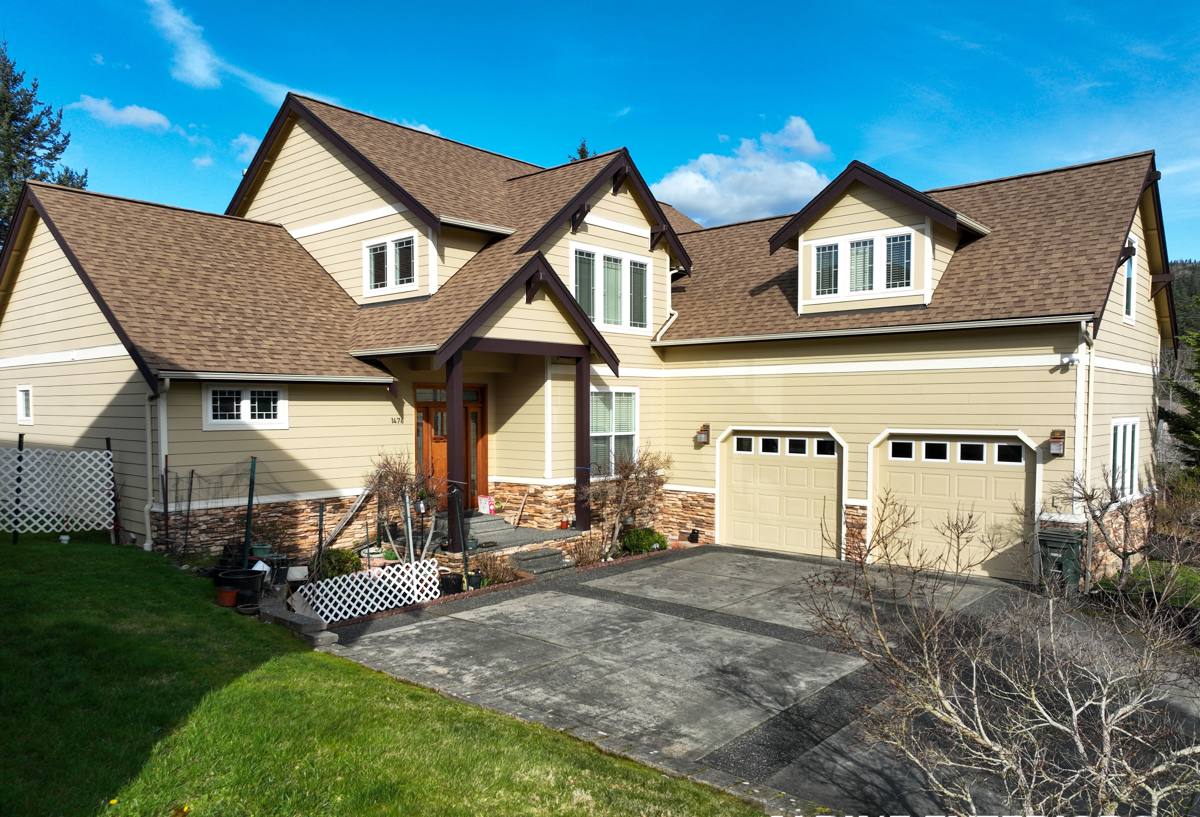
The Core Problem: Wood Is Still Wood
A primer coat is not a moisture barrier. It's a paint-adhesion layer. Underneath that thin factory primer is still solid, untreated spruce — a softwood that absorbs and releases moisture with every swing in humidity. In most of the country, that's manageable. In Whatcom County, where Chuckanut homes sit right up against saltwater exposure, driving winter rain, and a moss season that can stretch from October well into April, it's a much harder ask of the material.
What that moisture cycling does over time
- End grain and cut edges wick water fastest — the most common failure point on any wood lap siding job, primed or not.
- Repeated wet-dry cycles swell and shrink the boards, which stresses paint film and eventually causes it to crack, peel, or alligator.
- Once paint film fails in even a small spot, bare wood is exposed directly to weather, and rot can start underneath before it's visible from the ground.
- Moss and algae growth, which is a fact of life in this climate, holds moisture against the siding surface longer than a dry, wind-exposed wall would otherwise see.
None of that is a defect in the product. It's simply what solid wood does when it's asked to be the weather barrier on a home in a marine climate. Spruce siding was never engineered for salt air and moss season — it's a general-purpose wood product that predates climate-specific engineered siding entirely.
The Maintenance Commitment Nobody Mentions at Purchase
The real cost of primed spruce siding isn't the install — it's the twenty years after. A primer coat is meant to be topcoated with paint within a short window after installation, and that paint job needs to be refreshed on a real schedule, typically every 5 to 8 years in a coastal Washington climate, sooner on south- and west-facing walls that take the most sun and driving rain. Skip a repaint cycle and you're not just losing curb appeal — you're letting the one thing standing between the wood and the weather degrade.
| Maintenance Task | Primed Spruce Siding | James Hardie (ColorPlus) |
|---|---|---|
| Repainting cycle | Every 5-8 years, sooner on exposed elevations | Factory finish backed by its own warranty; no repaint needed on the same schedule |
| Caulking / joint recheck | Annual inspection recommended | Annual inspection still recommended, but the substrate isn't absorbing water at joints |
| Moss and algae cleaning | Needed regularly; buildup accelerates coating failure | Needed for appearance; doesn't compromise the substrate underneath |
| Vulnerability to rot | Real risk if coating fails or water gets behind boards | Not a wood product — won't rot |
| Fire performance | Combustible softwood | Non-combustible fiber cement |
We lay this out not to scare anyone off wood siding as a category, but because we think homeowners deserve the real maintenance math before they commit, not after the first repaint bill arrives.
Installation Sensitivity Is a Bigger Deal Than It Sounds
Primed spruce siding is far less forgiving of installation shortcuts than most homeowners assume. Every cut end needs to be field-primed or sealed before it goes up, because factory primer only covers the face and back of the board, not the ends the installer cuts on site. Skip that step — which happens more often than it should on production-paced jobs — and you've built a wicking point into the wall on day one.
Where installation problems actually show up
- Unsealed cut ends at corners, window and door trim, and butt joints
- Nail placement too close to board edges, which splits the wood and opens a water path
- Insufficient overlap or improper flashing behind the top of each course
- Direct wood-to-wood contact at inside corners with no drainage gap
- Paint applied too soon after priming, before the wood has equalized moisture content
Every one of those is avoidable with careful, by-the-book installation. But it means the quality of the crew matters more with primed spruce than with almost any other siding product on the market — there's very little margin for a rushed install to still perform well ten years down the road.
Why Salt Air and Moss Season Specifically Change the Calculus
Chuckanut's setting is part of what makes it a beautiful place to live, and it's also part of why we're careful about siding recommendations here. Homes with any real exposure to Bellingham Bay and the Salish Sea deal with airborne salt that accelerates fastener corrosion and holds moisture against exterior surfaces longer than an inland home would experience. Combine that with Whatcom County's long, wet winters and the shaded, damp conditions that let moss colonize roofs and north-facing walls for months at a time, and you've got a climate that specifically targets the weak points of solid wood siding: end grain, fastener heads, and any spot where the protective coating is thin or damaged.
We're not saying wood siding can't survive here — there are well-maintained wood-sided homes all over this county. We're saying it takes an owner who's genuinely committed to the maintenance schedule, and even then, the product is working against a tougher set of conditions than it would face in a drier climate.
What We Install Instead, and Why
James Hardie fiber cement siding solves the core problem directly: it's not wood, so it doesn't absorb moisture and rot the way spruce can, and it isn't combustible. Hardie's HZ5 product line is engineered specifically for the wetter, cooler climate zone that includes Western Washington, which matters when the product you're putting on a home is going to face decades of Whatcom County winters.
What actually makes the difference
- ColorPlus factory finish — baked-on color that doesn't rely on field-applied paint holding up against driving rain and salt air the way primer-and-paint on spruce does.
- Non-combustible core — a real difference in wildfire-adjacent and general fire-risk terms, since fiber cement doesn't burn.
- Climate-engineered HZ5 formulation — built for moisture exposure rather than adapted to it.
- Long, transferable warranty backing — coverage that reflects the manufacturer's confidence in the product's real-world performance, not just its lab performance.
We installed a lot of different siding products before we made the call to go all-in on Hardie. This isn't a manufacturer's talking point we picked up — it's a standard we set after seeing which products actually held up on homes in this specific climate and which ones created callbacks and maintenance headaches for owners.
A Fair Look at What You Give Up With Hardie
In the interest of being straight with you: Hardie is not a perfect drop-in replacement for the exact look of traditional wood lap siding. It's heavier, which means installation requires more labor and different fastening techniques than wood. It costs more up front than primed spruce. And while Hardie's lap profiles are designed to closely mimic traditional wood siding, a homeowner set on the precise grain texture and feel of real wood may still prefer wood in that narrow respect. We think the tradeoff favors Hardie for most Chuckanut homes, but it's a real tradeoff, not a one-sided decision.
Questions Worth Asking Before You Choose a Siding Product
- Who is actually going to keep up the repaint schedule, and is that realistic for your household?
- What's the plan if a section of siding fails and needs replacement — can you match the product ten years from now?
- Does the warranty follow the home if you sell it, or does it end with you?
- How exposed is your specific lot to wind-driven rain, direct sun, and shaded moss-prone areas?
- Is the installer following manufacturer installation specs, or their own shortcuts?
Those questions apply whether you're talking to us or anyone else. A good contractor should be able to answer all five without hesitation.
If you're weighing your siding options for a home in Chuckanut or anywhere else in Whatcom County, we're happy to walk your property, look at your exposure and current siding condition, and give you a straight, no-pressure estimate for what a Hardie install would look like on your home.