 Chuckanut Exterior
 Why Bellingham Decks Wear Out Faster Than the Brochure Says
A deck built to a generic national spec doesn't hold up the same way here as it does inland. Homes in and around Bellingham sit close enough to Bellingham Bay and the Salish Sea that salt-laden air is a constant, low-grade stressor on anything metal or unsealed. Add the region's driving, wind-pushed rain — the kind that hits decking at an angle instead of falling straight down — and a moss and algae season that can run from early fall through late spring, and you've got a structure that's under attack from three directions almost year-round.
None of that means a deck can't last decades in Whatcom County. It means the design, materials, and fasteners have to be chosen for this climate specifically, not pulled off a generic materials list. That's the difference between a deck that needs board replacement in eight years and one that's still tight and safe in twenty-five.
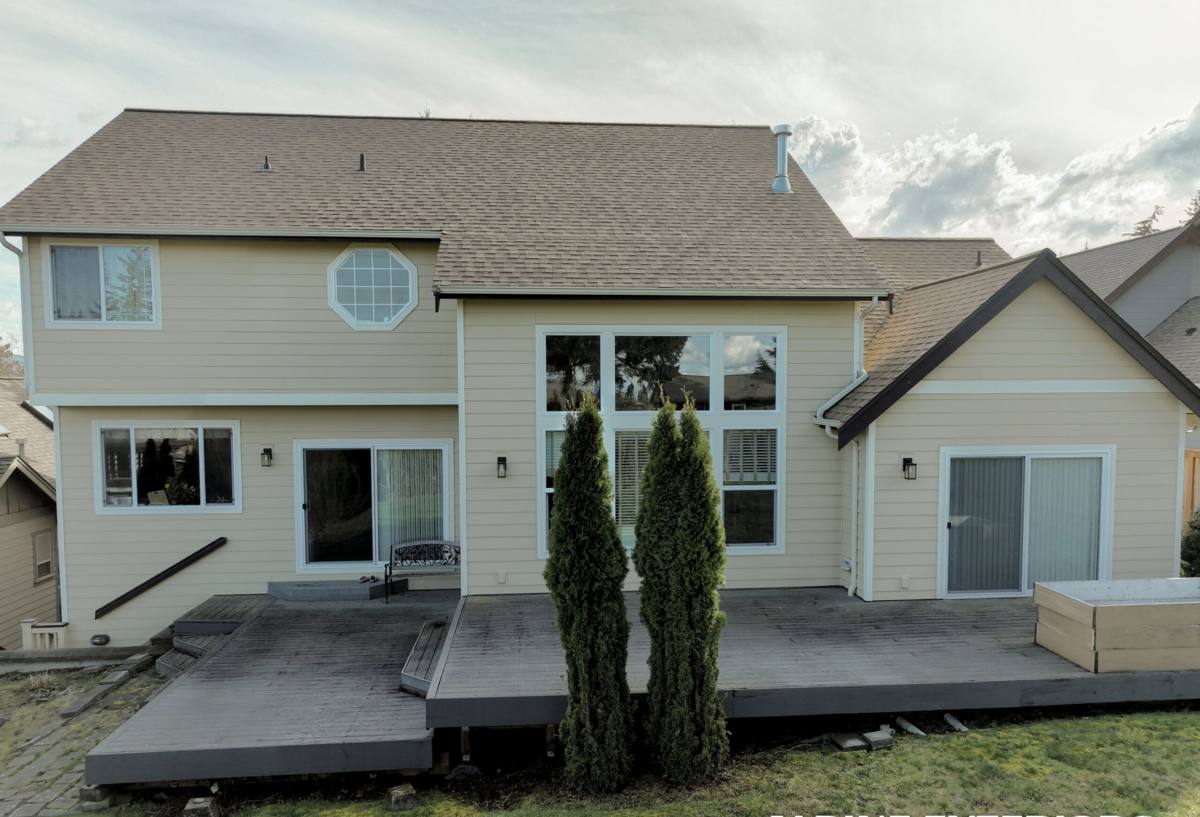
What a Deck Built for This Climate Needs to Get Right
Footings That Won't Heave or Settle
Everything above ground depends on what's below it. Footings need to be poured to the correct depth for local frost and soil conditions, with concrete that's allowed to cure properly before load goes on it. Skimping here is invisible for the first year or two — it shows up later as a deck that's started to rock, sag at one corner, or pull away from the house.
Fasteners and Hardware That Won't Rust Out
This is the detail that separates a deck built by people who understand this environment from one that wasn't. Salt air corrodes standard fasteners faster than most homeowners expect, and once a nail or screw starts rusting, it weakens from the inside before you ever see a stain on the surface. We use stainless steel or hot-dip galvanized fasteners and structural hardware rated for coastal exposure — not because it's required everywhere, but because it's the only approach that makes sense given what this air does to metal over time.
Decking Material: Matching the Surface to the Weather
There's no single "best" decking material — there's the material that fits your budget, your maintenance appetite, and how much moss and standing moisture your site sees. Here's how the common options actually compare in this climate:
| Material | Moss/Algae Resistance | Maintenance Needed | Typical Lifespan Here |
|---|---|---|---|
| Pressure-treated wood | Low — grows moss readily if not cleaned | Annual cleaning, periodic sealing | 10-15 years |
| Cedar | Moderate — natural oils help, but fade and gray without upkeep | Cleaning and oil/stain every 1-2 years | 15-20 years |
| Capped composite | Good — cap layer sheds moisture and resists staining | Occasional washing | 20-30 years |
| PVC decking | Very good — fully synthetic, doesn't absorb moisture | Occasional washing | 25-30+ years |
We install all four of these depending on what a homeowner wants, but we're upfront about the trade-off: lower upfront cost generally means more of your own time spent cleaning and sealing. That's not a knock on wood — plenty of homeowners like the look and don't mind the upkeep. It's just something to decide going in, not discover in year three.
Moss, Algae, and Standing Water: The Long Wet Season Problem
Moss doesn't need much to take hold — shade, moisture, and a surface that stays damp longer than a day or two. In a climate where it can rain for a week straight and the sun doesn't always get a chance to dry things out, deck design has to account for that from the start:
- Decking boards spaced with proper gapping so water drains through instead of pooling on the surface
- A slight slope built into the frame so water sheds away from the house rather than sitting against the ledger
- Joist tape or flashing on top of the framing so the structural lumber underneath isn't sitting in standing water every time it rains
- Enough clearance and airflow underneath the deck so the underside can actually dry out between storms
Skip any one of these and you get the classic Whatcom County deck problem: green film on the walking surface, soft spots where water collects, and framing that stays damp long enough to invite rot even though the visible boards look fine.
The Ledger Board: Where Most Deck Failures Actually Start
If a deck attaches to the house, the ledger board connection is the single most important detail on the job — and the one that's easiest to get wrong in a way that doesn't show up for years. The ledger bolts to your house's band board, and if it isn't flashed correctly, water works its way behind the siding and into that connection every time it rains. In a climate with this much driving rain, an improperly flashed ledger isn't a small risk — it's close to a guarantee of hidden rot eventually.
Done correctly, that means proper flashing integrated with the house's water-resistive barrier, a gap or flashing detail that lets water drain away from the connection rather than pool against it, and structural fasteners sized and spaced to actual load requirements rather than guesswork. A freestanding deck — one built on its own posts and footings, not attached to the house — sidesteps this risk entirely, and it's worth discussing as an option depending on your layout and how much you're relying on the house structure for support.
Our Deck Building Process, Start to Finish
- Site visit and design. We look at grade, drainage, sun exposure, and how the deck will tie into the house before recommending materials or layout.
- Permit and plan review. We handle the permit submission and make sure the design meets local code before any digging starts.
- Footings and framing. Footings poured to proper depth, framing built with corrosion-resistant hardware and correctly sloped for drainage.
- Inspection point. Framing typically gets inspected before decking goes down — we build in that step rather than rushing past it.
- Decking, railing, and stairs. Installed to the spacing and fastening pattern appropriate for the material you've chosen.
- Final walkthrough. We go over the finished deck with you, including what maintenance it will need and when.
Permits, Code, and Local Requirements
Most decks attached to a house, and many freestanding ones above a certain height, require a permit in Bellingham and unincorporated Whatcom County. Requirements can include guardrails once a deck surface reaches a certain height above grade, engineered footings for taller or larger structures, and setback distances from property lines. Specifics depend on your parcel, your jurisdiction, and the size of the project, so we verify the current requirements for your specific address rather than assuming last year's rules still apply — code updates aren't rare, and the cost of skipping a permit is almost always higher than the cost of pulling one.
Cost Factors: What Actually Changes the Price
Every deck quote is different because every site is different. These are the factors that move the number most:
| Factor | Why It Matters |
|---|---|
| Size and shape | Square footage and complexity (angles, multiple levels) both add material and labor time |
| Height above grade | Taller decks need more substantial framing, stairs, and often engineered guardrails |
| Decking material | Wood costs less upfront; composite and PVC cost more but need far less long-term upkeep |
| Ledger vs. freestanding | Freestanding decks avoid ledger flashing risk but need additional footings and posts |
| Railing style | Cable, glass, and custom railing systems cost more than standard baluster railing |
| Site access | Steep or tight lots can add time for material staging and equipment access |
We walk through these factors with you during the estimate so you understand what's driving the number, not just what the number is.
Why a Local Chuckanut-Area Crew Makes a Difference
A crew that works Bellingham and the surrounding Chuckanut area regularly knows things that don't come from a training manual: which neighborhoods sit in heavier fog and moss exposure, how local soil drains after a wet fall, what the county permitting office actually wants to see on a plan set, and how to schedule footings and framing around the rainy stretches of the calendar instead of fighting them. That local pattern-recognition is what keeps a project on schedule and keeps callbacks rare. It's also why we build every deck assuming the salt air, the rain, and the moss are permanent conditions to design around — because in this part of Washington, they are.
Keeping Your New Deck Ready for Whatcom County Weather
A well-built deck still needs some seasonal attention in this climate. A simple annual routine goes a long way:
- Sweep debris and needles off the deck surface before fall rains start, so they don't trap moisture against the boards
- Check gaps between boards periodically to make sure they haven't clogged with organic debris
- Look at fastener heads and visible hardware once a year for early rust staining
- Inspect the ledger flashing area and any place the deck meets the house for staining or soft siding
- Wash off moss and algae buildup before it gets a chance to establish, rather than after it's thick
- Reseal or re-oil wood decking on the schedule appropriate to that product — don't wait until it's visibly gray and dry
None of this is complicated, but skipping it is exactly how a well-built deck turns into a problem deck five or six years in.
Ready to Talk About Your Deck
If you're planning a new deck or replacing one that's past its prime, we're happy to walk your site, talk through material options, and give you a straightforward, no-pressure estimate — no invented urgency, just an honest look at what your home and your budget call for. Use the form below to get started.