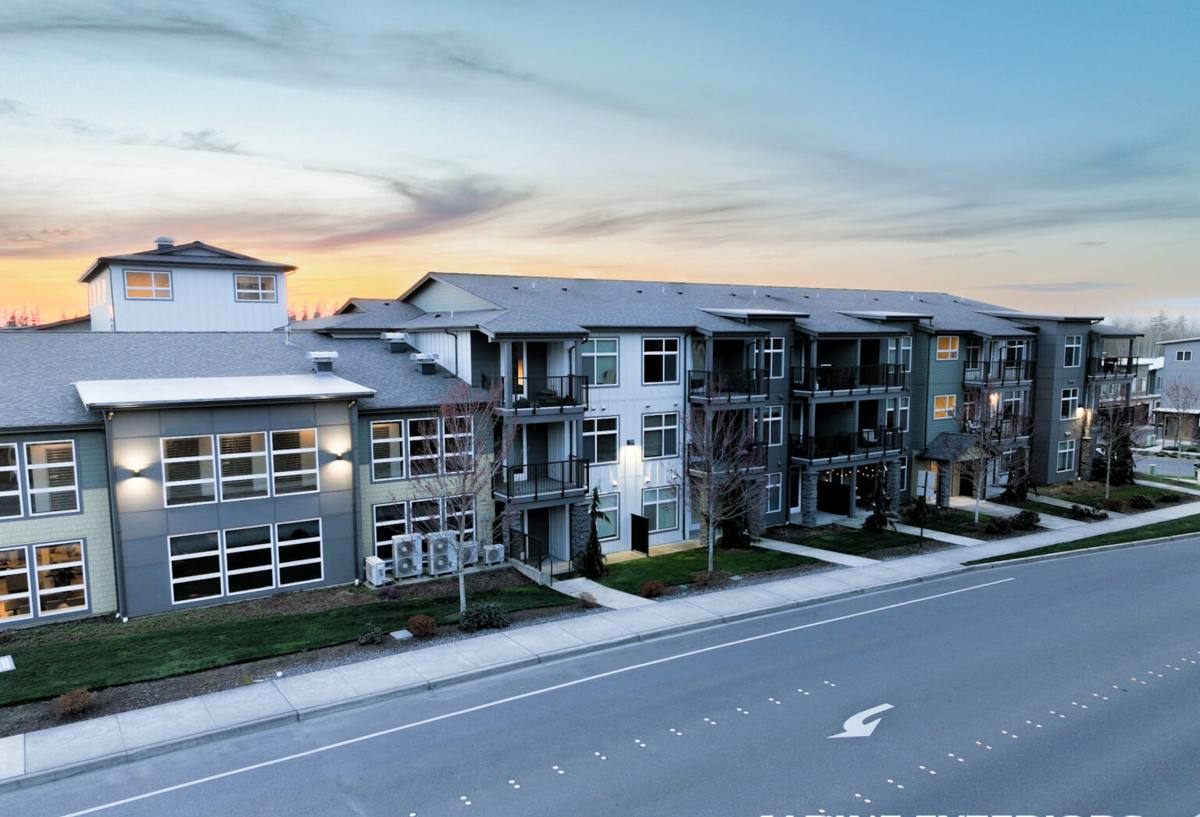
 Chuckanut Exterior
 Bellingham's Climate Is Harder on Siding Than Most Homeowners Realize
Homes in and around Bellingham sit close enough to the water that salt air is a daily fact of life, not an occasional nuisance. Add Whatcom County's long, wet winters, frequent driving rain off the Salish Sea, and a moss season that can stretch from October well into spring, and you have a combination that wears down the wrong siding material fast. A product that performs fine in a drier climate can fail here in half the time — swelling, delaminating, staining, or hosting moss and mildew that trap moisture against the wall.
Fiber cement siding, installed correctly for this specific environment, is one of the few products built to handle all three of these stresses at once: salt exposure, sustained moisture, and organic growth. This page covers what that actually looks like for a Bellingham home — not generic siding advice, but the details that matter for houses in this part of Whatcom County.
What Salt Air, Rain, and Moss Actually Do to a Home's Exterior
Salt Air and Corrosion
Salt-laden air accelerates corrosion of fasteners, flashing, and any exposed metal trim. It also breaks down certain paint and coating systems faster than inland weather would, leading to chalking and premature fading on lower-grade products. Fiber cement itself is not vulnerable to salt corrosion the way metal or some composite products are, but the fasteners, flashing, and trim details around it need to be chosen with that exposure in mind.
Driving Rain and Wind-Driven Moisture
Bellingham doesn't just get a lot of rain — it gets a lot of rain pushed sideways by wind coming off the water. That means siding has to shed water that's hitting it at an angle, not just falling straight down. Any gap in flashing, any short caulk joint, any missed detail at a window or door becomes an entry point for water that then has nowhere to go but into the wall assembly.
Moss, Mildew, and Organic Growth
Long, cool, damp seasons are exactly what moss and mildew need to establish themselves. On north-facing walls, under eaves, and anywhere air doesn't move much, organic growth on siding is common in this region. Beyond the cosmetic issue, moss holds moisture against the siding surface for extended periods, which shortens the life of moisture-sensitive materials and can accelerate rot in the substrate behind them.
Why We Install James Hardie Fiber Cement — and Nothing Else
We made a deliberate decision to install only James Hardie fiber cement siding. We don't install vinyl, LP SmartSide, Cemplank, Allura, primed spruce, or raw cedar, and we're upfront with homeowners about why. Every one of those alternatives has real strengths — vinyl is inexpensive, cedar looks beautiful, LP SmartSide is lighter and faster to install than fiber cement. But each also carries a trade-off that shows up specifically in a climate like Bellingham's: vinyl can warp and doesn't stop moisture as reliably at the seams, engineered wood products remain wood-based and vulnerable to swelling and rot if moisture gets past the coating, and cedar demands ongoing refinishing to hold up against constant damp.
James Hardie fiber cement is non-combustible, dimensionally stable in wet climates, resists moss and moisture far better than wood-based products, and comes with a factory-applied ColorPlus finish engineered to hold color under UV and salt exposure. It's also built in climate-specific HardieZone formulations, including versions engineered for wetter regions like ours. That combination is why it's the only product we put our name behind.
How the Main Options Compare in a Marine Climate
| Material | Moisture / Moss Resistance | Salt Air Durability | Maintenance Burden |
|---|---|---|---|
| James Hardie Fiber Cement | Strong — resists swelling, engineered HZ formulations for wet climates | High — non-combustible, factory finish holds color | Low — occasional wash, no repainting on ColorPlus cycle |
| Vinyl Siding | Moderate — seams and laps can allow water intrusion | Moderate — can fade and become brittle over time | Low, but limited repair options if damaged |
| LP SmartSide / Engineered Wood | Moderate — wood-based core vulnerable if coating fails | Moderate — coating degrades faster near salt air | Moderate — coating must be maintained |
| Cedar / Primed Spruce | Lower — absorbs moisture, prone to rot without upkeep | Lower — finish breaks down faster in salt exposure | High — regular refinishing required |
What a Correct Fiber Cement Installation Involves
Fiber cement siding is only as good as the installation behind it. In a climate like Bellingham's, a few details matter more than they would elsewhere.
Drainage Plane and Rainscreen
A proper weather-resistive barrier, installed with correct laps and taped seams, sits behind the siding. In our climate, we favor a ventilated rainscreen gap between that barrier and the siding itself, which lets any incidental moisture that gets behind the panels drain and dry instead of sitting against the wall.
Flashing at Every Penetration
Windows, doors, hose bibs, light fixtures, and any other wall penetration need properly lapped flashing — installed so water is directed out and down, never trapped. Given how much wind-driven rain this area sees, flashing shortcuts show up as leaks far sooner than they would in a drier climate.
Fasteners and Fastening Pattern
Corrosion-resistant fasteners, driven at the manufacturer's specified pattern and depth, matter both for long-term holding power and to avoid the kind of surface cracking that lets moisture in around the fastener head.
Joints, Caulking, and Clearances
Butt joints need to be treated correctly rather than just butted and caulked over. Siding also needs proper clearance from grade, roofing, and decks — a common defect on older homes here is siding installed too close to the ground or a deck surface, which keeps the bottom edge damp far more of the year than it should be.
Our Process, Start to Finish
- On-site assessment — we inspect the existing siding, sheathing, and trim for hidden moisture damage before quoting anything.
- Scope and product selection — we walk through Hardie plank, shingle, and panel options and the right HardieZone formulation for your exposure.
- Tear-off and substrate check — old siding comes off and we address any rot or compromised sheathing before anything new goes up.
- Weather barrier and rainscreen installation — the drainage system behind the siding is installed and inspected before panels go on.
- Flashing and trim — all penetrations, windows, and transitions are flashed to shed water correctly.
- Siding installation — panks are installed to Hardie's fastening specifications, with attention to clearances and joints.
- Final detailing and walkthrough — caulking, touch-up, and a walkthrough so you understand what was done and why.
Choosing Colors and Products for a Bellingham Home
James Hardie's ColorPlus finish is baked on in a controlled factory environment and backed by its own finish warranty, which matters here because field-applied paint has to work much harder to hold up against salt air and constant damp. For homes exposed to more direct weather — closer to the water or on more exposed lots around Chuckanut and Bellingham — we'll talk through which HardieZone product line and color options make the most sense for that specific exposure, rather than defaulting to whatever's fastest to install.
Maintenance in a Marine, Moss-Prone Climate
One of the advantages of correctly installed fiber cement is how little ongoing maintenance it needs compared to wood-based alternatives. That said, a few simple habits go a long way in this climate:
- Rinse siding annually, and more often on north-facing or shaded walls where moss tends to establish
- Trim back vegetation and tree limbs that keep siding shaded and damp
- Check gutters and downspouts each fall so overflow isn't running down the siding face
- Look at caulk joints around windows and trim yearly and have any cracked sections redone
- Address moss growth early with a gentle wash rather than letting it build up over a season
What Fiber Cement Siding Typically Costs
Every home is different, but the factors that move the price are consistent. We'll always give you a specific number after seeing the house — the table below is meant to help you understand what drives the estimate, not to substitute for one.
| Cost Factor | Why It Matters |
|---|---|
| Tear-off and substrate condition | Rot or moisture damage found under old siding adds repair scope before new siding goes on |
| Home size and wall complexity | More corners, dormers, and trim details mean more labor and material |
| Product line and profile | Plank, shingle, and panel styles, plus HardieZone formulation, price differently |
| Color and finish | Factory ColorPlus finishes vs. standard primed board affect material cost |
| Exposure and accessibility | Steep rooflines, multiple stories, or tight lot access affect labor time |
Why Hiring a Crew That Already Works in Bellingham Matters
Siding installed to a generic standard doesn't always hold up to a specific climate. A crew that regularly works homes in Bellingham and the surrounding Whatcom County area already knows where moss tends to establish on local roof and wall configurations, how much wind-driven rain a given exposure gets, and which flashing and drainage details actually get tested by this weather rather than just meeting a minimum code requirement. That local pattern recognition is hard to substitute for, no matter how good the product is.
If you're weighing your siding options for a home in the Bellingham area, we're happy to take a look and talk through what your specific house needs — no pressure, no obligation. Reach out using the form below for a free estimate.