 Chuckanut Exterior
 Exterior Work Built for Sedro-Woolley's Climate
Sedro-Woolley sits where the Skagit Valley opens up between the foothills and the sound-influenced lowlands, and that location gives local homes a distinct weather pattern to deal with. Winters bring long stretches of driving rain that comes in sideways during a stiff blow, humid air moves up the valley carrying a hint of salt influence from the sound, and the tree cover that makes this area beautiful also means shaded rooflines and siding that stay damp far longer than they would in a drier climate. Add in a moss season that can run from late fall through spring, and you have an environment that is genuinely hard on exterior building materials.
We work on homes throughout this part of Whatcom and Skagit County, and the pattern is consistent: houses that were built or resided with the wrong products for this climate show problems years before they should. That's the whole reason our crews specialize in siding, roofing, windows, and decks that are actually engineered for wet, moss-prone, valley-and-coastal conditions rather than generic products that happen to be cheaper up front.
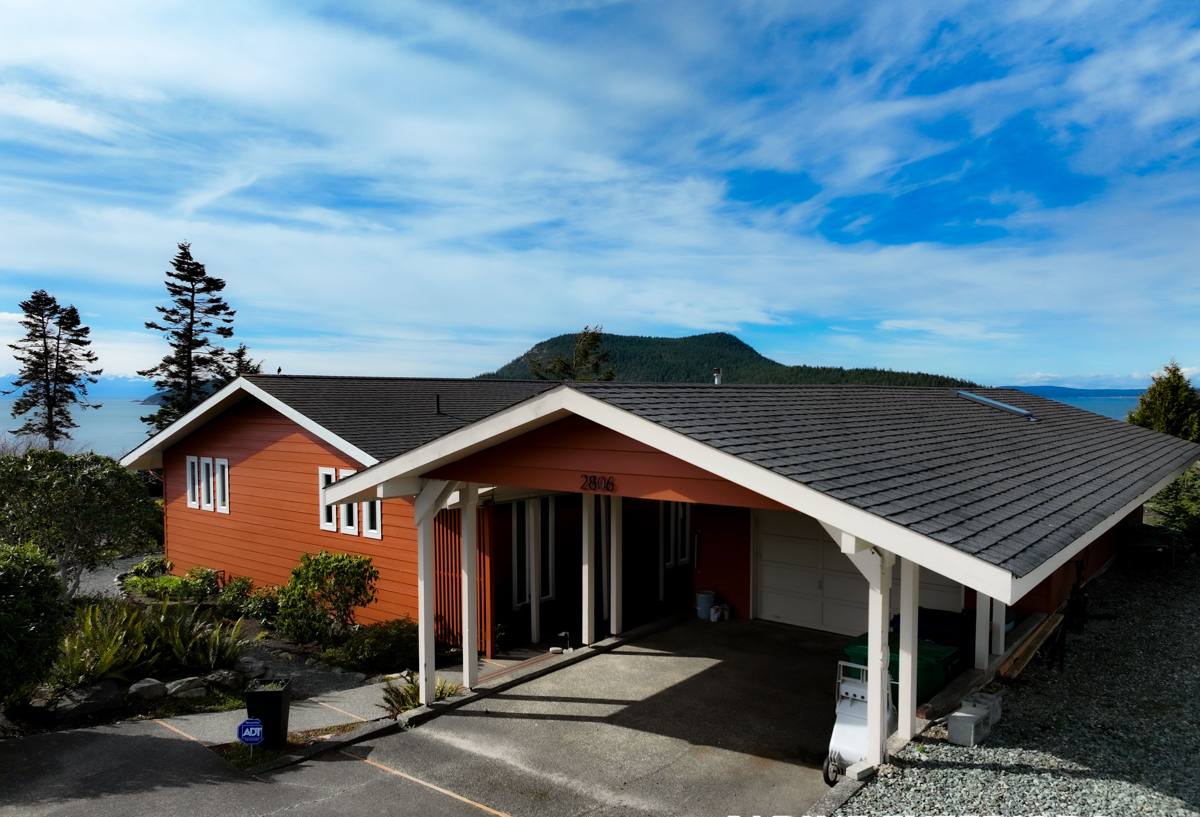
What Constant Moisture Does to a House
Moisture doesn't announce itself. It works quietly, and by the time you see a problem — a soft spot under a windowsill, a shingle line gone dark green, a siding seam that's started to swell — the damage underneath is usually further along than it looks.
The Usual Failure Points
- Siding seams and butt joints that weren't properly sealed or flashed, letting water track behind the cladding
- North-facing and shaded roof planes where moss gets a foothold and holds moisture against the shingles
- Window flashing installed as an afterthought instead of integrated with the water-resistive barrier
- Deck ledger boards and fastener points where wood-to-wood contact traps water
- Wood-based siding products that absorb moisture at cut edges and swell, crack, or delaminate over time
None of these are exotic problems. They're the predictable result of a wet climate meeting materials or installation details that weren't built for it. Good exterior work in Sedro-Woolley isn't about fancy upgrades — it's about getting the fundamentals of water management right, every time.
Siding: Why We Standardized on James Hardie
We get asked fairly often why we only install James Hardie fiber cement siding instead of offering vinyl, LP SmartSide, or cedar as options. It comes down to what we've seen hold up in this climate versus what we've seen fail, and we'd rather be straightforward about that than sell whatever a homeowner asks for.
What We Don't Install, and Why
Vinyl siding is inexpensive and low-maintenance in the sense that it doesn't need painting, but it's a thin plastic product that expands and contracts significantly with temperature swings, can crack in cold snaps, and simply melts near heat sources. It also isn't the product for anyone who wants their siding to look substantial rather than like a shell over the house.
Engineered wood products like LP SmartSide use a resin-treated wood strand core, which performs reasonably well when installation is flawless and maintenance is kept current — but any breach in the factory coating, especially at cut edges or fastener points, opens the door to moisture wicking into the wood fiber. In a climate with this much sustained dampness, that's a maintenance burden we don't think is worth the lower material cost.
Cedar and primed spruce look great on day one, but they're solid wood: they need refinishing on a real schedule, they're vulnerable to rot at grain checks and end cuts, and moss and mildew take hold on wood siding just as readily as they do on a shaded roof. We're not saying these products can't work anywhere — we're saying that after years of exterior work in exactly this kind of weather, we stopped recommending them for it.
Why Fiber Cement Wins Here
James Hardie siding is cement, sand, and cellulose fiber — a composite that doesn't absorb water the way wood or wood-composite products do, and doesn't warp, crack, or become brittle the way vinyl can. It's also non-combustible, which matters more each year as wildfire season creeps into the Pacific Northwest's summer months. Hardie's HZ5 product line is specifically engineered for climates that see freeze-thaw cycling and sustained moisture, which describes this region well. The factory-applied ColorPlus finish is baked on and warrantied against fading and peeling, which means less repainting over the life of the siding — a real advantage when a ladder job in a wet climate isn't something anyone looks forward to scheduling.
Roofing That Handles Rain and Resists Moss
A roof in this part of Washington needs to do two things well: shed a lot of water fast, and resist the moss and moisture retention that shaded, north-facing, and low-slope sections are prone to. We pay close attention to underlayment quality, proper overlap and fastening, ridge and valley flashing, and ventilation — a roof deck that can't breathe traps moisture from below just as surely as a leak lets it in from above.
Moss prevention starts with keeping overhanging branches trimmed back so roof planes get sun and airflow, but it also comes down to material choice and installation quality. Algae-resistant shingle products, proper drip edge, and correctly lapped flashing all reduce how much of a foothold moss gets in the first place. We also look at gutter sizing and downspout placement on every roofing job, because undersized gutters overflow in a hard rain and send water right down the siding.
Windows: The First Line Against Driving Rain
Windows fail in this climate for one of two reasons: the window unit itself is a lower-quality product with weak seals, or the flashing and integration with the wall's water-resistive barrier was done wrong. We see the second cause more often. A window can be expensive and still leak if it wasn't flashed to shed water down and out rather than into the wall cavity.
When we replace windows, we integrate the flashing with whatever siding system is going on the wall — this is part of why we prefer to handle siding and window work together where possible, so there's one crew accountable for the whole water path instead of a handoff between trades. We also talk with homeowners about U-factor and condensation resistance, since a valley climate with cold, damp winters puts real demands on a window's ability to keep interior moisture from condensing on the glass and frame.
Decks Built for a Wet Climate
Decks take a different kind of abuse — horizontal surfaces, standing water, and ledger connections that are notorious failure points if not flashed correctly. Wood decking needs consistent maintenance in this climate: sealing, cleaning, and watching for soft spots at fastener locations. Composite decking costs more up front but resists moisture absorption and doesn't need refinishing, which for a lot of homeowners in a climate like this makes the math work out over time. Either way, the structural details matter more than the surface material — proper ledger flashing, joist tape, and drainage underneath the deck determine whether it lasts.
Comparing Siding Options for This Climate
| Factor | Vinyl | Engineered Wood (LP SmartSide) | Cedar / Primed Spruce | James Hardie Fiber Cement |
|---|---|---|---|---|
| Moisture resistance | Doesn't absorb water, but seams can let it behind the panel | Vulnerable at cut edges and breached coating | Absorbs water; prone to rot without upkeep | Cement-based; doesn't swell or rot |
| Fire performance | Melts, can contribute to fire spread | Combustible | Combustible | Non-combustible |
| Maintenance | Low, but limited repair options | Moderate; coating upkeep matters | High; regular refinishing needed | Low; factory finish holds color |
| Typical lifespan (installed to spec) | 20-30 years | 20-30 years | 15-25 years with upkeep | 30-50 years |
| Appearance | Can look thin/plastic | Wood-grain texture | Natural wood grain | Authentic wood-look profiles, factory color |
Why a Local Crew Matters
Exterior work in Sedro-Woolley isn't the same job as exterior work in a dry climate, and it isn't quite the same as work right on the open coast either — it's valley weather with moisture-heavy air, real moss pressure, and rain that comes hard and often. A crew that works this region regularly knows to flash a window differently than a crew used to a dry Eastern Washington town, and knows which roof planes on a given lot orientation are going to fight moss the hardest. That local pattern recognition is worth more than it sounds like on paper — it's the difference between a repair five years from now and one that doesn't happen.
What to Look For When Hiring
- Manufacturer certification for the specific siding or roofing system being installed, not just general contracting experience
- A written scope that specifies flashing details, not just materials and labor
- Local references and a crew that can speak to how they handle this area's moisture and moss conditions specifically
- Proper licensing and insurance, verifiable through the state contractor lookup
- A warranty that's actually transferable if you sell the home
Seasonal Upkeep for Homes in This Area
Even the right materials installed correctly benefit from some basic seasonal attention. Clear gutters and downspouts before the fall rains ramp up, keep branches trimmed back from roof planes to reduce moss buildup, rinse algae or moss growth off siding and roofing before it gets established rather than after, and walk the exterior once or twice a year checking caulk lines, flashing, and deck ledger boards for early signs of wear. None of this takes long, and it's far cheaper than the repair that follows a season of neglect.
If you're dealing with an aging roof, siding that's showing its age, drafty windows, or a deck that needs more than a wash and a coat of sealer, we're happy to take a look and talk through what actually makes sense for your home and budget — no pressure, no upsell. Reach out for a free estimate using the form below.