 Chuckanut Exterior
 Storm Damage Roof Repair Built for Bellingham's Climate
A storm that rolls through Bellingham doesn't hit every roof the same way. Wind coming off the water pushes rain sideways and up under shingle edges instead of letting it run straight down and off. Salt-tinged marine air works steadily on exposed metal and fasteners between storms, weakening flashing and nails that then fail faster the next time wind loads spike. And Whatcom County's long, damp moss season means a lot of Bellingham roofs are already carrying extra weight and trapped moisture on shaded slopes before a storm even arrives. Storm damage repair here isn't just patching what's visibly broken. It's understanding how these local conditions compound each other and repairing the roof so it's actually ready for the next one, not just presentable until then.
This page covers what storm damage repair should actually involve for a Bellingham home, how to tell real storm damage from cosmetic wear, and how our process works from first inspection to final walkthrough.
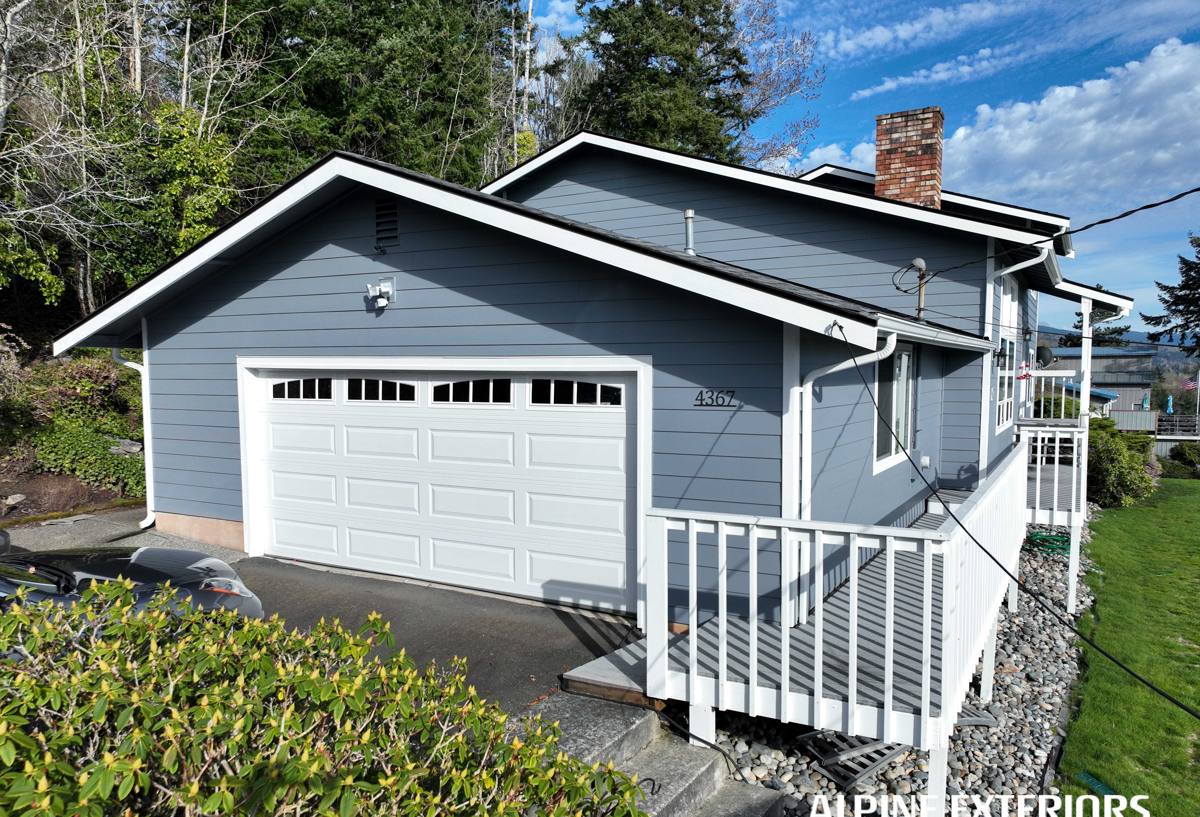
What Bellingham Storms Actually Do to a Roof
Storm damage isn't always the dramatic kind. A missing shingle or a tree limb through the decking is obvious. What's harder to catch is the damage that happens underneath an otherwise intact-looking roof surface — wind-driven rain forced under shingle tabs by sustained gusts, flashing seals stressed loose by repeated freeze-thaw and wind cycling, or granule loss from hail or debris impact that thins a shingle's protective layer without opening a visible hole.
That distinction matters because a roof can look fine from the ground after a storm and still be leaking into the attic or losing years of expected lifespan. This is exactly why a proper storm damage assessment includes an attic check and a close, on-roof inspection, not just a walk around the yard looking up.
The Specific Ways Local Conditions Make Storm Damage Worse
- Wind-driven rain intrusion: Gusts off the water don't just test a roof's surface, they test whether the underlayment and flashing underneath can stop water that's being pushed uphill and sideways.
- Salt air corrosion: Fasteners, flashing, and metal drip edge weakened by ongoing salt exposure are more likely to fail outright during high wind rather than simply degrade slowly.
- Moss-holding moisture: Shaded, north-facing slopes that stay damp for months already have softened or lifted shingle edges before a storm arrives, making them easier for wind to peel further.
- Debris load: Storm winds bring down branches and debris from mature trees common on Bellingham lots, and impact damage is often concentrated on specific slopes rather than spread evenly across the roof.
Signs of Storm Damage Worth Checking For
Some storm damage is obvious. A lot of it isn't, especially on a roof you don't get up close to very often. After any significant wind or rain event, it's worth looking for the following, both from the ground and inside the attic if you're able to.
- Shingles that are missing, cracked, curled, or visibly lifted at the edges
- Granules collecting in gutters or at downspout outlets after the storm, beyond normal seasonal shedding
- Dented or creased metal flashing, drip edge, or gutters
- New or worsening water staining on ceilings, especially near valleys, chimneys, or skylights
- Daylight visible through the roof deck from inside the attic
- Debris, branches, or standing water pooling on the roof surface
- Soft spots when walking the roof, which can indicate saturated decking underneath
If you're seeing any of these, or simply aren't sure after a hard storm, it's worth having the roof looked at before the next system moves through rather than waiting to see if a small problem gets worse on its own.
What a Correct Storm Damage Repair Involves
Storm repair done right addresses the roof as a system, not just the spot that's obviously damaged. A patch that only covers the visible problem often leaves the underlying cause, usually compromised underlayment or flashing, to fail again in the next storm.
Inspection Before Repair
A proper repair starts with an on-roof and in-attic inspection to document the actual extent of damage, not just what's visible from the driveway. This matters both for getting the repair scope right and for having clear documentation if an insurance claim is involved.
Deck and Underlayment Assessment
Any area where water has intruded needs the decking checked for saturation or soft spots, not just the shingles replaced on top. Underlayment in the affected area should be evaluated and replaced if it's been compromised, since shingles alone aren't the water barrier — the underlayment underneath them is doing a lot of that work.
Flashing Repair
Storm-loosened or corroded flashing at valleys, chimneys, skylights, and wall intersections is one of the most common places repeat leaks come from after a storm repair that only addressed the shingle field. Flashing should be properly lapped, sealed, and integrated with the surrounding roofing, not just re-caulked as a quick fix.
Matching Materials and Fastening
Replacement shingles should match the existing roof's profile and, where possible, color as closely as available product allows, and should be fastened to the same wind-rated standard as the rest of the roof rather than a lighter patch-job pattern. A repair that isn't fastened correctly is just future storm damage waiting to happen again.
Repair vs. Replacement: What Actually Determines the Call
| Factor | Leans Toward Repair | Leans Toward Replacement |
|---|---|---|
| Extent of damage | Isolated to one slope or a small area | Widespread across multiple roof planes |
| Roof age | Roof is well within its expected service life | Roof is already near or past typical lifespan |
| Decking condition | Deck is dry and sound under the damaged area | Rot or saturation found in the decking itself |
| Pattern of prior repairs | This is the first storm-related repair needed | This is one of several repairs in recent years |
| Underlayment condition | Underlayment elsewhere on the roof is still sound | Underlayment is aging or was substandard originally |
Most storm damage on a reasonably young, well-maintained roof is a legitimate repair, not a reason to replace the whole roof. But an honest contractor will tell you when a repair is really just delaying an unavoidable replacement, rather than selling a patch job that won't hold through the next storm season.
Cost Factors Worth Understanding
Storm repair estimates can vary a fair amount, and the difference usually comes down to real scope differences rather than arbitrary pricing.
| Factor | What It Affects |
|---|---|
| Size and location of damaged area | Material and labor needed to repair correctly |
| Decking repair or replacement | Whether hidden water damage is being addressed, not just covered |
| Flashing scope | Whether the actual leak source, not just the visible symptom, gets fixed |
| Material matching availability | How closely the repair blends with the existing roof |
| Roof pitch and access | Labor time and safety requirements for the crew |
| Insurance documentation needs | Time spent on photos, measurements, and reporting to support a claim |
A written, itemized estimate that separates these components is worth far more than a single lump-sum number, especially if you're also working with an insurance adjuster on the same damage.
How Our Storm Damage Repair Process Works
We keep this process straightforward, especially since storm damage is already stressful enough without an unclear repair timeline.
- Prompt inspection: We get out to look at storm damage in person, on the roof and in the attic where accessible, and document what we find with photos.
- Written, itemized estimate: You get a clear breakdown of what's being repaired and why, not a vague single-line price.
- Insurance documentation support: If you're filing a claim, we provide the photos and written scope your adjuster needs, though we work for you, not the insurance company.
- Temporary protection when needed: If a repair can't happen immediately, we can address active leaks or exposed decking to prevent further interior damage in the meantime.
- Repair to matching wind-rated standard: Decking, underlayment, flashing, and shingles are addressed as a system, fastened to hold up to the same conditions that caused the original damage.
- Final walkthrough: We review the completed repair with you and do a site and magnetic nail sweep before calling the job done.
Why Hiring a Crew That Already Works in Bellingham Matters
A crew that regularly repairs storm damage in and around Bellingham has already seen which roof orientations take the worst of wind-driven rain, how quickly salt air corrodes underspecified flashing, and which slopes hold moss and moisture long enough to soften shingles before a storm even hits. That local pattern recognition matters when you're trying to figure out whether damage is isolated or a sign of broader wear, and it shapes the small decisions made during a repair that a crew unfamiliar with this specific climate might not think to make.
It also matters after the storm passes. Storm seasons repeat in this region every year, and a workmanship warranty only means something if the company behind it has an established, ongoing presence here, not a crew that showed up after a single big storm and moved on to the next region once the immediate demand dried up.
A Practical Checklist Before You Hire for Storm Repair
- Do they inspect the attic as well as the roof surface, not just a ground-level look?
- Does the estimate specify what's being repaired at the decking and flashing level, not just "shingle repair"?
- Will they provide documentation and photos if you're filing an insurance claim?
- Do they carry current WA contractor licensing, liability insurance, and workers' compensation?
- Can they point to recent, real storm repair work in or near Bellingham?
- Are they upfront about when a repair makes sense versus when replacement is the honest recommendation?
After the Storm: What to Do While You Wait for an Inspection
If you've got visible or suspected storm damage and can't get an inspection immediately, a few reasonable steps can limit further damage without putting anyone at risk. Don't get on the roof yourself, especially after wet weather when surfaces are slick and footing is unreliable. Inside, place a container under any active leak and move furniture or belongings out of the path of dripping water. Take photos of visible exterior damage and interior water staining from the ground or from inside, since this documentation helps regardless of whether you end up filing an insurance claim. Beyond that, it's mostly a matter of getting a qualified inspection scheduled promptly so any hidden moisture intrusion doesn't have time to spread into rot.
If your Bellingham home has storm damage, or you're not sure whether recent weather left anything behind that needs attention, we're glad to come take an honest, no-pressure look and put together a written estimate. Use the form below to request a free estimate.