 Chuckanut Exterior
 Exterior Work Built for Blanchard's Corner of Whatcom County
Blanchard sits in a stretch of country most people only experience at highway speed, tucked along the Chuckanut corridor where the terrain rises straight out of saltwater and the tree cover barely lets sunlight reach the ground for months at a time. Homes here don't get the luxury of an average Pacific Northwest climate. They get the concentrated version of it: salt-laden air drifting up from the water, driving rain funneled by the hills, and a moss and mildew season that can run eight months or longer depending on the year. We've worked on enough homes in this pocket of Whatcom County to know that "standard" exterior materials and installation methods often aren't enough out here. Blanchard rewards a crew that understands the specific way this microclimate attacks a house, and it punishes shortcuts faster than most neighborhoods do.
This page covers what we see most often on Blanchard exteriors, how our siding, roofing, window, and deck work is approached for this specific setting, and why we think a local, accountable crew matters more here than almost anywhere else we work.
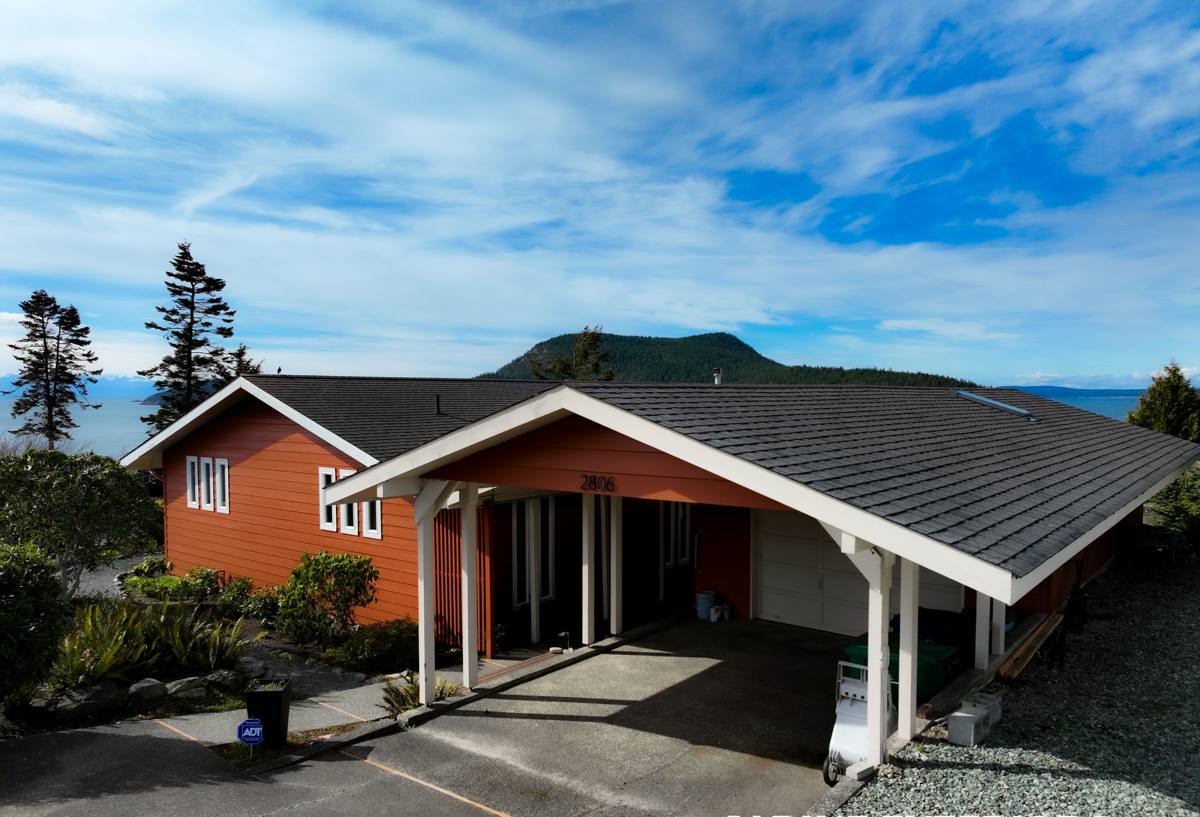
What the Climate Actually Does to a Blanchard Home
Salt Air and Slow Corrosion
Proximity to saltwater doesn't just mean occasional spray on a windy day. Salt aerosol travels with the wind and settles on every exterior surface, working into fasteners, flashing, and any exposed metal on a home's exterior. Over years, that steady low-grade exposure corrodes untreated or poorly coated hardware well before it would fail in a drier inland location. It also accelerates the breakdown of paint films that aren't formulated to resist it, which shows up as chalking, fading, and eventually bare, unprotected substrate.
Driving Rain and Wind-Driven Moisture
The terrain around Chuckanut funnels wind in ways that push rain sideways into a house rather than letting it fall straight down and shed off. That means water finds its way into seams, laps, and joints that would stay dry on a more sheltered lot. Siding systems, window flashing, and roof-to-wall transitions all take more abuse here than the manufacturer's baseline testing typically assumes for a "normal" install.
Moss, Mildew, and Extended Shade
Heavy tree cover and long stretches of overcast, damp weather create ideal conditions for moss and mildew to establish on roofs, siding, and decking. Once established, moss holds moisture against the surface underneath it, which is where the real damage happens — not the moss itself, but what it traps against wood, fiber cement, or roofing material for weeks at a time.
Common Signs We See on Blanchard Homes
- Rust streaking below fasteners or flashing on the weather-exposed side of the house
- Moss buildup in roof valleys, north-facing slopes, and shaded siding sections
- Paint or coating failure showing bare or chalky substrate on the windward elevation
- Soft or discolored trim and fascia where moisture has been trapped under debris
- Window sills and lower corners with early rot or staining from wind-driven rain
Siding: Why We Standardized on James Hardie for This Area
We install James Hardie fiber cement siding exclusively. We don't install LP SmartSide, vinyl, Cemplank, Allura, primed spruce, or cedar, and in a climate like Blanchard's, that's not a marketing position — it's a practical one based on what actually holds up under salt air, sustained moisture, and moss pressure over decades, not just years.
Fiber cement is non-combustible and dimensionally stable, meaning it doesn't expand and contract with moisture the way wood-based products do. That matters directly here: wood siding and engineered wood products absorb ambient moisture in a damp, shaded environment like Blanchard's, and that moisture cycling is what eventually leads to swelling, delamination, or rot at the edges and fastener points. Vinyl siding, meanwhile, can handle moisture fine but tends to show its age faster under UV and temperature swings, and it doesn't offer the same fire performance or impact resistance that matters to a lot of homeowners in wooded, low-visibility areas like this one.
Hardie's ColorPlus factory finish is baked on and warranted separately from the substrate, which is relevant in an area where paint failure from salt exposure is a real, recurring problem. The HZ5 product line in particular is engineered for the kind of freeze-thaw and moisture-cycling climate the Pacific Northwest delivers, and it's what we spec for most Blanchard installs.
Siding Options at a Glance
| Material | Moisture Behavior in This Climate | Long-Term Maintenance | Our Position |
|---|---|---|---|
| James Hardie Fiber Cement | Dimensionally stable, resists moisture-driven swelling and rot | Low; factory finish holds color, occasional wash | What we install |
| Vinyl | Handles moisture but can warp under heat/cold cycling | Low, but fading and brittleness over time | Not installed by our crew |
| Cedar / Primed Spruce | Absorbs moisture, prone to swelling and rot in shaded, damp areas | High; repainting, caulking, rot repair | Not installed by our crew |
| LP SmartSide / Engineered Wood | Better than raw wood but still moisture-sensitive at cut edges | Moderate; edge sealing and inspection required | Not installed by our crew |
Roofing for Moss Season and Storm Exposure
A roof in Blanchard has to do two jobs at once: shed wind-driven rain without leaking at valleys and penetrations, and resist moss colonization on the shaded slopes that barely see direct sun for half the year. We pay close attention to flashing detail at roof-to-wall intersections and around chimneys and vents, since that's where wind-driven rain finds its way in on exposed, elevated properties. We also talk through ventilation with homeowners, because a roof deck that isn't breathing properly traps moisture from underneath, which compounds whatever is happening on the surface from moss and rain exposure.
Moss removal and prevention treatments are part of a realistic maintenance plan out here, not a one-time fix. We're upfront with Blanchard homeowners that a shaded, damp lot will need periodic moss management regardless of roofing material — the goal is choosing a system and installation approach that minimizes the damage moss can do while it's there.
Windows: Sealing Out Wind-Driven Rain
Window failures in this area are rarely about the glass or the frame material itself — they're almost always about flashing and sealant detail at the rough opening. Wind-driven rain will find any gap in the water-resistive barrier or flashing tape, and once moisture gets behind a window frame in a shaded, damp environment, it can sit there for a long time before it becomes visible as staining or soft trim. When we replace windows in Blanchard, we treat the flashing and integration with the siding system as equally important as the window unit itself. A quality window installed with sloppy flashing will leak eventually; a mid-range window installed correctly will usually outperform it.
Decks: Built for Shade, Rain, and Moss
Decks on shaded, tree-covered lots take a different kind of abuse than decks in open sun. Wood surfaces stay damp longer, which accelerates rot and creates ideal conditions for moss and algae to take hold on walking surfaces — a real slip hazard, not just a cosmetic issue. Proper spacing between boards, ledger board flashing where the deck meets the house, and drainage planning underneath the structure all matter more here than they would on a drier, sunnier lot. We also talk with homeowners about composite decking options where a lower-maintenance surface makes sense for a heavily shaded property, versus traditional wood where the aesthetic is a priority and the maintenance commitment is understood upfront.
Why a Local Crew Matters in a Microclimate Like This
Blanchard isn't a large market, and it doesn't get the volume of contractor attention that bigger Whatcom County towns do. That means homeowners here are more likely to end up with a crew that's used to a different, gentler climate applying the same install methods they'd use anywhere else. A flashing detail that's adequate in a sheltered subdivision isn't necessarily adequate on an exposed lot taking direct wind off the water. A crew that's actually spent time working exteriors in this specific stretch of terrain knows where the wind funnels, which elevations take the worst of the driving rain, and where moss tends to establish first.
We also think accountability matters more on a project like a full exterior replacement. A local crew that plans to keep working in this area has every incentive to get the flashing, the fastening schedule, and the material choices right the first time, because a callback isn't a hypothetical — it's a phone call from a neighborhood we're still working in.
What to Ask Any Contractor Bidding on a Blanchard Exterior Project
- How do you handle flashing at roof-to-wall transitions and window rough openings specifically?
- What siding material are you recommending, and why does it hold up to salt air and moisture cycling?
- Do you have experience with shaded, moss-prone roofs and decks, or mostly open-sun installs?
- What's the realistic maintenance schedule for the materials you're proposing?
- Is the warranty on materials and labor actually transferable, and what voids it?
Getting Started
Whether you're dealing with siding that's showing its age, a roof that's holding moss longer each year, windows that are letting moisture in around the frames, or a deck that never quite dries out, we're happy to take a look and talk through what we're actually seeing on your specific property. If you're in Blanchard or anywhere else along the Chuckanut corridor, reach out for a free, no-pressure estimate — we'll walk the exterior with you and give you a straight assessment before any work is proposed.