 Chuckanut Exterior
 Exterior Work Built for Silver Beach's Climate
Silver Beach sits close enough to the water that salt air is part of daily life, not an occasional nuisance. Combine that with Whatcom County's long wet season and the shaded, moisture-holding conditions that let moss and algae take hold on roofs, siding, and decks, and you get a climate that is genuinely tough on the outside of a house. Homes here don't fail because owners neglect them. They fail because the materials weren't matched to what this specific stretch of coastline actually does to a building envelope year after year.
Chuckanut Exterior Companies works this area regularly, which matters more than it sounds. A crew that only sees Silver Beach a few times a year misses the patterns: which elevations take the worst wind-driven rain, where moss builds up fastest, which older homes were sided or roofed with materials that were never really suited to salt exposure in the first place. A local crew sees those patterns repeat house after house and builds the fix into how the work gets done.
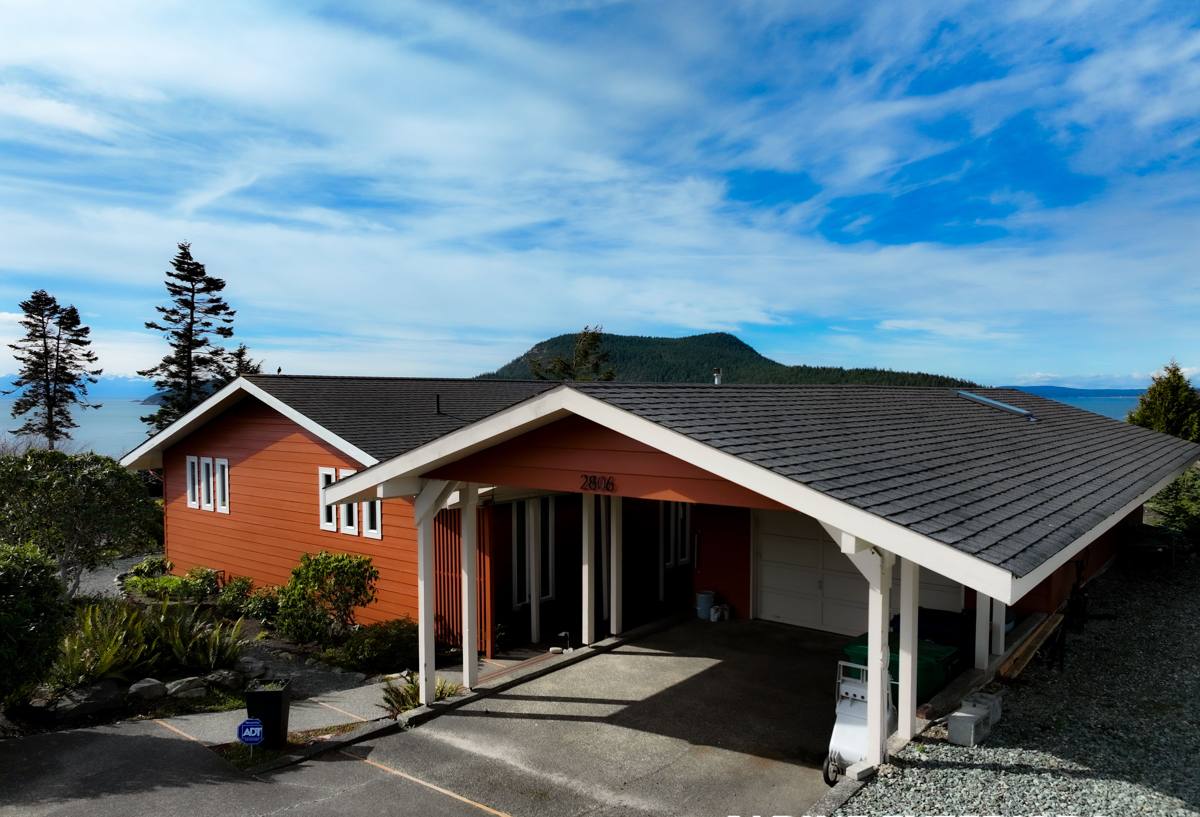
What Salt Air, Rain, and Moss Actually Do to a House
Each of these three factors attacks a home differently, and understanding the difference helps explain why some exteriors hold up for decades in this area and others need attention every few years.
Salt Air
Airborne salt is corrosive to exposed metal — fasteners, flashing, gutter hardware, and hinges all age faster near the water than they do a few miles inland. It also degrades some paint and coating systems over time, causing chalking, fading, and adhesion failure well before a product's rated lifespan is up.
Driving Rain
Rain that comes in sideways during coastal storms doesn't just run down a wall, it gets forced into seams, laps, and fastener penetrations that would stay dry in a calmer climate. Any weak point in the water-management layer behind the siding — a gap in house wrap, a poorly flashed window, a butt joint that wasn't sealed correctly — becomes a real entry point for moisture here in a way it might not in a drier region.
Moss and Algae Season
Shaded north- and west-facing walls, roof valleys, and anything under tree cover stay damp for long stretches of the year. That's exactly what moss and algae need to establish. Left alone, moss holds moisture directly against roofing and siding surfaces, which shortens the life of materials that aren't built to handle sustained dampness.
Siding: Why We Only Install James Hardie
Siding is the front line against all three of the conditions above, and it's also where material choice matters most. Chuckanut Exterior Companies installs James Hardie fiber cement siding exclusively. We don't install vinyl, LP SmartSide, cedar, primed spruce, Cemplank, or Allura, and in a climate like Silver Beach's, that's a deliberate standard, not a limitation.
Vinyl siding can warp and become brittle with age, and its seams and J-channels give wind-driven rain more opportunities to find a way behind the cladding. Wood-based siding products — cedar, primed spruce, and OSB-based options like LP SmartSide — perform fine when maintained aggressively, but they're organic materials, and organic materials are exactly what moss, mildew, and moisture-driven rot go after. In a climate with this much sustained dampness, that maintenance burden compounds fast: repainting, caulking, and moisture inspections become an every-few-years commitment rather than a once-a-decade one.
James Hardie fiber cement is non-combustible, doesn't support moss growth the way wood fiber products do, and holds its factory-applied ColorPlus finish far longer than field-applied paint on wood or vinyl. It's also engineered in HZ5 and HZ10 formulations specifically for wetter climates like the Pacific Northwest, meaning the product itself is designed around the conditions Silver Beach homes actually deal with. Combined with a strong transferable warranty, it's the product we're comfortable standing behind on a coastal home.
Siding Material Comparison for This Climate
| Material | Salt Air Resistance | Moisture / Moss Behavior | Typical Maintenance |
|---|---|---|---|
| James Hardie Fiber Cement | Strong — non-organic, factory finish | Doesn't feed moss/mildew growth | Occasional wash, no repainting for years |
| Vinyl | Moderate — can chalk, fade, warp | Seams allow moisture intrusion behind panel | Low, but panel replacement common over time |
| Cedar / Primed Spruce | Weak without diligent upkeep | Organic material, prone to moss and rot | Frequent repainting, sealing, inspection |
| LP SmartSide (OSB-based) | Moderate, edge-sealing critical | Vulnerable at cut edges and seams if not maintained | Regular inspection of seams and caulking |
Roofing That Handles a Long Moss Season
Roofs in Silver Beach face the same fight as siding, just at a steeper angle and with gravity working against runoff in the wrong spots. Moss growth in valleys, along ridge lines, and under overhanging trees is one of the most common issues we see on homes in this area, and it's rarely just cosmetic — moss holds water against the roofing surface, which accelerates wear on shingles and can work its way under flashing over time.
Good roofing work here means correct underlayment and flashing detail at every penetration and valley, proper ventilation so moisture doesn't get trapped from underneath, and material choices that hold up to sustained damp conditions rather than just heavy rain events. We also look at gutter and downspout sizing, since undersized or clogged gutters during a hard coastal rain send water somewhere it shouldn't go — often straight down the siding or into the fascia.
Windows: Keeping Salt Air and Rain Where They Belong
Window failures near the water tend to show up in two places: hardware and seals. Cheaper hardware corrodes faster in salt air, leading to sticking sashes and locks that stop working smoothly within a few years. Failed seals and poor flashing around the window opening let driving rain track behind the frame, which can lead to hidden rot in the wall assembly long before there's any visible sign inside the house.
When we replace windows in Silver Beach, flashing and integration with the siding get as much attention as the window unit itself. A high-quality window installed with a poor flashing detail will leak eventually in this climate — the window brand matters less than the installation matters here.
Decks Built for a Marine Environment
Outdoor living spaces take the most direct hit from this climate because they're fully exposed to sun, salt, and rain with none of a wall's protective layers behind them. Fasteners and hardware need to be rated for coastal/marine exposure, not standard exterior-grade, or they'll corrode and stain the decking around them. Decking material and ledger board attachment both need to account for a long wet season — standing water and poor drainage at the ledger connection is one of the more common problems we find on older decks in this area.
Whether it's a full rebuild or replacing an aging deck attached to a home we're also re-siding, we build with corrosion-resistant hardware and drainage details suited to what this specific location actually deals with, not generic specs pulled from a drier region.
Why a Local Crew Matters in This Neighborhood
A lot of exterior problems in Silver Beach aren't unique — they're the predictable result of a coastal, wet, tree-shaded climate meeting materials or installation details that weren't built for it. Knowing that in advance changes how the work gets planned: where extra flashing attention goes, which elevations need the most moisture protection, and which products are worth ruling out entirely for a house in this location.
That's the advantage of a crew that works Whatcom County's coastal neighborhoods regularly rather than treating every job as a one-off. We show up already knowing what Silver Beach homes are up against.
Homeowner Checklist: Signs Your Exterior Needs Attention
- Moss or dark streaking building up on roof valleys, ridges, or shaded siding sections
- Peeling, chalking, or fading paint on wood or vinyl siding
- Sticking windows or locks that have gotten harder to operate over time
- Soft or discolored decking boards, especially near the ledger board or support posts
- Rust staining around fasteners, flashing, or gutter hardware
- Gutters overflowing or pulling away from the fascia during heavy rain
Getting Started
If you're noticing any of the signs above, or you're simply due for an honest look at how your siding, roof, windows, or deck are holding up to Silver Beach's conditions, we're happy to take a look. We'll tell you straight what's actually needed versus what can wait. Reach out for a free, no-pressure estimate using the form below.