 Chuckanut Exterior
 Decks in Bellingham Face a Different Set of Problems
A deck built the same way you'd build one in a dry inland climate does not hold up in Bellingham. Between the salt-laden air coming off the water, the sheer volume of driving rain Whatcom County sees over the course of a year, and a moss season that can stretch from fall through spring, the materials and details that work fine elsewhere in Washington often fail early here. We build custom decks for Bellingham homeowners specifically around these conditions, not around a generic spec sheet.
This page covers what actually matters for a deck in this neighborhood: material choice, structural details, drainage, hardware, and the kind of maintenance that's realistic to expect. If you're planning a new deck or replacing one that's failing early, this is the information that should shape the decision.
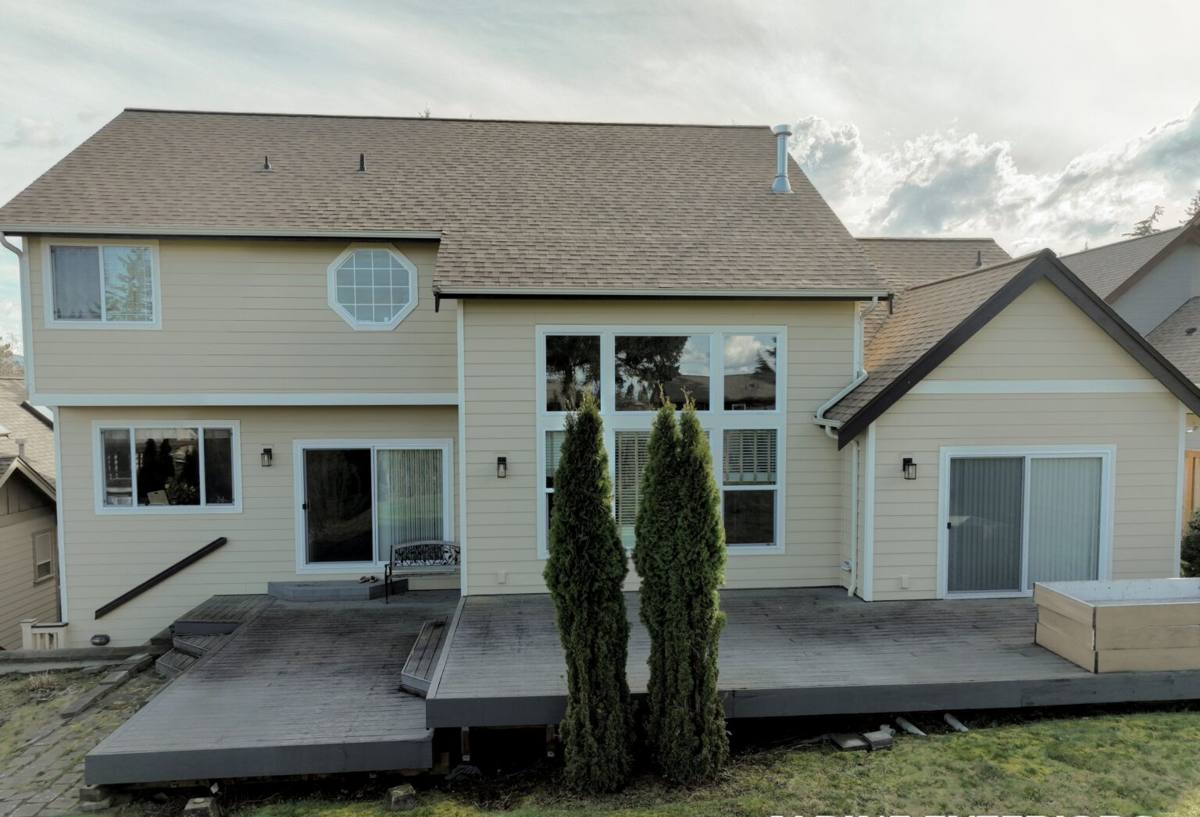
What Salt Air, Rain, and Moss Actually Do to a Deck
Salt Air
Airborne salt accelerates corrosion on anything metal — fasteners, joist hangers, railing hardware, screws. On a deck near the water, standard exterior-rated hardware can start showing rust and pitting years before it would inland. Once a fastener corrodes, it weakens, and a weak fastener in a structural connection is not a cosmetic issue.
Driving Rain
Rain that comes in sideways gets under flashing, behind ledger boards, and into end grain that isn't sealed. Over time this shows up as soft spots, rot at the house connection, and boards that cup or crack. The volume of rain Whatcom County gets in a normal year means a deck here spends far more cumulative hours wet than a deck in most of the country — every detail that's "good enough" in a drier climate gets tested here, repeatedly.
Moss
Moss needs moisture, shade, and time — Bellingham's long wet season provides all three. Moss on deck boards isn't just an appearance problem. It holds water against the surface, keeps wood decking damp longer than it would otherwise stay, and makes boards slick and dangerous underfoot. Moss also grows in fastener heads, screw slots, and gaps between boards, which traps moisture in exactly the spots most prone to rot.
Choosing the Right Decking Material for This Climate
There's no single "correct" material for every project — it depends on budget, the look you want, and how much upkeep you're willing to do. Here's how the common options actually perform under Bellingham conditions specifically:
| Material | Moisture & Moss Resistance | Maintenance Required | Realistic Notes for This Climate |
|---|---|---|---|
| Pressure-treated pine | Fair — treatment resists rot but surface still holds moss | Annual cleaning, periodic sealing | Lowest upfront cost; needs the most consistent upkeep to avoid moss buildup and graying |
| Cedar | Good — naturally rot-resistant, but softer surface | Regular cleaning, re-oiling to maintain color | Popular locally for its look, but exposed cedar left unsealed will silver and can develop moss in shaded areas |
| Composite decking | Very good — doesn't rot, less hospitable to moss | Periodic washing, no sealing or staining | Higher upfront cost, but the lowest long-term maintenance burden in a wet, mossy climate |
| PVC decking | Excellent — fully synthetic, no organic material for rot | Occasional washing | Highest upfront cost; best moisture performance of the group, worth it for shaded, damp-prone sites |
For decks in shaded, damp spots — under tree cover or on the north side of a house — we lean harder toward composite or PVC, because those are exactly the conditions where wood-based products struggle most with moss and moisture retention. For open, sunnier sites, a well-maintained cedar or treated deck can perform reasonably well.
Structural and Drainage Details That Matter Here
The decking surface gets the attention, but most early deck failures we see start underneath, where nobody's looking.
Ledger Board Attachment
The ledger board — where the deck attaches to the house — is the single most common point of water intrusion and structural failure on a deck. It needs proper flashing that directs water away from the house framing, not just caulk, which fails over time and is not a substitute for flashing.
Joist Protection
Untreated or unprotected joist tops trap water in the fastener holes where hangers and screws penetrate the wood. Joist tape or an equivalent moisture barrier on top of each joist keeps water from sitting in those penetration points, which matters more in a climate where the wood rarely gets a long stretch to fully dry out.
Board Spacing and Airflow
Gaps between deck boards need to be sized to allow water to drain through and air to circulate underneath. Too tight, and you get standing water and trapped debris that feeds moss growth. Underneath the deck, adequate clearance and drainage prevent the crawlspace from staying perpetually damp.
Footings
Footings need to be set to the depth required for this soil and frost conditions, and positioned so water doesn't pool against the post base. A footing sitting in standing water for months at a time is a slow structural problem, even if it doesn't fail in year one.
Hardware and Fasteners: Where Salt Air Does the Most Damage
This is one of the most overlooked details on decks near the water. Standard galvanized fasteners can corrode faster than expected in a salt-air environment, and a corroded fastener in a structural joist hanger or ledger connection is a real safety issue, not just an eyesore. We use stainless steel or high-grade coated fasteners and connectors rated for coastal exposure on structural connections, and we match fastener type to the decking material to avoid the staining and premature wear that happens when the wrong screw meets the wrong board.
Our Process for a Bellingham Deck Build
- On-site assessment of sun exposure, drainage, existing structure (for replacements), and how exposed the site is to weather and salt air
- Material recommendation based on your budget, how much maintenance you want to do, and the specific conditions of your yard
- Design and layout planning, including railing style, stairs, and any structural connections to the house
- Permitting through Whatcom County or the City of Bellingham as required for the scope of work
- Proper flashing, joist protection, and corrosion-resistant hardware built in from the start — not offered as an upgrade
- Final walkthrough covering drainage, board spacing, and what maintenance to expect from the material you chose
Realistic Maintenance Expectations by Material
Every deck needs some maintenance in this climate — the question is how much and how often. Wood decks need an annual cleaning at minimum to knock back moss and mildew before it takes hold, plus periodic sealing or staining to keep water from penetrating the surface. Composite and PVC decks need far less — mostly periodic washing to keep organic buildup from accumulating in the grain pattern — but "low maintenance" doesn't mean "no maintenance." Even composite surfaces in a consistently shaded, damp spot can develop a moss film if never cleaned.
A simple seasonal routine catches most problems before they become expensive:
- Clear leaves and debris from between boards and off the surface regularly through fall
- Wash the deck surface at least once a year to remove moss spores before they establish
- Check railings and stair connections for looseness or corrosion once a year
- Reseal or re-stain wood decking on the schedule appropriate for that product, not just when it looks faded
- Keep gutters and downspouts near the deck clear so runoff isn't dumping extra water onto the structure
Why a Crew That Already Works Bellingham Makes a Difference
A deck built to a generic national spec is not the same as a deck built for this specific microclimate. Knowing how much rain this area actually gets in a wet winter, how aggressively moss establishes on a shaded north-facing deck near the water, and how fast standard hardware corrodes in salt air changes real decisions — which fasteners to spec, how much drainage slope to build in, which materials are worth the extra upfront cost. A crew that works Bellingham regularly makes those calls from experience with this exact climate, not from a manual written for somewhere drier.
Local permitting familiarity matters too — knowing what Whatcom County and the City of Bellingham require for deck construction, and building to it the first time, avoids delays and rework.
Get a Straightforward Estimate
If you're planning a new deck or need to replace one that's showing rot, moss buildup, or corroded hardware, we're happy to take a look and give you an honest read on what your site needs. There's no pressure and no cost to get an estimate — use the form below to get started.