 Chuckanut Exterior
 Exteriors Built for Life Near Chuckanut Bay
Larrabee sits in one of the more exposed pockets of Whatcom County — close enough to the water to catch salt-laden wind off Chuckanut Bay, and tucked under enough tree cover from Chuckanut Mountain to stay damp and shaded for long stretches of the year. That combination is tougher on a home's exterior than most inland Bellingham neighborhoods ever see. Salt air accelerates corrosion on fasteners and metal trim. Overhanging conifers drop needles and organic debris into gutters and valleys. And the region's long, low-intensity rain season keeps siding, roofing, and deck surfaces wet for days at a time instead of drying out between storms.
None of this means a home in Larrabee is destined for constant repairs. It means the materials and workmanship have to match the environment. We've built our whole approach — and our decision to install only James Hardie fiber cement siding — around what actually holds up out here, not what looks fine on a spec sheet.
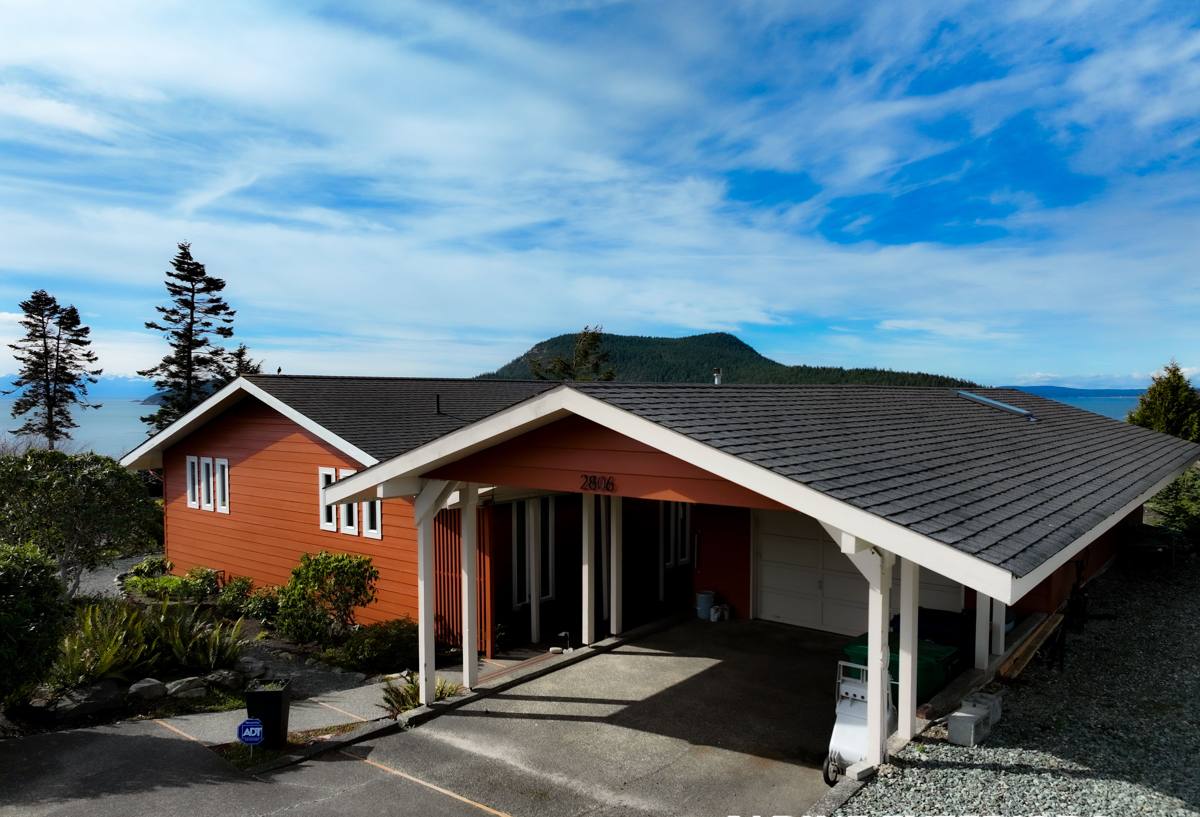
What Salt Air, Rain, and Moss Actually Do to a House
Salt Air and Metal Fatigue
Homes within a mile or two of Puget Sound waters deal with airborne salt that settles on every exterior surface. Over years, it works on unprotected or poorly coated metal — fasteners, flashing, gutter hangers — causing rust streaks, weakened joints, and premature failure at points you can't always see from the ground.
Moss, Algae, and Constant Moisture
Shaded, tree-covered lots like many in the Larrabee area rarely get a full day of direct sun on north- and east-facing walls. That keeps moisture sitting on siding and roofing longer than it would in an open, sunny yard. Moss and algae take hold in that environment, and once established they hold water against the surface underneath them — which is a bigger problem for some siding materials than others.
Driving Rain and Wind-Driven Water
Storms coming off the water don't just fall straight down — wind pushes rain sideways into wall assemblies, window frames, and deck ledger connections. Over time, any weak point in flashing, caulking, or siding laps becomes an entry point for water intrusion, which is where rot and hidden damage start.
Why We Install Only James Hardie Fiber Cement Siding
We get asked why we don't offer vinyl, LP SmartSide, cedar, or other fiber cement brands like Cemplank or Allura. The honest answer is that we've standardized on one product because it holds up consistently in exactly the conditions Larrabee homes face:
- Non-combustible core — fiber cement doesn't feed a fire the way wood-based products can, which matters in a region where wildfire smoke seasons have become a real concern even west of the Cascades.
- Moisture-resistant by design — Hardie's fiber cement doesn't absorb and swell like engineered wood siding can when it stays wet for extended periods, which is a real risk under heavy tree canopy.
- Factory-applied ColorPlus finish — the finish is baked on in a controlled environment rather than field-applied, so it resists fading and moisture penetration better than site-painted wood or primed products that need a paint job soon after install.
- Climate-engineered HZ product lines — Hardie makes region-specific formulations for wetter, cooler climates like ours, rather than a one-size-fits-all product.
- A strong, transferable warranty — backed by a large, established manufacturer, which matters more on the wet side of Washington than in drier climates where siding gets an easier life.
We're not saying every other product is unusable everywhere. We're saying that for the specific moisture load, shade, and salt exposure common around Chuckanut and Larrabee, we don't think it's honest to sell a homeowner something we don't believe will perform as well over 20-30 years. Vinyl can warp and fade under UV and temperature swings; primed wood and engineered wood need more diligent maintenance to keep moisture out at seams and cuts; cedar looks great new but demands ongoing sealing and refinishing to resist the rot risk that comes with constant dampness. Hardie fiber cement, installed correctly, is the product we're willing to put our name behind here.
Roofing for Heavy Rain and Overhanging Tree Cover
Roofs in tree-shaded, coastal-adjacent neighborhoods take a different kind of abuse than roofs in open, sunny developments. Needle and leaf litter collects in valleys and behind chimneys, holding moisture against roofing material and clogging gutters faster than homeowners expect. Moss gets a foothold on north-facing slopes that stay shaded most of the day, and if left unchecked it can lift shingle edges and hold water against the deck below.
Our roofing work in this area focuses on the details that matter most given that exposure: proper flashing at every valley, chimney, and penetration; ventilation that lets the roof deck dry out between rain events instead of trapping moisture; and gutter and downspout capacity sized for the volume of water and debris a tree-covered lot actually produces — not just a generic minimum.
Windows: Keeping Water Out and Comfort In
Older windows in coastal Whatcom County homes often show their age through condensation between panes, drafts, and soft trim where water has worked its way in around the frame. In a climate with persistent rain and salt-laden wind, window flashing and sealant details matter as much as the glass itself. Replacement windows installed with correct flashing integration into the wall assembly stop water from tracking behind the siding — which is often a bigger contributor to hidden rot than people realize. Beyond moisture control, updated windows also cut down on heat loss during the long, damp winter stretch this area sees, which shows up as a real difference in comfort and energy bills.
Decks: Built for Shade, Wet Winters, and Salt Exposure
Decks in shaded, moisture-heavy yards face a harder job than decks in open, sunny lots. Ledger board connections, joist hangers, and any fastener exposed to the weather need corrosion-resistant hardware given the salt air off the bay. Decking material that doesn't shed water and dry quickly becomes a magnet for moss and slick algae growth, which is both a maintenance headache and a slip hazard. We build and repair decks around proper drainage, ventilated framing, and fasteners rated for coastal exposure, so the structure underneath isn't quietly failing while the surface still looks fine.
Why a Local Crew Matters Here
A crew that works across Whatcom County, rather than flying in from out of the area for a single job, knows which walls in a neighborhood like Larrabee take the worst weather, which roof slopes hold moss the longest, and how much rain-driven wear to expect between the water and the mountain. That local knowledge shapes real decisions — where to add extra flashing, which sides of a house need a tougher moisture strategy, how to sequence work around a wet forecast instead of guessing. It also means someone is actually reachable nearby if a warranty question or a maintenance concern comes up years down the road, instead of chasing down a company that only worked in the area once.
What to Expect From an Estimate and Project
- An on-site walk-around to look at current siding, roofing, window, and deck condition, with attention to shaded walls, moss buildup, and any signs of past water intrusion.
- A straightforward conversation about what's actually needed now versus what can reasonably wait, without upselling work that isn't warranted.
- A written estimate that breaks out material and labor so you can see where the cost is going.
- A realistic timeline that accounts for the region's rain patterns — some exterior work simply has to wait for a dry window, and we'll tell you that upfront rather than rushing it.
Cost Factors to Understand Before You Budget
Every property is different, but these are the variables that most affect exterior project costs in a climate and setting like Larrabee's:
| Factor | Why It Matters Here |
|---|---|
| Tree cover and shade | More moss and organic debris means more prep work and sometimes added ventilation detailing |
| Proximity to the water | Higher salt exposure calls for corrosion-resistant fasteners and hardware, which affects material choice |
| Existing moisture damage | Hidden rot behind old siding or around windows isn't visible until removal, and can add scope once uncovered |
| Roof pitch and complexity | Steeper or more cut-up rooflines take longer to flash correctly and generate more waste |
| Access to the home | Sloped or wooded lots common in this area can affect staging, scaffolding, and material delivery |
A Homeowner's Seasonal Exterior Checklist
- Clear gutters and downspouts of needles and leaf litter at least twice a year, more often under heavy tree cover.
- Walk the property after the first hard rain of fall and look for water pooling near the foundation or deck posts.
- Check north- and east-facing siding and roof sections for moss or algae buildup before it spreads.
- Inspect deck fasteners and ledger connections annually for rust or looseness, especially near the water.
- Look at window sills and interior trim for soft spots or discoloration that could signal water tracking in from outside.
- Have a professional check flashing at roof valleys, chimneys, and wall penetrations every few years, since these are the most common failure points in wet climates.
If you're noticing moss creeping up your siding, a musty smell near a window, or a deck that never quite dries out, it's worth having a local crew take a look before small issues turn into structural ones. We offer free, no-pressure estimates for siding, roofing, window, and deck work throughout the Larrabee and Chuckanut area — reach out through the form below and we'll walk the property with you.