 Chuckanut Exterior
 Why Siding Replacement Looks Different in Bellingham
Bellingham sits in a climate that is genuinely hard on the outside of a house. You've got marine air rolling off Bellingham Bay carrying salt and moisture, long stretches of driving rain off the Puget Sound weather systems, and a shade-and-damp cycle in fall and winter that keeps moss and mildew active for months at a time. Add in the tree cover common on many Bellingham lots, and you get siding that rarely gets a chance to fully dry out between weather events. That combination is exactly what wears out the wrong siding material years before its time, and it's exactly what a correctly installed, climate-appropriate siding system is built to handle.
When we talk about "siding replacement in Bellingham," we're not just talking about a general Whatcom County job. Neighborhoods closer to the water deal with more salt exposure and wind-driven rain against west- and south-facing walls. Homes tucked under mature trees deal with more shade, more standing moisture, and more moss and algae growth on siding and trim. A siding job that doesn't account for which of these conditions applies to your specific house is a job that's guessing.
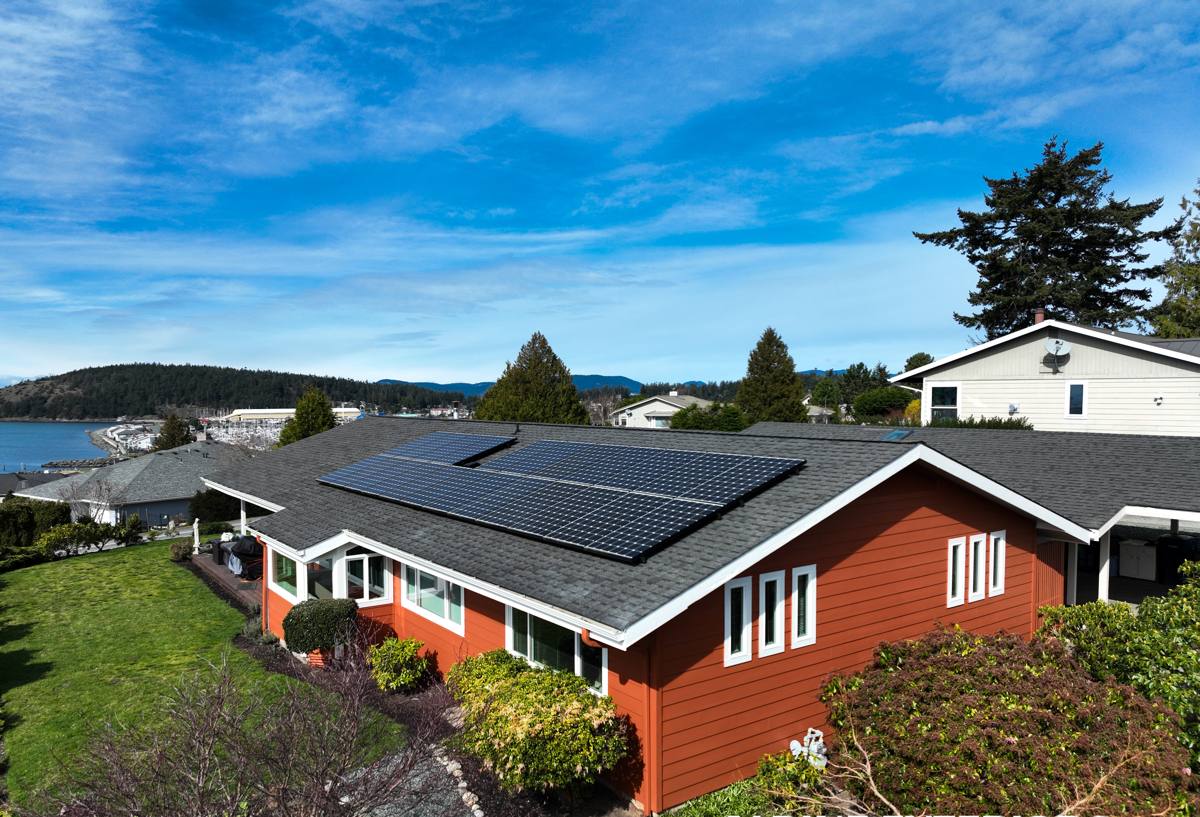
What Bellingham's Climate Actually Does to Siding
Salt Air and Moisture
Proximity to the bay means airborne salt settles on exterior surfaces and accelerates corrosion of fasteners, trim metal, and any siding material that isn't dimensionally stable when it absorbs moisture. Salt also holds moisture against a surface longer than plain rainwater does, which matters a lot when we're talking about materials that swell, cup, or delaminate when wet.
Driving Rain
Wind-driven rain doesn't just wet a wall — it forces water sideways and upward into laps, seams, and butt joints that were never designed to handle that kind of pressure. A siding system with weak water-shedding detail at the joints, or a water-resistive barrier and flashing package that was installed carelessly, will eventually let water behind the siding. Once water gets behind cladding in this climate, it doesn't dry out quickly.
Moss and Algae Season
Cool, damp, shaded conditions for a good chunk of the year mean moss, lichen, and algae aren't occasional problems here — they're a seasonal certainty on north-facing walls, under eaves, and anywhere airflow is limited. Some siding materials resist this kind of biological growth well. Others become a magnet for it, and the growth itself holds additional moisture against the surface, compounding the problem.
What a Correct Siding Replacement Involves
Replacing siding correctly is not just pulling off old boards and nailing up new ones. In a climate like Bellingham's, the work that happens before the new siding goes up matters as much as the siding itself.
- Full removal of old siding and inspection of the sheathing underneath for rot, soft spots, or prior water damage
- Repair or replacement of any damaged sheathing and framing before covering it back up
- Installation of a proper water-resistive barrier, lapped and sealed correctly at every seam
- Correct flashing at windows, doors, corners, and any penetration through the wall — this is where most water intrusion problems actually start
- Rainscreen or drainage gap detailing where appropriate, so any moisture that does get behind the cladding has a way to drain and dry
- Siding installed to the manufacturer's specified fastening pattern, clearances, and gapping — not "close enough"
- Properly sealed and caulked trim, corners, and penetrations using products rated for this climate
Skip or rush any one of these steps and the new siding may look fine for a year or two while a moisture problem builds behind it unseen. That's the failure mode we see most often when we're called out to look at a "siding problem" that's really a water-management problem.
Why We Install Only James Hardie Fiber Cement
Chuckanut Exterior Companies installs James Hardie fiber cement siding exclusively. We don't install vinyl, LP SmartSide, primed spruce, cedar, or other fiber cement brands like Cemplank or Allura. That's a deliberate standard, not a lack of options, and it's especially relevant to a climate like Bellingham's.
Vinyl siding is affordable and low-maintenance in a lot of climates, and it has real strengths — it doesn't rot, and it's quick to install. But it's a thin material that expands and contracts significantly with temperature swings, its seams and laps rely heavily on overlap rather than sealed joints, and in wind-driven rain it can allow more moisture to reach the wall assembly behind it than homeowners expect. It also tends to show its age faster in coastal, salt-exposed conditions — chalking, fading, and becoming brittle over time.
Wood-based products — cedar and primed spruce — look great when new and have real appeal, but wood is an organic material in a climate that rarely lets it fully dry out. That's a maintenance commitment: painting, caulking, and moisture monitoring on a schedule, indefinitely, or rot and moss growth move in. LP SmartSide (engineered wood) improves on solid wood's consistency but is still a wood-based product with strand board and resin construction — it depends heavily on intact factory coating and correctly sealed cut edges to keep moisture out, which is a bigger ask when a crew is working through Bellingham's wet-season install windows.
James Hardie fiber cement is non-combustible, doesn't rot, and is dimensionally stable — it doesn't swell and shrink with moisture the way wood-based products do, which matters directly in a marine, high-moisture climate. Hardie's HZ5 product line is engineered specifically for cold, wet, freeze-prone climates like ours in the Pacific Northwest. The ColorPlus factory finish is baked on under controlled conditions rather than field-painted, which means better fade and chip resistance than a job-site paint job, and a long, transferable warranty backs the product when it's installed to Hardie's specification.
None of that means fiber cement is maintenance-free — it isn't a "set it and forget it" product. But it starts from a materially stronger position against the specific things that wear siding out fastest here: standing moisture, salt exposure, and biological growth.
How the Main Siding Options Compare in This Climate
| Material | Moisture Behavior | Moss/Algae Resistance | Maintenance Burden |
|---|---|---|---|
| Vinyl | Sheds water on the surface but seams rely on overlap, not seal | Moderate — can be pressure washed | Low, but brittles and fades over time |
| Cedar / primed spruce | Absorbs moisture; slow to dry in shaded, damp conditions | Prone to growth without regular treatment | High — ongoing paint, caulk, and inspection |
| LP SmartSide | Depends on intact coating and sealed cut edges | Moderate with factory coating intact | Moderate — coating and seams need monitoring |
| James Hardie fiber cement | Dimensionally stable, doesn't swell or rot | Strong — dense, non-organic surface | Low to moderate — periodic cleaning and caulk checks |
Our Process for a Bellingham Siding Replacement
Every job starts with a walk-around of the house, not just a measurement of the walls. We're looking at which sides take the most wind-driven rain, where trees are shading and holding moisture against the house, where existing moss or algae growth tells us something about drainage and airflow, and whether there's any sign of hidden water damage at trim, corners, or penetrations. That inspection shapes the flashing and water-management plan before a single piece of siding gets ordered.
From there, the job moves through sheathing inspection and repair, water-resistive barrier and flashing installation, and then the Hardie siding itself, installed to the fastening and clearance specifications that keep the warranty valid and the assembly performing the way it's designed to. We also talk through color and profile up front — Hardie's ColorPlus lineup and lap or panel profiles give real choices without needing field painting, which matters for both appearance and long-term durability here.
Why a Crew That Already Works Bellingham Matters
Siding installation detail isn't generic — a crew that's used to installing in a hot, dry climate and a crew that's used to installing in the Pacific Northwest's wet, marine climate will make different calls on flashing overlap, sealant selection, and drainage detailing, because they're solving for different problems. A crew that already works Bellingham and greater Whatcom County knows which walls on a typical local house take the worst of the driving rain, understands how much moss and algae pressure to plan for on shaded elevations, and isn't learning HZ5 installation requirements on your house for the first time. That local, repeated experience shows up in the small decisions — where extra flashing goes, how much drainage gap to leave, which sealant actually holds up through a wet Whatcom County winter — that determine whether a siding job performs for decades or starts causing problems in five years.
Signs Your Bellingham Home May Need Siding Replacement
- Soft or spongy spots when you press on the siding, especially near the bottom of walls or under windows
- Visible cracking, cupping, or delamination, particularly on sun- or rain-exposed elevations
- Persistent moss, algae, or mildew that returns quickly after cleaning
- Peeling or bubbling paint, which often signals moisture trapped behind the surface
- Rising energy bills that suggest the wall assembly is no longer performing as an effective barrier
- Visible gaps, warping, or siding that's pulling away from the wall at seams and corners
Any one of these on its own might be minor. Several together, especially on a home that's had the same siding for fifteen-plus years, are usually a sign it's time for a real inspection rather than a patch repair.
If you're seeing any of these signs on your Bellingham home, or you're simply planning ahead for a siding replacement, we're happy to take a look and walk you through what your house actually needs — no pressure, no obligation. Use the form below to request a free estimate.