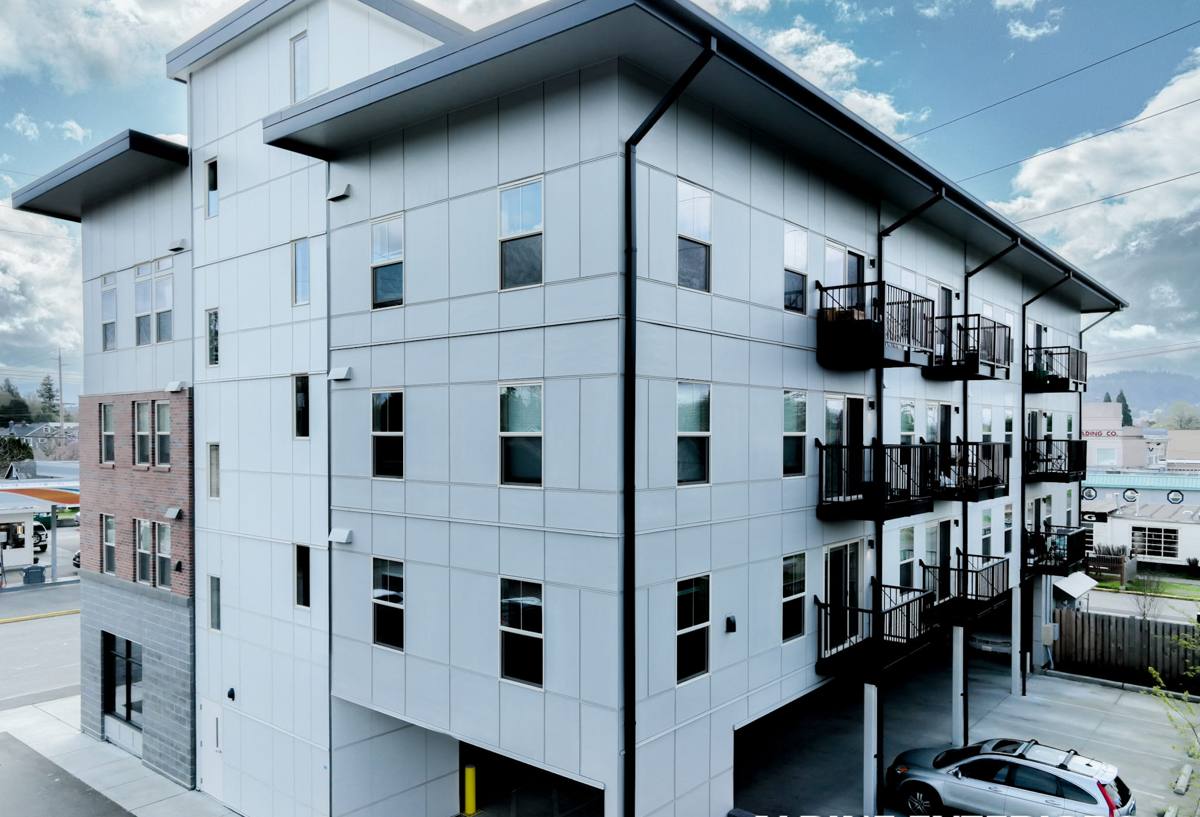
 Chuckanut Exterior
 Windows Built for Bellingham's Marine Climate
Bellingham sits close enough to the water that homes here deal with a version of weather that inland Whatcom County doesn't see quite the same way. Salt-tinged air off Bellingham Bay, wind-driven rain that comes in sideways during fall and winter storms, and a moss season that seems to stretch longer every year all put steady stress on window frames, seals, and sills. A window that's rated fine for a dry climate can still fail early here if it wasn't installed with this specific exposure in mind.
Window replacement in this area isn't just a cosmetic upgrade. It's a chance to correct water intrusion points, stop the slow rot that starts at the sill, and bring a home's thermal performance in line with what a Pacific Northwest winter actually demands. This page covers what that looks like done right, specifically for Bellingham homes.
What This Climate Does to Windows Over Time
Three factors do most of the damage to windows in this part of Whatcom County, and they compound each other over the years.
Salt Air and Corrosion
Homes within a few miles of Bellingham Bay or Chuckanut Bay see airborne salt settle on hardware, screens, and metal components. Over time this accelerates corrosion on lower-grade fasteners, hinges, and balance mechanisms, especially on the sides of a house that face the water or catch the prevailing wind.
Driving Rain
Rain in this region rarely falls straight down. Storms push it sideways against west- and south-facing walls, which means window assemblies get tested at the flashing, the sill pan, and the seal between the frame and the wall far more than they would in a calmer climate. A window that's watertight in a light rain can still leak under sustained wind-driven rain if the flashing detail wasn't done correctly at install.
Moss, Algae, and Prolonged Damp
Bellingham's long wet season keeps wood, vinyl tracks, and window sills damp for extended stretches. Moss and algae take hold in shaded, north-facing spots and in tracks that don't drain well, holding moisture against the frame and, on older wood windows, feeding rot at the sill and lower corners.
Signs a Bellingham Home Needs Window Replacement
Not every drafty window needs full replacement, but these signs usually mean it's time to stop patching and start planning a real fix:
- Fogging or a milky haze between the panes on double-pane units (the seal has failed and the gas fill is gone)
- Soft, spongy, or visibly rotted wood at the sill or lower corners
- Windows that are hard to open, close, or lock, especially older aluminum or wood units
- Visible moss, algae, or black staining building up in the tracks or on the sill each winter
- Noticeable drafts or cold spots near the window even when it's fully closed
- Condensation forming on the inside of the glass regularly through fall and winter
- Paint that keeps failing or bubbling on the interior or exterior trim around the frame
Any one of these on its own might be manageable. Several showing up on the same window, or across several windows on the same wall, usually points to a bigger moisture or seal problem worth addressing with replacement rather than repair.
What a Correct Installation Actually Involves
The window unit itself matters, but in this climate, the installation detail is what determines whether that window performs for the next twenty-plus years or starts leaking in five. A correct job includes:
- Removing the old unit and inspecting the rough opening and sill for hidden rot or water damage before anything new goes in
- Repairing or replacing any damaged sheathing, framing, or sill material found during that inspection
- Installing a proper sloped sill pan so any water that does get past the window drains outward, not into the wall
- Integrating new flashing correctly with the home's existing weather-resistant barrier, shingled so water always moves downward and out
- Shimming the unit level, plumb, and square, then fastening per the manufacturer's specifications, not just "close enough"
- Sealing the interior and exterior with the right materials at the right points, low-expansion foam or backer rod and sealant where appropriate, never foam alone as a substitute for flashing
- Testing operation, locking hardware, and weep holes before calling the job finished
Skipping any of these steps is how a brand-new, expensive window ends up with the same water damage the old one had, just a few years later.
Frame Material: What Holds Up in This Climate
There's no single "best" window material for every home, but each option has real trade-offs worth understanding before you decide.
| Material | How It Handles This Climate | Maintenance |
|---|---|---|
| Vinyl | Won't rot or corrode; handles damp and salt air well; performs consistently across seasons | Low — occasional cleaning, no painting |
| Fiberglass | Very stable in temperature swings, strong resistance to moisture and salt exposure, holds paint well if a custom color is wanted | Low to moderate |
| Wood-clad (wood interior, clad exterior) | Good insulating properties and interior appearance, but the exterior cladding must be properly sealed at every joint or moisture can work behind it | Moderate — interior wood needs occasional attention |
| Aluminum | Strong and slim profile, but conducts cold and is more prone to condensation and corrosion near salt air unless it's a well-built, thermally broken unit | Moderate — hardware needs monitoring near the water |
We don't install every product on the market, and that's by design. Some lower-cost frame assemblies and hardware packages are more sensitive to installation error or hold up poorly under sustained wind-driven rain and salt exposure, which shows up as callbacks and early failures. We'd rather steer a homeowner toward a product with a track record in this climate than install something that looks fine on day one and causes problems by year three.
Glass Package: What Actually Matters Here
Western Washington is a heating-dominated climate for most of the year, which means the U-factor (how well the window resists heat loss) matters more here than the solar heat gain coefficient that gets emphasized in hotter climates. For most Bellingham homes, a solid Low-E double-pane package with argon fill hits the right balance of performance and cost. Triple-pane is worth considering on north-facing walls, homes near busy roads where sound matters, or for homeowners specifically chasing the lowest possible heating bills, but it's not a requirement for every window in every room.
Our Process for Bellingham Window Replacement
We keep the process straightforward and try to avoid surprises once the crew is on site.
- On-site assessment — we look at each window individually, note sill and framing condition, and flag anything unusual before quoting
- Honest recommendation — we tell you which windows need full replacement, which could reasonably wait, and why
- Accurate measurement and ordering — units are ordered to the actual openings, not standard sizes
- Removal and inspection — old windows come out carefully, and we check for hidden rot or water damage before installing anything new
- Correct installation — sill pans, flashing, shimming, and sealing done to spec, not shortcuts
- Cleanup and final walkthrough — every window operated, checked, and reviewed with you before we consider the job done
Why Local Experience in Bellingham Matters
A crew that regularly works Bellingham and the surrounding Whatcom County area has already seen how this specific coastline treats windows. That means knowing which walls take the worst of the driving rain, understanding how older housing stock in this area was originally built and flashed, and having a realistic sense of how a given product will hold up here versus how it performs in a manufacturer's brochure. It also means being available for a warranty question or a follow-up visit without a long drive, and knowing local permitting expectations without having to learn them on your job.
A Quick Checklist Before You Decide
- Confirm the contractor inspects the sill and framing, not just the window itself
- Ask specifically how flashing will be integrated with your home's existing weather barrier
- Get the U-factor and glass package spelled out in writing, not just "energy efficient"
- Ask what happens if hidden rot or water damage is found once the old window comes out
- Confirm what's covered under warranty — the product, the installation labor, or both
- Check that the timeline accounts for Whatcom County's wet season, not just fair-weather scheduling
Getting Started
If your windows are fogging, drafting, sticking, or showing rot at the sill, it's worth having them looked at before another wet Bellingham winter makes the problem worse. We're happy to walk through your home, point out what we see, and give you a straightforward, no-pressure estimate — no obligation, no pushy sales pitch. Use the form below to get started.