 Chuckanut Exterior
 Exteriors Built for Columbia's Climate, Not Just Any Climate
Columbia sits close enough to the water and the hills around Chuckanut that its homes take a specific kind of beating year after year. It's not one dramatic storm that wears a house down here — it's the steady combination of salt-laden air, driving wind-blown rain, and a moss season that seems to stretch longer every year. Add in Whatcom County's damp shoulder seasons, where morning fog and afternoon drizzle trade off for weeks at a time, and you've got an environment that punishes exterior materials that were never engineered for it.
We work on homes throughout this area regularly, and the patterns repeat: north-facing walls that never fully dry out, deck boards that stay slick with algae from October through April, window frames swelling and sticking, and roofs holding onto moss mats that trap moisture against the shingles. None of this is unusual for the Pacific Northwest — but it does mean an exterior contractor who treats Columbia like anywhere else in the country is setting a homeowner up for problems.
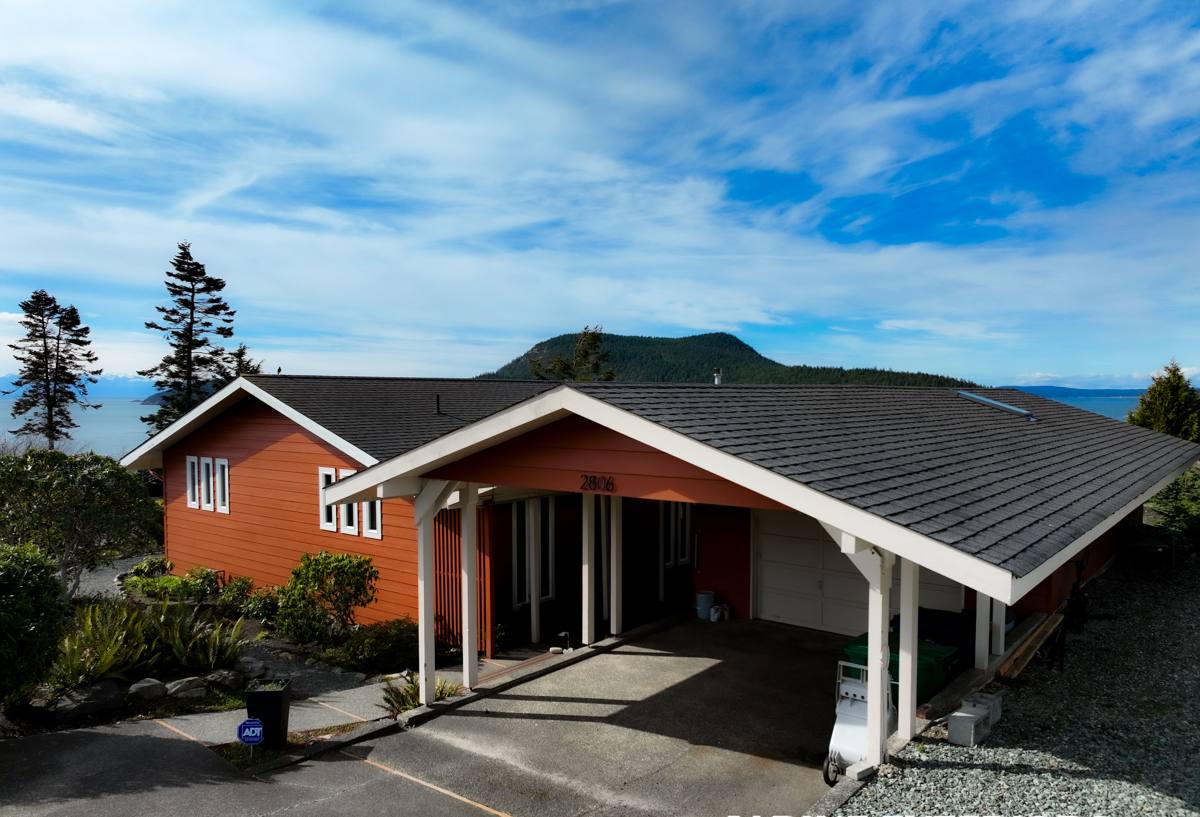
What Columbia Homes Are Actually Up Against
Salt Air and Corrosion
Proximity to Puget Sound air means airborne salt settles on siding, trim, fasteners, and metal roofing components. Over time, salt exposure accelerates corrosion on unprotected metal and can degrade paint films faster than inland homes ever experience. This is one of the main reasons material choice matters so much here — a coating or cladding system that holds up fine forty miles inland can fail early a few miles from the water.
Driving Rain
Wind-driven rain doesn't just fall — it gets pushed sideways into seams, laps, and joints that were never designed to handle water moving horizontally. Siding systems with weak butt joints, poor caulking practices, or materials that swell when saturated are the first to show it, usually as staining, bubbling paint, or soft spots at corners and around windows.
Moss and Constant Moisture
Whatcom County's moss season can run eight months or more in shaded, north-facing, or tree-covered areas — which describes a lot of Columbia's lots. Moss holds water against roofing and siding surfaces long after a storm has passed, and that sustained dampness is exactly the condition that rots wood, delaminates weak composites, and shortens the life of anything not built to shrug off standing moisture.
Siding: Why Material Choice Is the Whole Ballgame Here
We install James Hardie fiber cement siding exclusively. We don't install vinyl, LP SmartSide, Cemplank, Allura, primed spruce, or cedar, and in a climate like Columbia's, that's not a marketing position — it's a practical one built on what actually holds up.
- Vinyl can warp and buckle under temperature swings and doesn't offer the impact resistance homeowners often assume; sun and salt exposure can also fade it unevenly over time.
- Wood-based composite siding (LP SmartSide) uses engineered wood strand technology that, while treated, is still an organic material at its core — in a region with this much sustained moisture, any breach in the factory coating or field-applied caulking becomes an entry point for water and eventual swelling at edges.
- Cemplank and Allura are both fiber cement products and share the same core material category as Hardie, but we've standardized on Hardie specifically for its ColorPlus factory finish, its HZ5 climate-engineered formulation for wet Pacific Northwest conditions, and the depth of installer training and warranty backing behind it.
- Primed spruce and raw cedar are beautiful materials, but they demand an ongoing maintenance commitment — re-staining or repainting on a strict cycle — that most homeowners underestimate until the first signs of graying, cupping, or rot show up, especially on the wetter, shadier sides of a Columbia lot.
James Hardie fiber cement is non-combustible, dimensionally stable in wet-dry cycling, and factory-finished with ColorPlus technology so the color coat is baked on before it ever reaches your house — not applied on-site where weather and technique introduce variability. For a climate that alternates between soaking rain and salt air, that stability matters more than it does almost anywhere else in the country.
Roofing: Moss Isn't Just Cosmetic
A mossy roof in Columbia isn't just an eyesore — it's a moisture trap. Moss holds water against shingles, works into laps and fastener lines, and can lift shingle edges over time, which is exactly where wind-driven rain finds its way in. Our roofing work focuses on details that matter in this specific climate: proper underlayment and flashing at valleys and penetrations, ventilation that lets a roof deck actually dry out between rain events, and material choices that resist moss colonization better than bargain-tier options.
We also look at the whole system, not just the shingles. A roof that's shedding water correctly but venting poorly will still trap moisture in the attic, which shows up later as sheathing rot or mold — problems that are far more expensive to fix than the roof itself.
Signs a Columbia Roof Needs Attention
- Visible moss or algae streaking, especially on north-facing slopes
- Granule buildup in gutters (a sign shingles are breaking down)
- Soft spots or sagging along the roofline
- Daylight visible around flashing or vent boots
- Water stains on interior ceilings after heavy rain
Windows: Sealing Out Sideways Rain
Driving rain finds weak points at windows faster than almost anywhere else on a house. Old or poorly flashed windows in Columbia often show it as staining below the sill, fogging between panes, or drafts that seem to get worse every wet season. When we replace windows, flashing detail and proper integration with the siding system get as much attention as the window unit itself — a great window installed with poor flashing will leak just as much as a bad one.
Energy performance matters too. Homes here run heat and dehumidification for a good chunk of the year, and older single-pane or poorly sealed windows lose a surprising amount of that conditioned air. Upgrading windows alongside a siding project is common because it lets us address flashing and water management as one continuous system rather than patching around an existing window.
Decks: Built for Standing Water and Slippery Wet Months
Outdoor living in the Pacific Northwest means building for the wet months, not just the two or three dry ones. Deck framing, fasteners, and ledger connections all need to handle sustained moisture without trapping water against wood long-term. We pay close attention to proper flashing at the ledger board (a common rot point on older decks), drainage under the decking itself, and fastener choices that won't corrode from salt exposure over the years.
Surface material matters for safety as much as longevity — a deck that stays slick with algae for half the year is a fall risk, not just a maintenance headache. We talk through composite versus wood options with every homeowner based on how much upkeep they actually want to commit to.
Cost Factors Homeowners in Columbia Should Understand
| Factor | Why It Matters Locally |
|---|---|
| Siding material | Fiber cement costs more upfront than vinyl but avoids the recurring maintenance and premature failure risk that salt air and driving rain accelerate |
| Roof ventilation upgrades | Sustained moss season means poor venting shows up as deck rot faster here than in drier regions |
| Window flashing detail | Sideways rain punishes shortcuts at window openings more than vertical rain does |
| Deck ledger and framing | Chronic dampness accelerates rot at connection points if flashing is skipped or done poorly |
| Site shading/exposure | North-facing or tree-covered lots need moss-resistant material choices and more attention to drying time |
Why a Local Crew Matters More Than It Seems
Exterior work in this part of Whatcom County isn't generic construction — it's construction that has to account for a specific combination of salt exposure, wind-driven rain direction, and a moss season most of the country doesn't deal with at all. A crew that works this area regularly knows which details get skipped by out-of-town or low-bid contractors and where those shortcuts show up first: unflashed butt joints, under-vented roofs, deck ledgers without proper flashing.
We also know the practical side of working here — permitting expectations in Chuckanut and surrounding Whatcom County jurisdictions, realistic weather windows for exterior work, and how to sequence a project so open walls or roofs aren't left exposed when the forecast turns.
Our Process for Columbia Projects
- On-site assessment of existing siding, roofing, windows, or deck condition, with particular attention to moisture damage and moss buildup
- Honest discussion of material options and why we recommend what we recommend — including why we don't install certain products
- A clear, itemized estimate with no vague allowances
- Scheduling built around realistic weather windows, not just calendar convenience
- Installation to manufacturer spec, since most warranty voids trace back to installation shortcuts, not the material itself
- A final walkthrough before we consider the job done
Let's Take a Look at Your House
If moss, staining, drafts, or a slick deck have you wondering what your Columbia home actually needs, we're happy to take a look. Every estimate is free and no-pressure — we'll tell you honestly what we see and what we'd recommend, whether that's a full exterior overhaul or a smaller fix. Use the form below to get started.