 Chuckanut Exterior
 Exterior Work in Sehome, Chuckanut, Washington
Sehome sits close enough to the water and the hills around Chuckanut that its homes take a particular kind of beating year after year. It's not dramatic weather — no hurricanes, no hailstorms most years — but it's relentless. Salt-tinged air off the Sound, long stretches of driving rain, and a moss season that seems to start earlier every year all work slowly on siding, roofing, trim, windows, and decks. Chuckanut Exterior Companies works this neighborhood regularly, and the patterns we see on Sehome homes are consistent enough that we can usually tell what's going on with a house before we even get out of the truck.
We handle four things: siding, roofing, windows, and decks. We don't spread ourselves across kitchen remodels or gutter-cleaning subscriptions. That focus matters in a climate like this one, where the failure points are almost always at the connections between these systems — flashing where roof meets wall, trim where siding meets window, ledger boards where deck meets house. A crew that only does one of those systems tends to miss what's happening at the seams.
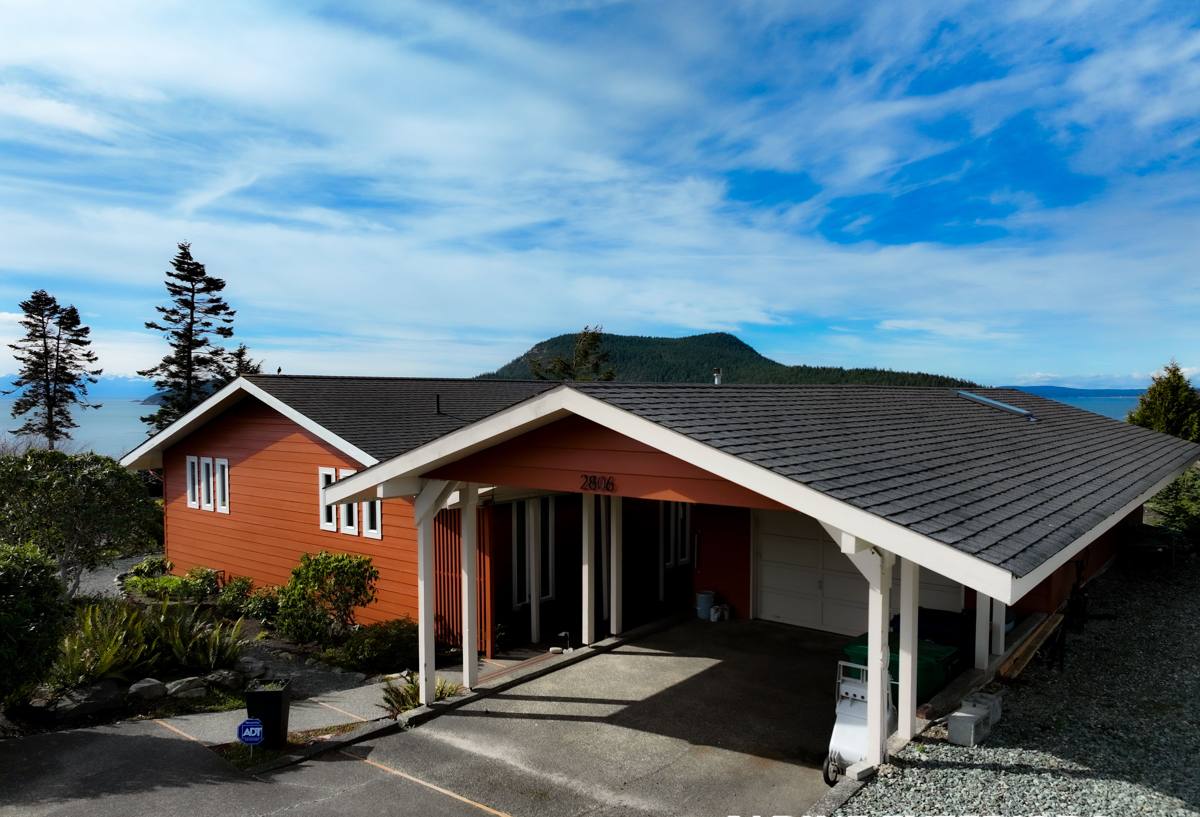
What Whatcom County's Climate Actually Does to a House
Salt Air
Sehome isn't waterfront, but it's close enough to the Salish Sea that airborne salt reaches exterior surfaces, especially on west- and south-facing walls that catch the prevailing weather. Salt exposure accelerates corrosion on fasteners, hardware, and some flashing metals, and it can speed the breakdown of certain paints and coatings over time. It's a slow process, but it's cumulative, and it's one reason material choice matters more here than it would somewhere landlocked.
Driving Rain
This part of Washington doesn't just get rain — it gets rain pushed sideways by wind for days at a stretch. That matters because a lot of exterior failures aren't about water landing on a surface, they're about water finding a horizontal or diagonal path into a wall assembly, a window frame, or a deck ledger. Systems that rely on face-sealing alone (rather than proper flashing and drainage planes) tend to struggle here over the long run.
Moss Season
Whatcom County's moss season isn't really a season anymore in practice — shaded north sides, tree-covered lots, and roofs with low pitch or poor airflow can stay damp enough to grow moss for most of the year. Moss holds moisture against roofing and siding surfaces far longer than open air would, and it works into seams, laps, and fastener heads. Left alone, it doesn't just look bad — it shortens the working life of whatever it's growing on.
Siding: Why We Only Install James Hardie Fiber Cement
We install James Hardie fiber cement siding exclusively. We don't install vinyl, LP SmartSide, Cemplank, Allura, primed spruce, or cedar, and that's a deliberate professional standard, not a sales pitch. Each of those products has real strengths — vinyl is inexpensive, engineered wood is lighter to install, cedar looks the way a lot of homeowners want a Pacific Northwest house to look. But every one of them asks a homeowner to accept a trade-off we're not willing to build into work with our name on it, especially in a climate that punishes shortcuts.
Vinyl can warp and fade, and it relies on gaps and laps rather than a hard, paintable surface — fine in dry climates, less convincing after a decade of driving Whatcom County rain. Engineered wood products are wood-based, which means the cut edges and any breach in the factory coating are vulnerable to the exact moisture exposure this area produces in volume. Cedar is beautiful but needs ongoing maintenance — staining, sealing, repainting — to hold up against sustained damp; skip a cycle or two and it shows. Primed spruce is essentially asking paint to do a job it was never built to do long-term in this climate.
James Hardie fiber cement is cement, sand, and cellulose fiber — it doesn't rot, it's non-combustible, and it doesn't feed pests. Hardie's HZ5 product line is specifically engineered for the kind of cold, wet, coastal-influenced climate that describes Whatcom County almost exactly. The factory-applied ColorPlus finish is baked on under controlled conditions, which holds color and resists the fading and peeling that field-applied paint eventually shows here. It comes with a strong transferable warranty, which matters if a Sehome home changes hands, as many eventually do.
Siding Installation Details That Matter Locally
- Correct fastener spacing and type to handle the corrosion pressure of salt-influenced air
- Proper flashing and a drainage plane behind the siding, not just a face seal, given how much wind-driven rain this area gets
- Factory-primed and factory-painted cut edges wherever a cut edge is exposed
- Attention to butt joints and caulking details, which are where most siding failures actually start
Roofing in a Wet, Mossy Climate
Roofing in Sehome has to account for two things at once: sustained rain volume and long damp periods that favor moss and algae growth. We look closely at underlayment quality, flashing at every penetration and wall intersection, and ventilation, since a roof deck that can't breathe stays damp longer and ages faster. Moss prevention starts with material choice and roof design as much as it does with cleaning — a roof that sheds water and dries out between storms will always outperform one that holds moisture against shaded, low-slope sections.
We also pay attention to how a roof interacts with the siding below it. A poorly flashed roof-to-wall transition is one of the most common sources of hidden water intrusion we find on older Sehome homes, and it's invisible from the ground until the siding or sheathing beneath it has already been compromised.
Windows: Sealing Out Wind-Driven Rain
Windows take the brunt of driving rain because they're full of seams — sash to frame, frame to rough opening, frame to siding. In this climate, we treat window flashing and integration with the surrounding wall assembly as seriously as the window unit itself. A high-quality window installed with poor flashing will leak eventually; a modest window installed correctly, with proper head flashing and drainage, usually won't. We also look at glazing performance for comfort and condensation control, since Whatcom County's damp, cool winters can make poorly sealed or single-pane windows prone to interior condensation and drafts.
Decks: Built for Year-Round Exposure
A deck in Sehome spends most of the year wet, shaded, or both, depending on the lot. The details that matter most are the ones underneath the visible surface: proper ledger board flashing where the deck attaches to the house, joist protection, and adequate drainage and airflow beneath the decking so moisture doesn't sit trapped against structural framing. Decking material choice affects maintenance load — some materials need regular sealing to hold up to this level of sustained moisture, others are lower-maintenance but cost more up front. We walk through those trade-offs with homeowners directly rather than defaulting to whatever is cheapest to install.
Common Exterior Problems We See in Sehome
| Symptom | Likely Cause | Climate Factor |
|---|---|---|
| Green or black staining on north-facing siding or roof | Moss, algae, or mildew growth in shaded, slow-drying areas | Extended moss season, limited sun exposure |
| Soft or discolored trim around windows | Water intrusion behind poorly flashed trim or caulk failure | Wind-driven rain finding gaps |
| Rust streaks on siding or fasteners | Corroding fasteners or metal flashing | Salt-influenced air near the Sound |
| Soft spots near deck ledger board | Trapped moisture from missing or failed ledger flashing | Sustained dampness at the house-to-deck connection |
| Peeling or bubbling paint on siding | Moisture moving through the substrate from behind | High ambient humidity and repeated wet-dry cycling |
Signs Your Sehome Home Could Use an Exterior Inspection
- Moss or dark streaking that keeps coming back within a season or two of cleaning
- Visible gaps, cracking, or separation at siding joints and trim
- Windows that feel drafty or show condensation between panes
- A deck that feels spongy near the house or around support posts
- Missing, curling, or granule-shedding roof shingles, especially on north-facing slopes
- Any interior water stains on ceilings or walls near exterior corners
Why a Local Crew Matters Here
A lot of exterior problems in this part of Whatcom County aren't caused by bad materials — they're caused by details that work fine in a drier climate but fail here. A crew that mostly works inland or in a different climate zone may not think twice about a detail that turns into a leak in Sehome within a couple of wet winters. Working this area regularly means we've seen how specific orientations, tree cover, and proximity to the water actually play out on real houses, not just in a spec sheet. It also means we're close by if something needs a follow-up look after a hard storm season.
What Working With Us Looks Like
We start with a walk-around of the exterior, looking at siding, roofline, window and deck condition, and anything that suggests hidden moisture — soft trim, staining patterns, or gaps at flashing points. From there we give a straightforward assessment of what's holding up fine, what's showing early wear, and what needs attention now versus what can be planned for later. If siding replacement makes sense, we'll explain why we install James Hardie and walk through the specific product line and finish options that fit the house. We're not interested in upselling work that isn't needed, and we'll say so plainly if an exterior just needs maintenance rather than replacement.
If you're in Sehome and want an honest look at how your siding, roof, windows, or deck are holding up against this climate, we're glad to come take a look. There's no cost and no pressure — just a straight assessment and, if you want one, an estimate. The form below is the easiest way to get started.