 Chuckanut Exterior
 Two Very Different Materials, One Demanding Climate
Homeowners in Chuckanut and across Whatcom County usually narrow a siding decision down to two finalists: vinyl and fiber cement. Both are common, both are sold by reputable manufacturers, and both can look good on a showroom sample board. The differences show up later — after a few winters of driving rain off Chuckanut Bay, a few summers of UV exposure, and a few moss seasons that never seem to end. This page walks through both materials honestly, including where vinyl genuinely earns its popularity, so you can weigh the trade-offs yourself instead of taking a salesperson's word for it.
We install James Hardie fiber cement exclusively. We do not sell or install vinyl siding. That's a real bias, and we're not going to pretend otherwise — but the reasoning behind it is specific, not a sales pitch, and we'll lay it out plainly below.
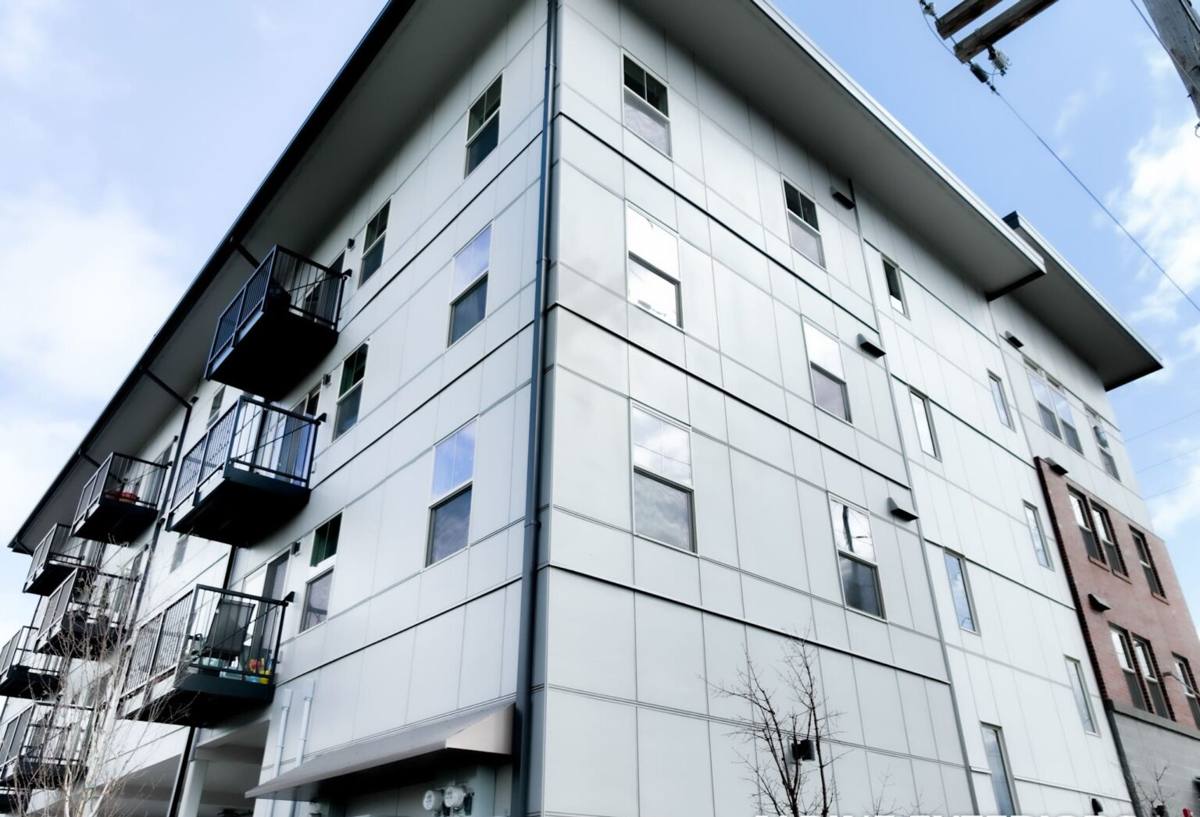
What Vinyl Siding Gets Right
Vinyl earned its market share honestly. It's lightweight, which makes installation faster and labor costs lower. It's typically the least expensive siding option up front, sometimes by a wide margin. It never needs painting, it resists rot outright since it contains no wood fiber, and modern insulated vinyl products have improved on the thin, rattly panels of decades past. For a homeowner on a tight budget who needs a functional, low-maintenance exterior and plans to move within a decade, vinyl is a legitimate and defensible choice. We're not here to tell you it's a bad product — it isn't. It's a product with a specific set of trade-offs that matter more in some climates than others.
Where Vinyl Struggles in Whatcom County's Climate
Salt Air and Coastal Moisture
Chuckanut's proximity to the bay means salt-laden air is a constant, low-grade factor on every exterior surface. Vinyl itself doesn't corrode, but the fasteners, trim accessories, and underlying wall assembly behind it are still exposed to that moisture load. Vinyl is installed with a "hung, not fastened tight" method that allows expansion and contraction — which is correct for the material, but it also means the panel itself does very little to manage bulk water at the wall. Everything depends on the water-resistive barrier behind it doing its job perfectly, for decades, with no way to inspect it without pulling panels.
Driving Rain
Winter storms here don't just drop rain straight down — wind-driven rain hits walls at an angle, and it finds every lap, seam, and utility penetration. Vinyl's overlapping panels are engineered to shed the majority of that water, but they are not a sealed system, and they were never designed to be one. In wetter coastal microclimates, that gap between "designed to shed most water" and "sealed against a genuine storm" matters more than it does in a drier inland location.
Moss and Biological Growth
The long moss season in this part of Washington isn't just a roof problem. Shaded, north-facing wall sections and anywhere airflow is restricted can grow moss and algae on vinyl just as readily as on other claddings, and vinyl's slightly flexible, textured surface gives spores something to hold onto. Cleaning it requires care — pressure washing at the wrong angle or PSI can drive water behind panels or crack aging vinyl outright.
Heat, Cold, and Impact
Vinyl expands and contracts significantly with temperature swings, which is why it's hung loosely rather than fastened tight — done correctly, that's fine. But in real cold snaps, vinyl becomes noticeably brittle and more prone to cracking from impact (a ladder, a thrown rock, a wind-blown branch). And on south and west exposures, vinyl can warp or distort if it absorbs too much heat, which is why manufacturers restrict which colors and accessories can be used near dark trim, grills, or reflective surfaces like low-E windows.
What Fiber Cement Gets Right
James Hardie fiber cement is made from Portland cement, sand, and cellulose fiber, cured into a dense, dimensionally stable board. It doesn't expand and contract the way vinyl or wood does, so it holds paint and factory finish far longer. It's non-combustible, which matters for homeowners thinking about wildfire-adjacent risk even in a wetter climate, and it stands up to impact, moss, and moisture cycling in a fundamentally different way than a thin plastic panel.
Climate-Engineered Product Lines
Hardie's HZ10 product line is specifically engineered for cold, wet, freeze-thaw climates like the Pacific Northwest — this isn't a generic siding sold everywhere with a one-size-fits-all spec. The formulation and installation requirements account for exactly the conditions Chuckanut sees: sustained moisture exposure, temperature swings, and the need for a rigid substrate that doesn't flex and open up gaps at seams over time.
ColorPlus Factory Finish
Rather than field-applied paint, Hardie's ColorPlus finish is baked on at the factory in multiple coats under controlled conditions, with a finish warranty that runs far longer than typical field-applied paint jobs. That matters directly for moss and salt exposure — a consistent, factory-cured finish resists staining and holds color better than a coating applied on-site in variable weather.
Installation Sensitivity: The Part Nobody Advertises
Both materials fail the same way when installed wrong: water gets behind the cladding and the wall assembly rots from the inside, invisibly, for years before anyone notices. The difference is what "installed right" requires. Vinyl relies almost entirely on correct overlap, fastening that allows movement, and a flawless water-resistive barrier — there's very little margin the material itself provides. Fiber cement requires correct fastener placement, proper clearances at grade and roof lines, sealed butt joints, and specific gaps at trim — Hardie publishes detailed installation requirements, and skipping them is the single biggest cause of any fiber cement siding problem. Neither product is foolproof against bad installation. That's exactly why we treat installation to spec as non-negotiable, not optional.
Cost Comparison: Upfront vs. Lifecycle
| Factor | Vinyl Siding | Fiber Cement (Hardie) |
|---|---|---|
| Upfront material + install cost | Lower | Higher |
| Expected service life | 15-25 years typical | 30-50+ years when installed to spec |
| Repainting needed | Never (color is molded in, but fades over time) | Not for the ColorPlus warranty period; field-painted trim eventually needs touch-up |
| Impact resistance | Moderate; brittle in cold | High; resists denting and cracking |
| Fire rating | Combustible plastic | Non-combustible |
| Resale/appraisal perception | Neutral to slightly negative in some markets | Generally viewed as a premium, durable upgrade |
The honest takeaway: vinyl usually wins on day-one cost, and fiber cement usually wins on cost-per-year over the life of the siding. Which one is "cheaper" depends entirely on how long you plan to own the home and how much you value not touching the exterior again for decades.
Maintenance and Longevity
Vinyl's maintenance is mostly cosmetic — periodic washing to keep moss and algae from taking hold, and watching for cracked or warped panels after storms or heat events. It doesn't rot, but it also doesn't get stronger or more weather-resistant over time. Fiber cement's maintenance is similarly light on the surface (rinse off moss and salt residue periodically) but the underlying board itself doesn't degrade, warp, or become brittle the way plastic can. The caulking at joints and trim is the one component on either system that needs periodic inspection and occasional refresh.
Warranty Structure: Read the Fine Print
Vinyl warranties are often prorated — full coverage in the early years, declining coverage as the product ages, and frequently non-transferable to a new owner. Hardie's product warranty on fiber cement is longer-dated and, on ColorPlus finishes, includes finish coverage separate from the substrate warranty, with transferability that can matter if you sell the home. Warranty length alone doesn't guarantee performance, but it does tell you how much confidence the manufacturer has in the product holding up.
What to Ask Before You Choose Either Material
- What specific product line is being quoted — is it climate-rated for Whatcom County's wet, freeze-thaw conditions?
- Is the installer following the manufacturer's published fastening, clearance, and flashing requirements, or their own shortcuts?
- What does the warranty actually cover after year 10, and is it transferable if you sell?
- How is water managed at windows, doors, and trim — not just the field of the wall?
- What's the realistic maintenance schedule, and who is expected to do it — you, or the contractor?
- Does the quote include proper disposal of existing siding and inspection of the sheathing underneath?
Why We Standardized on James Hardie
We made a decision as a company to install one product system and install it right, rather than offer every option on the market and let installation quality vary by budget. Fiber cement's dimensional stability, non-combustibility, climate-engineered HZ formulation, factory-cured finish, and stronger warranty structure line up with what actually holds up in Chuckanut's combination of salt air, driving rain, and moss. That's not a claim that vinyl is defective — it's a statement that for the way we build and the climate we build in, fiber cement is the material we're willing to stand behind.
If you're weighing vinyl against fiber cement for your own home, we're happy to walk your specific house, look at your exposure to wind and moisture, and give you a straight answer — including telling you if your situation doesn't require the most expensive option. Reach out for a free, no-pressure estimate and we'll go over what we'd actually recommend for your walls.