 Chuckanut Exterior
 Exterior Work Built for South Hill's Climate
South Hill sits close enough to the water that homes here deal with a version of weather that's a little more aggressive than what you'll find further inland in Whatcom County. Salt-laden air off the bay, wind-driven rain that comes in sideways during winter storms, and a long, damp shoulder season that lets moss and algae take hold on anything that stays wet too long — these aren't occasional nuisances, they're the baseline. An exterior that works in Lynden or Sumas doesn't automatically work the same way three miles from saltwater.
Chuckanut Exterior Companies works this area regularly, which matters more than it sounds like it should. A crew that only shows up once or twice a year doesn't have a feel for which north-facing walls stay damp into June, which rooflines collect debris fastest, or how much clearance a deck needs off the ground before moss becomes a permanent tenant. That local pattern recognition shapes how we spec and install siding, roofing, windows, and decks for South Hill homes specifically, not generically.
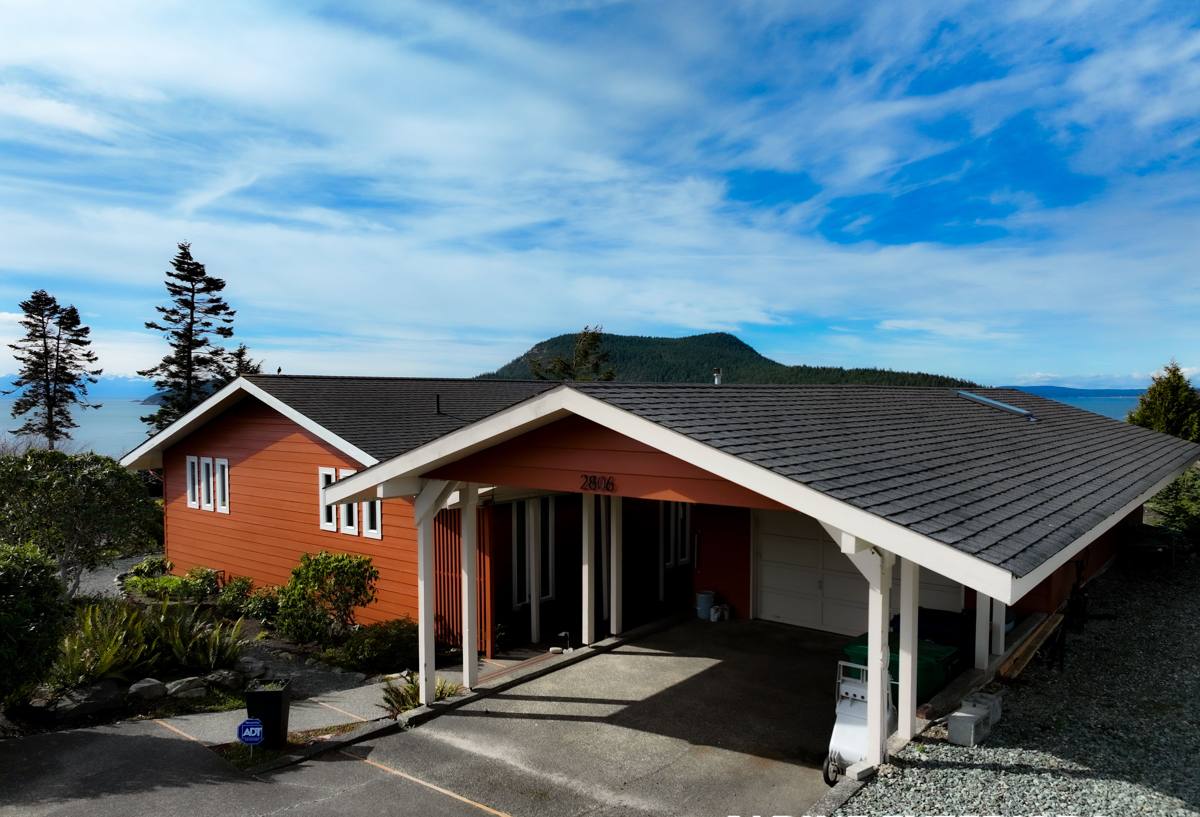
What Salt Air and Driving Rain Actually Do to a House
It helps to be specific about the mechanisms, because "coastal weather is tough on homes" is true but not very useful on its own.
Salt air
Airborne salt is corrosive to exposed metal — fasteners, flashing, gutter hardware, hinges — and it accelerates the breakdown of some paint films and coatings faster than inland exposure would. It doesn't ruin a house overnight, but it shortens the service life of anything not built or finished to handle it.
Driving rain
Whatcom County storms often come with real wind behind them, which pushes water horizontally into wall assemblies, window frames, and roof penetrations instead of letting it simply run off. Water-resistive barriers, flashing details, and caulking that would be adequate in a calmer climate get tested harder here, more often.
Moss and algae season
Cool, wet, and shaded conditions persist for a large part of the year in this part of the state. North-facing walls, low rooflines, and anything under tree cover stay damp longer, which is exactly what moss and algae need to establish. Once established, they hold moisture against the surface underneath, which compounds the problem over time.
Siding: Why We Install Only James Hardie
Siding takes the brunt of all three of the conditions above at once — it's exposed to salt air constantly, it's the first line of defense against driving rain, and it's the surface most likely to grow moss if it can't dry out between storms. That combination is why we standardized on James Hardie fiber cement and don't install vinyl, LP SmartSide, Cemplank, Allura, or primed wood siding, even though homeowners sometimes ask about them.
The short version of why: fiber cement doesn't absorb water the way wood-based products can, it's non-combustible, and Hardie's ColorPlus factory finish is baked on under controlled conditions rather than field-applied, which gives it more consistent resistance to fading and moisture intrusion at the surface. Hardie also engineers specific product lines (HZ5, in this climate zone) for regions with sustained damp exposure, which is a meaningfully different product than something designed for a drier market and sold everywhere.
We go into the full comparison — what each alternative gets right and where it falls short in a marine climate — on our dedicated product pages. On this page, the short answer is enough: in an area where siding stays damp for long stretches and takes salt air on top of it, we don't think it's honest to install a product we don't believe will hold up to spec, warranty period included.
Roofing for South Hill Homes
Roofing in this area has to manage water shedding, resist moss establishment, and handle wind uplift during winter storms — often on the same roof plane. A few things we pay particular attention to on South Hill jobs:
- Proper underlayment and ice-and-water shield at valleys and eaves, since driving rain can push water uphill under shingles at these vulnerable points
- Flashing details at every penetration — vents, chimneys, skylights — inspected and often replaced rather than reused, since old flashing is a common failure point on re-roofs here
- Ventilation that actually balances intake and exhaust, which reduces the moisture buildup that feeds moss and algae growth from underneath
- Gutter and downspout capacity sized for real storm volume, not just code minimum, so water is moved off the roof and away from the foundation efficiently
Moss removal and prevention treatments are a recurring conversation in this neighborhood. We're straightforward with homeowners about the difference between a one-time cleaning and the ongoing maintenance rhythm a shaded, damp roof actually needs.
Windows: The Weak Point in a Wind-Driven Storm
Window installation quality matters more here than in calmer climates, because wind-driven rain will find any gap in flashing or sealant and push water through it rather than simply beading off. A window that's watertight on a still day can leak during a real South Hill storm if the flashing and sill pan weren't installed correctly the first time.
We flash every window opening properly — sill pan, side flashing, head flashing integrated with the water-resistive barrier — rather than relying on caulk alone to keep water out. We also talk with homeowners about glass and frame options that hold up to salt air exposure without excessive maintenance, since window hardware and frame finishes are as exposed to that corrosive air as anything else on the house.
Table: Common Exterior Issues in South Hill and What's Behind Them
| Symptom | Likely Cause | Where It Shows Up First |
|---|---|---|
| Green or black staining on siding | Moss/algae growth from prolonged damp exposure | North-facing and shaded walls |
| Soft or swollen siding panels | Water absorption into wood-based siding products | Lower walls, butt joints, corners |
| Corroded fasteners or flashing | Salt air exposure on unprotected metal | Roof edges, gutter hardware, deck fasteners |
| Interior staining near windows | Failed flashing letting wind-driven rain past the frame | Window head and sill areas |
| Slippery, dark decking | Moss establishing on boards that don't dry between rains | Shaded deck sections, low-clearance areas |
Decks: Built to Shed Water and Resist Moss
Decks in this part of Whatcom County have two jobs most decks elsewhere don't: shed a lot of rain efficiently, and resist the moss that wants to grow on any horizontal wood surface that stays damp. Board spacing, deck height off grade, and material choice all affect how well a deck handles that reality over the years.
We talk through material trade-offs honestly with South Hill homeowners — composite decking sheds water differently than wood and generally needs less surface maintenance against moss, while quality wood decking, properly finished and maintained, has its own advantages in appearance and repairability. What we won't do is install a deck without proper drainage planning underneath it, since standing water under a deck is a slow, hidden way to damage the structure and the ground around a foundation.
What a Local Crew Actually Changes
There's a practical difference between a contractor who drives in from out of the area for a bid and one who works South Hill and the surrounding Chuckanut area regularly. It shows up in small decisions: knowing to plan around the wetter months rather than promising a timeline that ignores them, recognizing which parts of a house are more exposed to wind-driven rain based on lot orientation, and having a realistic sense of how a given siding, roofing, or decking product actually performs after a few winters in this specific climate — not just on a spec sheet.
It also means being reachable if something needs a second look after the job is done, rather than being a name on an invoice from a company based somewhere with a very different climate.
A Practical Checklist Before You Start an Exterior Project
- Walk the house and note which walls or roof areas stay shaded and damp longest — those need the most moisture-resistant materials and detailing
- Ask any contractor directly what siding, roofing, and window products they install and why, including what they won't install and the trade-offs behind that choice
- Check that flashing and water-resistive barrier details are part of the written scope, not just "install siding" or "install windows" as a line item
- Confirm gutter and drainage capacity is being sized for real storm conditions, not a generic minimum
- Ask about warranty terms in writing — both the manufacturer's product warranty and the installer's workmanship warranty
- Get a clear sense of timeline expectations around the wetter months, since some exterior work is genuinely weather-dependent here
Get a Free, No-Pressure Estimate
If you're weighing a siding, roofing, window, or deck project for a South Hill home, we're happy to take a look and walk you through what your specific house is dealing with — no obligation, no pressure. Use the form below to request a free estimate and we'll follow up to schedule a time that works.