 Chuckanut Exterior
 Exterior Contracting for the Alger Area
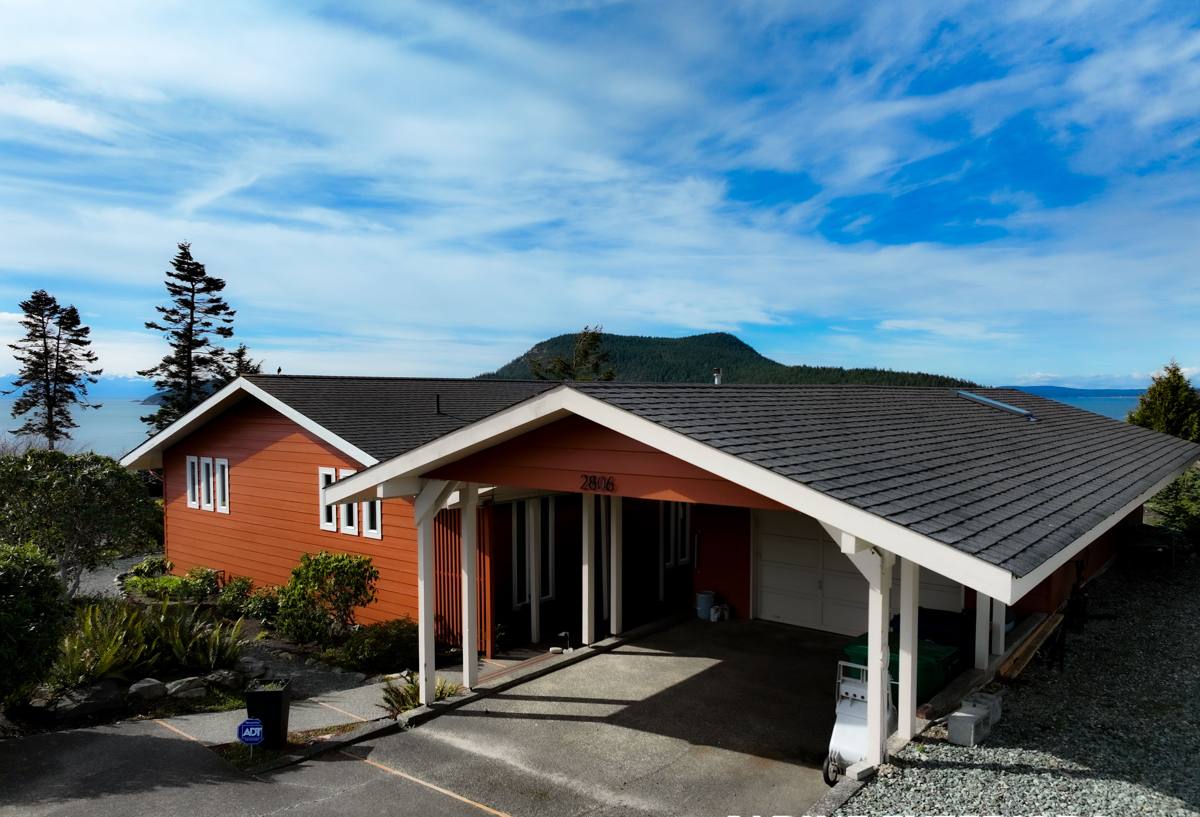
Alger sits in that stretch of Whatcom County where the landscape changes fast — timbered hillsides, low farmland, and enough proximity to Samish Bay and Puget Sound that salt-laden air is a real factor in how a house ages. Homes out here take a different kind of beating than a house twenty miles inland. If you own property in or near Alger, you already know the drill: gutters clogged with fir needles by October, north-facing walls that never quite dry out, and a green film on anything that sits still long enough. We build our exterior work — siding, roofing, windows, and decks — around those specific conditions, not a generic weatherproofing checklist.
This page walks through what the Alger climate does to a home's exterior, how we approach each major system, and what to actually look for when you're vetting a contractor to do this work. We install James Hardie fiber cement siding exclusively — more on why below — but the roofing, window, and deck guidance here applies regardless of what siding is currently on your house.
What the Local Climate Does to a House
Three things define exterior wear in the Alger area, and they compound each other:
- Salt air: Proximity to Samish Bay and the greater Puget Sound means airborne salt reaches further inland than most homeowners expect, especially on exposed or elevated lots. It accelerates corrosion on fasteners, flashing, and metal trim, and it degrades cheaper paint finishes faster than inland exposure would.
- Driving rain: Whatcom County's weather doesn't just rain straight down — wind-driven rain off the water pushes moisture sideways into wall assemblies, particularly on west- and south-facing elevations. Siding, trim, and window flashing all have to handle water moving horizontally, not just falling vertically.
- Moss season: The combination of shade from mature trees, persistent damp, and mild temperatures gives moss and algae a long growing window — often eight or nine months of the year on north-facing roofs and siding. Moss holds moisture against a surface far longer than open air would, which is what actually causes rot and coating breakdown over time, not the moss itself.
None of this is unique to any one street or subdivision in Alger — it's a function of geography and tree cover that applies across most of the community. But it does mean an exterior built to a generic spec, rather than this climate, tends to show problems years earlier than it should.
Siding: Why We Only Install James Hardie
We made a deliberate decision to stop installing vinyl, LP SmartSide, and other fiber-cement alternatives like Cemplank or Allura, and to stop offering primed spruce or cedar lap siding. That's not a marketing position — it's a response to what we saw in the field, especially in salt-air, high-moisture areas like Alger.
The trade-offs we walked away from
Vinyl siding is inexpensive and low-maintenance in dry climates, but it softens and warps at temperature extremes and its seams give wind-driven rain an easy path behind the cladding. Engineered wood products like LP SmartSide perform reasonably well when installation and caulking are perfect and stay perfect for decades — a hard standard to guarantee on any real jobsite, and a harder one to guarantee near salt spray. Primed spruce and cedar are beautiful materials, but they require a repainting and caulking cycle that most homeowners underestimate, and any lapse in that maintenance lets moisture in fast in a climate this wet.
Why James Hardie
James Hardie fiber cement is non-combustible, doesn't swell or rot the way wood-based products can, and comes from the factory with a ColorPlus finish baked on — not applied on-site, which matters when you're trying to get consistent, long-lasting color in a climate that's hard on paint. Hardie also makes climate-engineered HZ5 product lines built specifically for regions with the kind of moisture exposure Whatcom County sees. The warranty is transferable, which matters for resale, and it's backed by a large manufacturer with decades of field performance data behind it — not a niche or regional product we'd be vouching for on our own.
None of this means Hardie is maintenance-free. It still needs to be installed to spec — correct clearances, correct fastening, correct flashing details — and it still benefits from periodic inspection, especially in an area with heavy moss growth. But it removes the failure modes we saw most often with the alternatives.
Siding Product Comparison
| Material | Moisture Behavior in Wet Climates | Maintenance Burden | Typical Lifespan |
|---|---|---|---|
| Vinyl | Seams allow wind-driven rain intrusion; can warp | Low, but limited repair options when damaged | 15-25 years |
| Primed spruce/cedar | Absorbs moisture without diligent repainting | High — regular paint and caulk cycle | Varies widely with upkeep |
| LP SmartSide / engineered wood | Good if installed and sealed perfectly | Moderate — install quality is everything | 20-30 years with maintenance |
| James Hardie fiber cement | Engineered for wet, coastal-adjacent climates (HZ5) | Low — factory finish, periodic inspection | 30+ years, transferable warranty |
Roofing in a Moss-Heavy, Salt-Exposed Area
A roof in Alger is fighting moss growth on shaded slopes and salt-accelerated corrosion on flashing and fasteners at the same time. We pay particular attention to a few things on every roofing job in this area:
- Flashing and fastener materials rated for coastal-adjacent exposure, not just standard-grade hardware
- Proper underlayment and ventilation so trapped moisture under moss-covered sections doesn't rot the deck
- Valleys and low-slope transitions, where standing water and debris collect fastest under tree cover
- Gutter and downspout capacity sized for the volume of driving rain this area actually sees, not a generic minimum
Moss removal and prevention treatments extend a roof's life significantly, but they're not a substitute for correct ventilation and flashing — a roof that's shedding moss but trapping moisture underneath will still fail early.
Windows: Handling Wind-Driven Rain and Temperature Swings
Window failures in this area are rarely about the glass — they're about flashing and sealant at the rough opening letting wind-driven rain behind the window frame. On west- and south-facing walls especially, we treat window flashing integration with the wall assembly as the critical detail, not an afterthought. Beyond weatherproofing, well-sealed, properly rated windows also cut down on the energy loss that comes with the temperature swings typical of this stretch of Whatcom County, from damp winter cold to dry summer heat.
Decks: Built for Standing Water and Shade
Decks in Alger deal with two specific problems: prolonged shade that keeps deck boards damp long after a storm passes, and standing water where framing and ledger connections meet the house. We focus on drainage detailing at the ledger board, proper spacing between deck boards to let air move underneath, and fastener and flashing materials that hold up under sustained moisture exposure rather than corroding out in a few seasons. Material choice matters too — some decking products handle shaded, damp conditions far better than others, and we'll walk through the real trade-offs for your specific lot rather than defaulting to whatever's cheapest.
Why a Local Crew Matters Here
A contractor who mostly works in drier, more sheltered parts of the county — or who travels in from outside the region — doesn't necessarily know that a north-facing wall in Alger under a stand of fir trees behaves differently than the same wall a few miles away in open sun. Detail work like flashing laps, ventilation gaps, and fastener spacing gets adjusted based on real exposure conditions, and that judgment comes from having worked on enough homes in this specific area to know where the moisture actually goes. It also means someone is genuinely reachable if a detail needs a second look after the job's done, rather than having to track down a crew that's moved on to a different county.
What to Check Before Hiring for Exterior Work in Alger
- Washington state contractor license, current and in good standing
- Liability insurance and workers' compensation coverage, verified directly rather than taken on faith
- Manufacturer certification for the specific siding or roofing product being installed
- A written scope of work that specifies flashing, ventilation, and fastening details — not just "install siding" or "replace roof"
- Willingness to explain material trade-offs honestly, including for products the contractor doesn't install
- Local references or project history in Whatcom County, ideally in comparable climate conditions
Getting Started
Every property in the Alger area sits a little differently — tree cover, sun exposure, and proximity to open water all shift what a given home actually needs. We're happy to walk your property, look at how your current siding, roofing, windows, or decking are holding up, and give you a straightforward, no-pressure estimate on what it would take to get it right. Use the form below to request one.