 Chuckanut Exterior
 Exterior Work Built for Burlington's Climate
Burlington sits in a part of Washington where the exterior of a house is never really "done." Between the marine air drifting in off the water, long stretches of driving rain through fall and winter, and the shady, damp conditions that let moss and algae take hold on roofs and siding, homes here take a steady beating year after year. It's rarely one dramatic event that causes damage — it's the slow accumulation of moisture cycles, wind-driven rain finding its way behind trim, and organic growth that holds water against surfaces long after a storm has passed.
Chuckanut Exterior Companies works throughout the region, and Burlington is one of the areas where we see this pattern most consistently: homes that look fine from the curb but have real trouble developing behind the siding, around window flashing, or under roof valleys where debris and moss collect. Our approach on every project — siding, roofing, windows, or decks — starts with understanding how water moves across and around a building, because in this climate, that's the difference between an exterior that lasts and one that quietly fails.
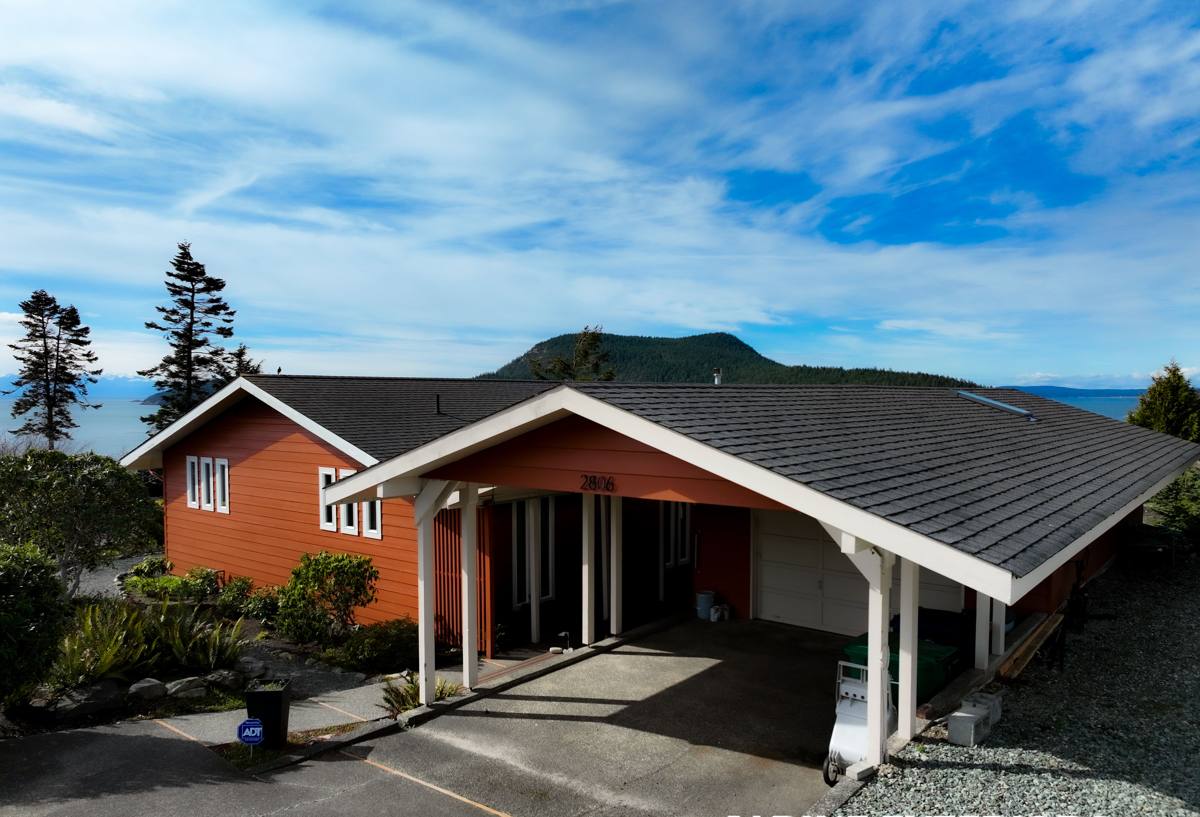
What Local Homes Are Up Against
Salt Air and Coastal Moisture
Even a few miles inland from open water, salt-laden air accelerates corrosion on fasteners, flashing, and metal roofing components. Cheaper hardware and unprotected steel connectors degrade faster here than they would in a drier, inland climate. It's a slow process, which is exactly why it's easy to overlook until a leak or a rust stain shows up.
Driving Rain
This isn't gentle, straight-down rain. Wind pushes water sideways and upward, into laps, seams, and gaps that a fair-weather installation might get away with elsewhere. Siding, trim, and window flashing all need to be detailed with wind-driven rain in mind — proper overlaps, correct caulking (and knowing where caulk should never be relied on at all), and drainage planes that actually let water escape instead of trapping it against the wall sheathing.
Moss and Algae Season
Shade, moisture, and mild temperatures are a perfect combination for moss and algae growth on roofs and the north- and west-facing sides of homes. Beyond the cosmetic issue, moss holds moisture against roofing material and siding for extended periods, which shortens the life of both and can work its way under shingles or shakes at the edges.
Siding: Why Material Choice Matters Here
Siding is the single biggest factor in how well a home handles this climate over the long run, which is why Chuckanut Exterior Companies installs only James Hardie fiber cement siding. We don't offer vinyl, LP SmartSide, Cemplank, Allura, or wood products like primed spruce or cedar — not because those products don't have a place in the industry, but because we've made a professional decision about what we're willing to put our name behind in a climate like this one.
Vinyl siding can warp and gap over time as it expands and contracts, and those gaps become entry points for wind-driven rain. Engineered wood products like LP SmartSide perform well when installation and maintenance are followed precisely, but they remain wood-based and depend on an intact factory coating to resist moisture — any breach in that coating is a vulnerability in a climate this wet. Cedar and primed spruce are beautiful but demand ongoing refinishing and vigilant caulking to hold up against constant moisture cycling. Competing fiber cement brands like Cemplank and Allura are reasonable products, but we've standardized on one system so our crews install it the same correct way every time, and so our warranty and product knowledge stay consistent from job to job.
James Hardie fiber cement is non-combustible, dimensionally stable in wet climates, and available in HZ product lines engineered specifically for the moisture and temperature patterns of the Pacific Northwest. The factory-applied ColorPlus finish resists fading and chipping far better than field-applied paint, which matters when a house sees this much rain and UV cycling. It also carries a strong transferable warranty, which protects the investment even if the home changes hands.
Siding Comparison at a Glance
| Material | Moisture Behavior in This Climate | Maintenance Burden |
|---|---|---|
| James Hardie Fiber Cement | Dimensionally stable, non-combustible, engineered for wet climates | Low — factory finish, occasional wash |
| Vinyl | Can warp/gap, seams vulnerable to wind-driven rain | Low, but limited repair options when damaged |
| Cedar / Primed Spruce | Absorbs moisture without diligent finish maintenance | High — repainting, caulking, staining |
| LP SmartSide | Wood-based; relies on intact factory coating | Moderate — coating integrity is critical |
Roofing: Managing Water and Moss Together
A roof in Burlington has to do two jobs at once: shed a lot of water quickly, and resist the buildup of moss and organic debris that hold moisture against the surface. We look closely at valleys, flashing around penetrations, and edge details, since those are the spots where driving rain and accumulated moss cause the most trouble over time. Ventilation matters just as much — a roof that traps warm, moist air underneath will age faster from the inside out, regardless of how good the shingles or metal on top are.
Gutter and drainage condition also plays a direct role in roof longevity. Clogged gutters back water up under the roof edge, and that's a common, preventable cause of rot along fascia and roof decking in this area.
Windows: Flashing Is the Real Story
Window replacement gets talked about mostly in terms of energy efficiency, but in a climate with this much wind-driven rain, correct flashing and integration with the surrounding siding matter just as much as the window unit itself. A high-end window installed with poor flashing will leak. A modest window installed correctly, with proper head flashing and drainage behind it, will hold up. We treat every window replacement as a chance to correct or improve the water management at that opening, not just swap glass.
Decks: Built to Handle Standing Moisture
Decks in this region face constant cycles of wet and dry, plus shaded areas that stay damp longer and are more prone to moss and slick surfaces. Ledger board attachment and flashing where a deck meets the house are frequent trouble spots — that's the same wind-driven rain and moisture concern that applies to siding and windows, just at a different connection point. We build and repair decks with drainage, proper flashing at the house connection, and materials suited to sustained moisture exposure.
Why a Local Crew Matters
Exterior work in this region rewards experience with this specific climate — knowing which details fail first, which products actually hold up, and how to sequence a job around a wet forecast instead of fighting it. A crew that works Burlington and the surrounding Whatcom County area regularly sees the same failure patterns repeat on different houses, which shapes how we detail flashing, plan drainage, and choose materials before a problem ever develops.
It also means faster response when something needs attention, and a crew that's already familiar with the permitting and inspection expectations that apply locally.
What to Check Before Hiring an Exterior Contractor
- Ask what siding, roofing, and window products they install — and why they chose those brands over alternatives
- Confirm they carry current liability insurance and any required state contractor licensing
- Ask how they detail flashing at windows, doors, and deck ledger boards — this is where most water damage starts
- Get a written scope of work, not just a price, so you know exactly what's included
- Ask about warranty coverage on both materials and labor, and whether it's transferable
- Look for a crew with a track record of working in similar coastal or high-rainfall conditions
What a Project Typically Involves
Every project starts with an on-site assessment — looking at current siding, roofing, window, or deck condition, checking for hidden moisture issues, and identifying any areas where past work may have trapped water rather than shed it. From there we put together a clear scope and timeline, accounting for the reality that Pacific Northwest weather doesn't always cooperate with a project calendar. Materials are ordered, and installation is sequenced to minimize the time any part of the home is exposed to the elements.
If you're dealing with aging siding, a roof that's showing moss buildup or wear, windows that leak or fog, or a deck that needs repair or replacement, we're happy to take a look and talk through honest options — no pressure, no pushy sales pitch. Reach out for a free estimate using the form below.