 Chuckanut Exterior
 Exteriors in Fairhaven: Built for the Bay, Not Just the Blueprint
Fairhaven sits close enough to the water that homes here live with a different set of stresses than a house ten miles inland. Salt-laden air off the bay, driving rain that comes in sideways during winter storms, and a moss season that seems to stretch longer every year all work on a home's exterior at the same time, from every direction. A roof, siding system, window, or deck that would hold up fine in a drier part of Whatcom County can wear out early here if it wasn't chosen and installed with this specific exposure in mind.
We work across Chuckanut and the surrounding communities, and Fairhaven is one of the areas where we see the clearest gap between exteriors that were built for the coast and exteriors that were simply built. This page walks through what that gap looks like in practice — siding, roofing, windows, and decks — and how we approach each one for homes in this area.
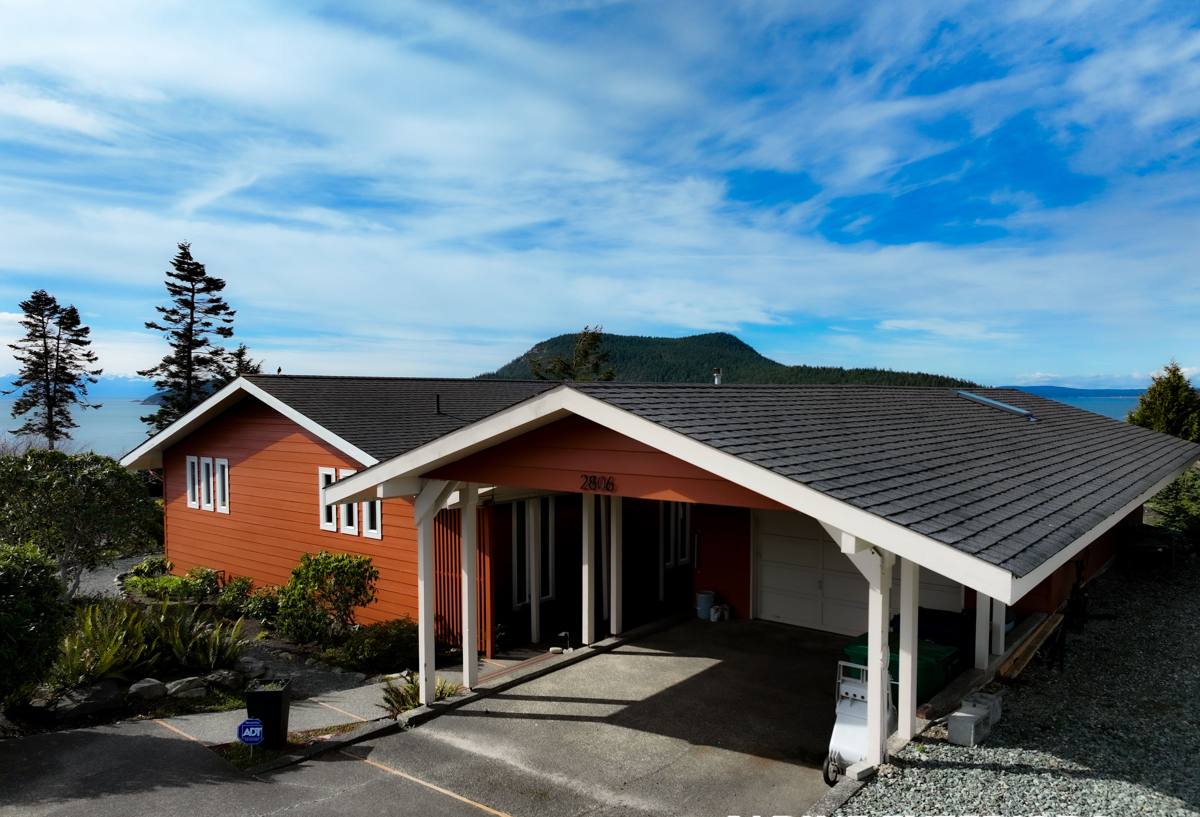
Why Fairhaven's Climate Is Harder on Exteriors Than It Looks
On paper, this stretch of Whatcom County doesn't sound extreme. There's no hurricane risk, no desert heat, no deep freeze most winters. But three things combine here in a way that adds up over time:
Salt Air
Proximity to the bay means airborne salt settles on everything — siding, trim, fasteners, and hardware. Salt accelerates corrosion in unprotected metal and can contribute to premature breakdown of materials that weren't engineered to resist it. Over years, that's the difference between fasteners and flashing that still do their job and ones that quietly fail.
Driving Rain
Storms coming off the water don't just fall straight down — they get pushed sideways into walls, under eaves, and around window and door openings. That kind of wind-driven rain finds every weak seam, every undersized flashing detail, and every gap in caulking that a calmer climate would never expose. It's one of the main reasons water intrusion shows up first around windows, at butt joints in siding, and at deck ledger connections.
A Long Moss Season
Shaded lots, marine humidity, and mild temperatures mean moss and algae have a long window to establish themselves on roofs and north-facing siding. Beyond looking bad, moss holds moisture against the surface underneath it for extended periods, which shortens the life of roofing materials and can telegraph problems into the siding and trim below.
None of this is unusual for the area — it's just the reality of building near the water in the Pacific Northwest. The point isn't to alarm anyone; it's that materials and installation details matter more here than they would somewhere drier and more sheltered.
Siding in Fairhaven: What We Install and Why
We install James Hardie fiber cement siding exclusively. We don't offer vinyl, LP SmartSide, Cemplank, Allura, primed spruce, or cedar as alternatives, and that's a deliberate standard, not an oversight.
Fiber cement is non-combustible and dimensionally stable, meaning it doesn't expand and contract with moisture and temperature the way wood-based or engineered-wood products can. In an environment with sustained damp air and driving rain, that stability matters. Hardie's ColorPlus factory-applied finish is baked on under controlled conditions, which gives it more consistent weather resistance than field-applied paint, and it comes with a longer color-specific warranty than most site-painted systems can offer.
Hardie also produces climate-engineered HZ product lines, with versions formulated for wetter, cooler regions like ours. That's a meaningful detail for a coastal Whatcom County property — a siding product designed for a hot, dry climate isn't the same product as one designed for the Salish Sea.
What Correct Installation Looks Like Here
- Proper rain-screen or drainage gap behind the siding so incidental moisture can escape instead of sitting against the wall
- Correctly lapped and sealed house wrap or weather-resistive barrier before siding goes on
- Stainless or coated fasteners appropriate for a salt-air environment, not standard-grade hardware that corrodes early
- Tight, properly flashed butt joints and corners — the exact spots wind-driven rain targets first
- Caulking and sealant used only where Hardie's specifications call for it, not as a substitute for proper flashing
Siding that's installed to spec, with a product engineered for this climate, is what actually holds up near the bay. Siding that skips any of those details tends to show problems years earlier than it should.
Roofing: Holding Up Under Rain and Moss Pressure
A roof in Fairhaven does more work than a roof further inland. It's absorbing more sustained rain exposure, fighting a longer moss season, and dealing with wind that pushes water up under shingles and flashing at a steeper angle than a calm-weather storm would.
Good roofing here comes down to a few fundamentals done consistently: proper underlayment for a wet climate, correctly lapped flashing at every valley, chimney, and penetration, adequate attic ventilation to control condensation from the inside, and a maintenance rhythm that keeps moss from getting a foothold in the first place. We handle roof replacement and repair, and on repair calls we're almost always looking first at flashing details and moss-related wear before anything else, because that's where this climate does its damage.
Windows: The First Place Wind-Driven Rain Finds a Way In
Window openings are one of the most common places we find water intrusion on coastal Whatcom County homes, and it's rarely the window unit itself that's the problem — it's the flashing and integration with the surrounding wall assembly. Wind-driven rain doesn't just hit a window head-on; it gets pushed up and around the frame, which means the flashing above and beside a window has to shed water actively, not just sit there passively.
When we replace windows, we pay close attention to how the new unit ties into the existing wall and siding — proper head flashing, correctly lapped side flashing, and a sill pan that directs any water that does get in back out rather than into the wall cavity. Energy performance matters too, but in this climate, keeping water out of the wall assembly is the detail that protects everything else.
Decks: Built to Handle Standing Water and Salt Exposure
Decks near the bay take a beating from two directions at once: constant damp weather that keeps wood wet for long stretches, and salt air that accelerates corrosion in fasteners and hardware. A deck built with the wrong hardware, or without attention to drainage at the ledger board and between decking boards, will show rot and rust years before it should.
We build and repair decks with fastener and connector hardware rated for coastal exposure, proper flashing at the ledger connection to the house (a critical, often-skipped detail), and enough gap and pitch in the decking to let water actually shed instead of pooling. A well-built deck in this climate should look and perform the same in year ten as it did in year one — that only happens with the right hardware and drainage planning from the start.
Comparing Exterior Materials for a Coastal Whatcom County Home
| Material Concern | What Matters Most in Fairhaven | Our Approach |
|---|---|---|
| Siding | Moisture stability, salt-air resistance, factory finish durability | James Hardie fiber cement only, HZ climate-engineered lines |
| Roofing | Moss resistance, wind-driven rain, flashing integrity | Proper underlayment, flashing detail, ventilation, moss management |
| Windows | Wind-driven rain intrusion around the frame | Correct head/side flashing and sill pan integration |
| Decks | Standing moisture, corrosion-prone hardware | Coastal-rated fasteners, ledger flashing, drainage-focused build |
What to Look for When Hiring an Exterior Contractor Near the Bay
Not every contractor working in Whatcom County builds specifically for a coastal exposure like Fairhaven's, and that gap doesn't usually show up until years later, when flashing fails or fasteners corrode. A few things worth checking before you hire anyone for siding, roofing, window, or deck work in this area:
- Ask specifically how they handle flashing details at windows, siding butt joints, and deck ledgers — vague answers are a red flag
- Confirm what fastener and hardware grade they use, especially for decks and siding attachment
- Ask whether the materials they're proposing were designed for a wet, coastal climate or a general-purpose product being used everywhere
- Check that they carry proper licensing and insurance for exterior work in Washington State
- Ask how they handle moss and algae prevention on roofing, not just cleaning after the fact
Why a Local Crew Matters Here
Exterior work near the bay isn't the same job as exterior work twenty miles inland, even within the same county. A crew that works this area regularly already knows where wind-driven rain tends to cause problems, how long moss season really runs, and which installation shortcuts show up as callbacks two or three years down the road. That local, repeated exposure to the same climate conditions is part of what keeps a job done right the first time, rather than needing to be revisited.
If you're weighing siding, roofing, window, or deck work on a Fairhaven property, we're happy to take a look and talk through what your home actually needs — no pressure, no upsell, just a straight answer. Reach out for a free estimate using the form below.