 Chuckanut Exterior
 Two Fiber Cement Brands, One Choice We've Made
When homeowners in Chuckanut start researching fiber cement siding, they usually run into two names: James Hardie and Cemplank. Both are legitimate fiber cement products — a mix of cement, sand, and cellulose fibers pressed into planks and panels. Both are non-combustible, resist rot, and hold paint or factory finish better than wood. On paper, they look like close cousins.
We don't install Cemplank. This page explains why, honestly and without exaggeration. Cemplank is not a bad product in the abstract — it's a serviceable fiber cement board manufactured by Allura (formerly PlyCem). Our decision to stick exclusively with James Hardie comes down to manufacturing consistency, product engineering for our specific climate, warranty structure, and the practical realities of what we've seen hold up over decades of Pacific Northwest weather — the salt air off the Salish Sea, driving winter rain, and the long moss season that Whatcom County homes deal with every year.
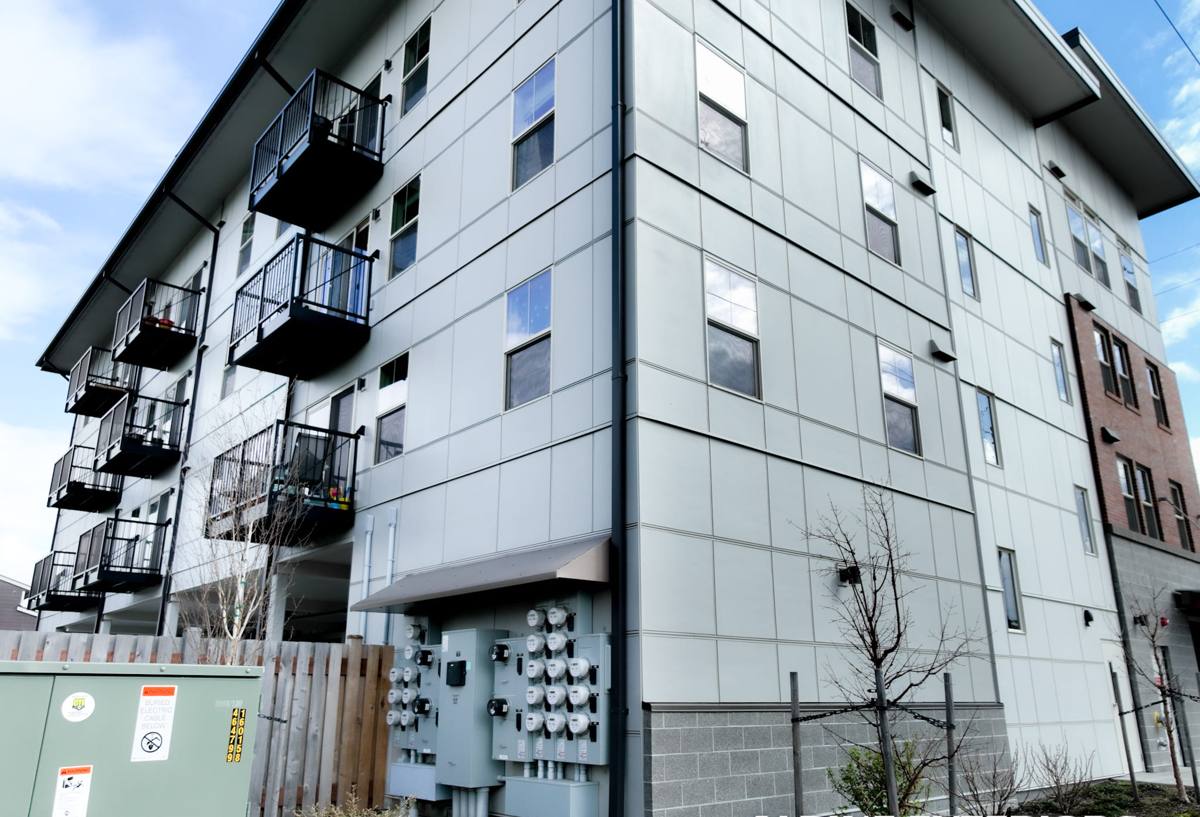
What Cemplank Gets Right
To be fair to the product, Cemplank fiber cement does what fiber cement is supposed to do better than vinyl or wood. It won't burn, it resists woodpeckers and insects, and it takes paint far more predictably than cedar or primed spruce. For homeowners on a tighter budget who still want a fiber cement look rather than vinyl, Cemplank is a real option in the market, and we don't tell people it's dangerous or fraudulent. It isn't.
Where things get more complicated is in the details underneath that surface-level similarity — manufacturing tolerances, regional product engineering, factory finish quality, and long-term support behind the product once it's on a wall in a wet, salt-exposed climate.
Where the Products Diverge
James Hardie builds region-specific product lines — its HZ5 formulation, for instance, is engineered for climates with freeze-thaw cycles and sustained moisture exposure, which describes a good chunk of a Whatcom County winter. Cemplank does not offer the same depth of climate-zone engineering; it's a more general-purpose board. That matters less in a mild, dry climate and more here, where siding faces sustained damp periods, wind-driven rain off the water, and moss growth that can hold moisture against a wall for months at a time.
Factory finish is another divergence point. James Hardie's ColorPlus finish is baked on in a controlled factory process with a multi-coat, UV-cured system and a finish warranty that travels with the product. Cemplank's factory-finish programs have existed but have been less consistent over the years, and touch-up paint matching against factory colorants can be a headache for homeowners years down the line if a panel gets damaged.
Manufacturing Consistency and Availability
This is the part that doesn't show up in a brochure but shows up on a job site. James Hardie is the dominant fiber cement manufacturer in North America, with dedicated regional plants, a deep installer network, and a supply chain built to keep exact-match product available for years. If a homeowner needs a replacement plank five or ten years after installation — after a tree branch comes down in a windstorm, say — matching the existing siding is realistic.
Cemplank has a smaller footprint and a less consistent supply history in the Pacific Northwest specifically. We've found it harder to guarantee exact-match replacement material, harder to source certain trim profiles locally, and more variable in batch-to-batch color consistency. For a company that stands behind its installs for years after the invoice is paid, that unpredictability is a real business risk we'd rather not pass on to homeowners.
Installer Network and Accountability
James Hardie runs a certified contractor program (Elite Preferred and similar tiers) with training standards, inspection requirements, and manufacturer-backed warranty enhancements tied to certified installation. That structure gives homeowners a second layer of accountability beyond just our own workmanship warranty. Cemplank's contractor programs are less standardized in this region, which means less manufacturer oversight of how the product actually gets installed — and fiber cement, of any brand, fails at the installation details (flashing, clearances, fastening patterns) far more often than it fails as a material.
Warranty Structure, Side by Side
| Factor | James Hardie | Cemplank |
|---|---|---|
| Product warranty (siding) | Typically 30 years, non-prorated | Varies by product line, often shorter or prorated |
| Factory finish warranty | ColorPlus finish warranty separate from substrate, typically 15 years | Finish warranty coverage less consistent across product lines |
| Warranty transferability | Transfers to new owner within a defined window | Transfer terms vary and are less uniformly documented |
| Certified installer bonus coverage | Available through Elite Preferred contractor programs | Not standardized in this market |
Warranty paperwork rarely matters until the day it does — a failed finish, a hairstyle crack, a homeowner selling the house twelve years in. When it does matter, the clarity and consistency of the paperwork is worth more than the small price difference between brands.
What This Looks Like on a Chuckanut Home
Chuckanut sits close enough to the water that salt-laden air is a constant, low-grade factor on any exterior surface — metal fasteners, finishes, and caulking all age faster here than they would fifty miles inland. Add Whatcom County's long, wet moss season, where north-facing walls and shaded elevations can stay damp for weeks, and you have a climate that punishes any weak point in a siding system faster than a drier region would.
That's the practical reason we lean on Hardie's climate-specific HZ engineering rather than a general-purpose board. It's not that Cemplank would fall apart in a season — it's that over fifteen or twenty years of driving rain and moss exposure, the margin for error matters more here than it would in Arizona, and we'd rather build in that margin from the material up.
Cost Difference: What Homeowners Actually See
Cemplank typically prices somewhat below James Hardie on a per-square-foot material basis, and installation labor is broadly similar between the two since both are fiber cement and require the same cutting, fastening, and flashing techniques. The real cost difference shows up over the life of the siding rather than on the initial invoice: replacement-plank availability, finish touch-up matching, and warranty claim experience.
- Material cost: Cemplank generally runs somewhat lower per square foot than comparable Hardie lines.
- Installation labor: comparable between the two, since technique and crew time are similar.
- Long-term replacement parts: Hardie's larger regional supply chain makes future color-matched repairs more realistic.
- Warranty claims: Hardie's non-prorated, longer-term coverage reduces homeowner risk if a defect surfaces years later.
- Resale conversations: "James Hardie siding" is a recognized, easily verified upgrade to buyers and appraisers; "Cemplank" requires more explaining.
A Practical Checklist Before You Choose a Fiber Cement Brand
- Ask any contractor for the specific product line and HZ (or equivalent) climate rating, not just "fiber cement."
- Get the warranty document itself, not a verbal summary — read the non-prorated period and transfer terms.
- Ask how replacement planks would be sourced in ten years if a panel gets damaged.
- Confirm whether the installer is manufacturer-certified for the brand they're proposing.
- Compare factory-finish systems, not just plank material — finish is what you're actually looking at every day.
- Factor in your home's exposure: full sun, shaded/north-facing, or near-water salt exposure all change how much finish quality matters.
Why We Standardized on Hardie
Running one manufacturer relationship across every job lets our crews get genuinely expert at one installation system rather than switching techniques and fastening specs between brands. It also means every warranty conversation with a Chuckanut homeowner points to the same document, the same manufacturer support line, and the same regional supply chain — no case-by-case explaining of which brand is on which house. For a company doing repeat business across Whatcom County, that consistency protects homeowners as much as it protects us.
None of this means Cemplank is a scam or that homeowners who chose it made a mistake — it's a legitimate product used successfully across the country. It means that after weighing climate engineering, finish consistency, warranty structure, and long-term supply reliability against our own standards for what we're willing to put our name behind, James Hardie was the clearer answer for this region.
Get an Honest Look at Your Siding Options
If you're comparing fiber cement brands for a home in Chuckanut or elsewhere in Whatcom County, we're happy to walk through the specifics on your house — sun exposure, moss history, existing siding condition — and give you a straight answer, not a sales pitch. Reach out for a free, no-pressure estimate using the form below.