 Chuckanut Exterior
 Board & Batten in Alger: A Style That Has to Earn Its Keep
Board and batten has become one of the most requested siding profiles for homes around Alger and the greater Chuckanut area, and it's easy to see why. The vertical lines read as clean and modern on newer builds, but the same profile also suits the farmhouses, cabins, and rural properties scattered through this part of Whatcom County. It's a look with real history in the Pacific Northwest, going back to the board-and-batten barns and homesteads that still dot this region.
But a siding profile is only as good as the material and installation behind it. Alger sits close enough to the water and the foothills that homes here take a steady beating from salt-laden air, wind-driven rain, and a moss season that can run most of the year. Board and batten's wide flat panels and narrow battens create more seams, more fastener points, and more surface area exposed to weather than lap siding does — which means the material choice and the install details matter more here, not less.
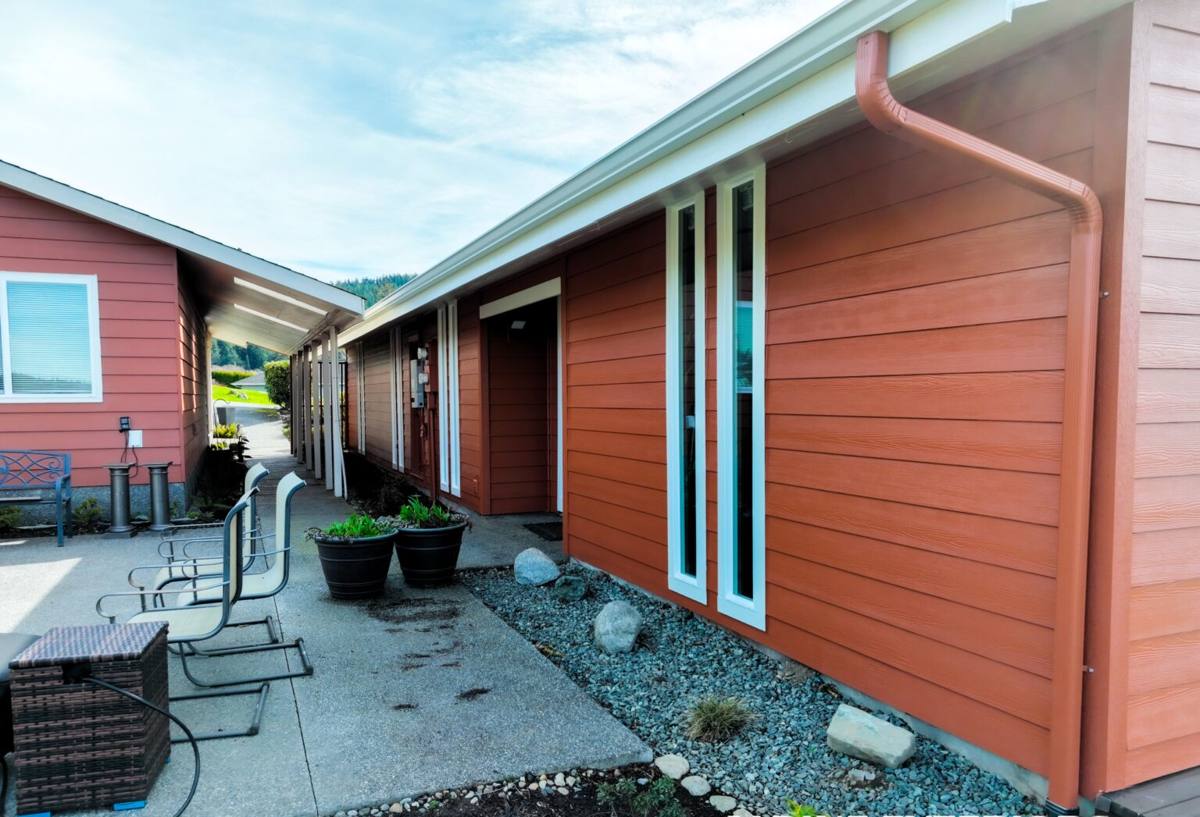
What Alger's Climate Actually Does to This Siding Style
Salt Air
Properties in and around Chuckanut are close enough to Puget Sound and Bellingham Bay that airborne salt is a real factor, even a few miles inland. Salt accelerates corrosion on exposed fasteners and metal flashing, and it breaks down cheaper paint films faster than inland exposure would. On a board and batten wall, every batten strip is another row of fastener heads that need to be corrosion-resistant and properly countersunk.
Driving Rain
Storms coming off the water don't just fall straight down here — they hit walls at an angle, and board and batten's vertical seams give wind-driven rain more opportunity to find a way behind the cladding than a horizontal lap profile does. Every batten-to-board joint is a potential water path if it isn't backed by a proper drainage plane.
Long Moss Season
Shaded, north-facing walls and anything near tree cover in this part of the county stay damp for long stretches of the year, which is exactly what moss and algae need to take hold. Once organic growth establishes on a wall, it holds moisture against the surface and accelerates whatever decay process the underlying material is prone to.
None of this means board and batten is a bad choice for Alger — it means the material and the install both have to be built for this climate, not just for the look.
Why We Install James Hardie Board & Batten and Nothing Else
Chuckanut Exterior Companies installs James Hardie fiber cement exclusively. We don't offer board and batten in vinyl, LP SmartSide, primed spruce, cedar, or other fiber cement brands like Cemplank or Allura — not because those products have no merit, but because after years of working on homes in this exact climate, we standardized on the one system that consistently holds up here without asking homeowners to accept a maintenance trade-off we're not comfortable selling.
- Non-combustible core — fiber cement doesn't feed a fire the way wood-based products can, which matters more every year as regional wildfire smoke and dry-season risk increase.
- Engineered for wet, coastal climates — Hardie's HZ5 product line is formulated specifically for regions with prolonged moisture exposure, which describes Whatcom County for a good part of the year.
- ColorPlus factory finish — a baked-on finish that resists fading and chalking far better than field-applied paint, which matters on battens and boards facing direct sun or salt spray.
- Dimensional stability — fiber cement doesn't swell, cup, or split the way wood battens can when they cycle through repeated wet-dry seasons.
- Strong transferable warranty — backed by the manufacturer, not just the installer, and it follows the home if it sells.
Wood board and batten can look beautiful, but it needs repainting, re-caulking, and vigilant moisture management to survive a Whatcom County winter. Vinyl board and batten is low-maintenance but can warp or crack in temperature swings and rarely holds up visually the way fiber cement does over a couple of decades. LP SmartSide and other engineered wood products use a wood-strand core that, if moisture gets behind the panel through a compromised seam, is vulnerable to swelling and rot in a way fiber cement simply isn't. We'd rather stand behind one system we trust completely than offer five and let a homeowner guess which one is right.
Comparing Board & Batten Material Options for Alger Homes
| Material | Moisture Resistance in Coastal Climate | Maintenance | Typical Lifespan |
|---|---|---|---|
| James Hardie Fiber Cement (HZ5) | Excellent — engineered for wet regions | Occasional wash; factory finish resists fading | 30+ years with proper install |
| Cedar / Primed Spruce | Fair — needs sealed end grain and diligent upkeep | Repainting/staining every few years | 15–25 years, highly upkeep-dependent |
| Vinyl Board & Batten | Good against rot, poor in wind/impact and UV | Low, but color and panels degrade over time | 15–25 years |
| LP SmartSide | Fair — vulnerable if seams fail and moisture reaches the strand core | Periodic caulk and paint touch-up | 20–30 years, install-sensitive |
This table isn't meant to declare every alternative unusable — it's meant to show why moisture resistance in a specifically wet, salt-exposed climate is the deciding factor for us, and why that factor points to fiber cement every time.
What a Correct Board & Batten Installation Actually Involves
The profile itself doesn't protect a house — the assembly behind it does. On every Alger project, our installation includes:
- A drainage plane and rainscreen gap behind the siding, so any moisture that does get past the battens has somewhere to go instead of sitting against the sheathing.
- Weather-resistive barrier installed and lapped correctly, with all penetrations (vents, hose bibs, light fixtures) properly flashed before a single board goes up.
- Corrosion-resistant fasteners, sized and spaced to Hardie's published fastening schedule — not shortcuts that save time but loosen over a few freeze-thaw or wet-dry cycles.
- Proper board and batten spacing and expansion gaps at trim, corners, and window/door casings, per manufacturer specification.
- Factory-cut and factory-primed edges wherever possible, with any field cuts sealed to keep raw fiber cement from wicking moisture.
- Flashing at every horizontal transition — window heads, belly bands, roof-to-wall intersections — since these are the spots where driving rain does the most damage over time.
Skipping any one of these doesn't usually cause a visible problem in year one. It shows up in year five or eight, as staining, soft spots, or fastener corrosion bleeding through the finish — by which point it's a repair job, not a touch-up.
Our Process on Alger Projects
1. On-Site Assessment
We walk the exterior, check existing sheathing and moisture conditions, and evaluate sun/shade exposure and drainage patterns specific to the lot — since a wall shaded most of the day near tree cover needs different attention than a south-facing wall in full sun.
2. Detailed Estimate
You get a written scope covering material, the drainage assembly, flashing details, and timeline, so there's no ambiguity about what "board and batten installation" actually includes.
3. Prep and Weather Barrier
Old siding removal (where applicable), sheathing repair if needed, and correct installation of the weather-resistive barrier and rainscreen before any Hardie product touches the wall.
4. Installation to Manufacturer Spec
Boards and battens installed per James Hardie's fastening and clearance requirements, with flashing integrated at every transition as the work progresses — not added after the fact.
5. Final Walkthrough
We review the finished exterior with you, point out any manufacturer-recommended maintenance, and make sure the warranty registration is handled correctly.
Maintenance Homeowners in Alger Should Actually Expect
- Rinse the exterior once or twice a year to clear salt residue and organic buildup, especially on shaded or north-facing walls.
- Check caulking at trim and window intersections annually — caulk, not the fiber cement itself, is usually the first thing to age.
- Keep gutters clear so overflow doesn't run down the wall face and feed moss growth at the base of the siding.
- Trim back vegetation that shades siding and keeps it damp longer than it needs to be.
- Watch for any small area of paint or finish wear near ground level, where splashback and standing moisture are most concentrated.
Why Hiring a Crew That Already Works Alger Matters
Board and batten installation isn't complicated in theory, but getting it right in a climate like this one comes down to details that only show up with repeated local experience — how much rainscreen gap actually performs well against wind-driven rain off the water, which wall orientations in this area need extra flashing attention, and how the moss season here actually behaves against different finishes. A crew that installs siding across a range of climates might do fine work, but a crew that's installed and then gone back to inspect its own work on Chuckanut-area homes through a few full wet seasons knows exactly where this siding style tends to get tested — and builds for that from the start.
If you're considering board and batten for a home in Alger, we're glad to walk the property, talk through what correct installation looks like for your specific site conditions, and give you a straightforward, no-pressure estimate using the James Hardie system we stand behind on every job. Reach out through the form below to get started.