 Chuckanut Exterior
 Windows Built for What Alger Weather Actually Does
Homes in the Alger area sit in one of the more demanding pockets of Whatcom County for exterior materials. You've got salt-laden air drifting in off the water, long stretches of driving rain that push moisture sideways into window openings, and a moss season that seems to run longer every year, keeping siding, trim, and sills damp for weeks at a time. Windows take the brunt of all three. They're the first thing to show telltale fogging between panes, the first frames to swell or rot at the corners, and often the last thing homeowners think to check until a draft or a stuck sash forces the issue.
A window that was fine for a drier climate can struggle here, and a window installed poorly — even a good one — will fail early no matter what the sales brochure promised. This page is about doing window replacement right for Alger conditions specifically: what to look for, what a correct installation actually involves, and why local experience with this exact weather pattern matters more than most homeowners realize.
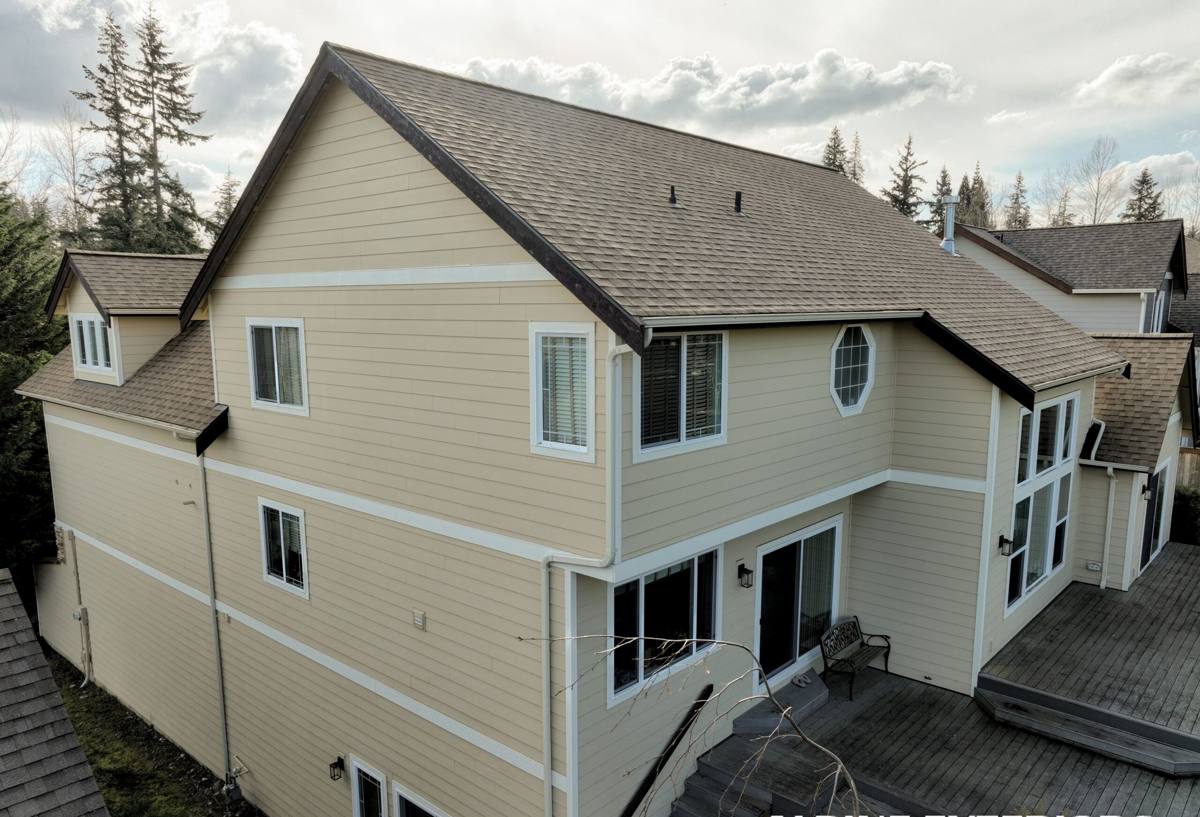
How to Tell a Window Is Actually Failing (Not Just Old)
Age alone doesn't mean a window needs replacing. What matters is whether the seals, frame, and flashing are still doing their job. In this climate, failure usually shows up in a handful of predictable ways before it becomes a real problem.
- Fogging or a milky haze between the panes of a double- or triple-pane window — the seal has failed and the gas fill (or just dry air) has been replaced by moisture
- Soft, spongy, or darkened wood at the sill or lower corners of the frame, often the first place rot takes hold
- Visible gaps between the frame and the siding or trim, which lets wind-driven rain track behind the window instead of shedding off it
- Windows that are noticeably harder to open, close, or lock than they used to be — frames can swell with trapped moisture and bind
- A cold draft near the window on a still day, which usually points to failed weatherstripping or a warped sash
- Moss or dark streaking building up on the sill or lower trim faster than on the rest of the exterior — a sign that water is sitting there instead of draining
Any one of these is worth a look. Two or more, especially rot or persistent moisture, usually means repair won't hold for long and replacement is the more honest recommendation.
What a Correct Window Replacement Involves
The window unit itself is only part of the job. Most of the failures we get called out to fix in this area trace back to installation shortcuts, not a bad product. Getting it right matters more here than in drier climates because there's less margin for error before water finds a way in.
Flashing and the moisture barrier
Every opening needs to be flashed so that water is directed out and away from the wall framing, layered correctly with the house wrap or building paper so nothing can wick backward under the siding. This is the single most common place we find past shortcuts — flashing tape run in the wrong order, or skipped entirely because it's hidden once the trim goes back on. In an area with as much driving rain as Alger sees, a flashing mistake doesn't show up right away. It shows up eighteen months later as soft sheathing.
Fastening, shimming, and squaring
A window has to be shimmed level, plumb, and square before it's fastened, or the sash won't seat evenly against the weatherstripping — which is exactly how drafts and water intrusion start. Fasteners need to hit solid framing, not just trim.
Sealing the interior and exterior separately
The exterior seal keeps bulk water out; the interior seal controls air leakage and condensation. They're not the same joint and shouldn't be treated as one. Sealing both with the wrong product, or skipping the interior air seal, is a common source of the cold-draft complaints we hear about in older replacement jobs.
Choosing a Frame Material for This Climate
There's no single "best" window material — each has real trade-offs, and the right call depends on your home's exposure, your budget, and how much upkeep you want to take on. Here's how the common options generally compare for a coastal Whatcom County property.
| Frame Material | How It Handles Salt Air & Moisture | Maintenance | General Cost |
|---|---|---|---|
| Vinyl | Doesn't corrode or rot; performs well against salt air | Low — occasional cleaning | Lower |
| Fiberglass | Very stable in moisture and temperature swings; strong long-term option | Low | Mid to higher |
| Wood-clad | Attractive, but the exposed wood interior and any gaps in the cladding are vulnerable to our rain and moss exposure | Higher — periodic inspection and refinishing | Higher |
| Aluminum | Durable but conducts cold and can corrode faster near salt air without a quality finish | Moderate | Mid |
As a professional standard, we're cautious about recommending wood-clad or bare aluminum for homes with direct salt air exposure — not because the products are bad, but because both demand more consistent upkeep to hold up here, and a missed year of maintenance costs more than the material saved. Vinyl and fiberglass tend to be the lower-maintenance, more forgiving choices for this specific climate, and we'll walk you through the real trade-offs for your home rather than pushing one option.
Our Alger Window Replacement Process
- On-site assessment. We look at every window being considered, check for hidden rot around the frame and sill, and note anything unusual about that side of the house — sun exposure, wind direction, roof drainage nearby.
- Honest scope and options. You get a clear picture of what actually needs replacing, what could reasonably wait, and which frame materials make sense for that specific opening.
- Opening prep. Old units come out carefully so we can inspect the framing and sheathing underneath before anything new goes in. Any soft or damaged wood gets addressed at this stage, not covered over.
- Flashing and installation. New flashing, correct shimming, and proper fastening — the steps that determine whether the window performs for twenty years or five.
- Interior and exterior finish work. Trim, sealant, and touch-up so the new window looks right and is fully weathered in before we consider the job done.
- Final walkthrough. We check operation, seals, and appearance with you before we leave.
What Drives Cost
Every home is different, but the same handful of factors move the price of a window replacement up or down. We'll always give you specifics for your home rather than a number pulled out of thin air, but this is generally what to expect going in.
| Factor | Why It Matters |
|---|---|
| Frame material chosen | Vinyl and fiberglass sit at different price points; wood-clad and specialty finishes cost more |
| Number of windows | Doing several openings at once typically brings a better per-window cost than one at a time |
| Condition of the existing opening | Hidden rot or damaged sheathing found during removal adds labor and material to fix properly |
| Window size and configuration | Large picture windows, bays, and custom shapes cost more than standard double-hungs |
| Access and height | Second-story or hard-to-reach openings take more time and equipment |
The one factor we'd flag specifically for this area: don't be surprised if we find some hidden moisture damage once an old window comes out. It's common enough on homes exposed to this much rain and salt air that we always build inspection time into the process rather than assuming the wall behind the trim is sound.
Why a Crew That Already Works Alger Matters
Window replacement isn't a one-size-fits-all job, and a crew that mostly works drier inland areas doesn't necessarily know to check for the things that matter here — how far salt air travels inland on this stretch of the coast, which sides of a house take the worst wind-driven rain, or how long moss can sit against trim before it starts holding moisture against the wood. None of that is complicated, but it's the kind of knowledge that only comes from doing the work in this exact climate, on this exact housing stock, repeatedly.
It also matters for something simpler: showing up. A contractor based near Alger can get back out for a warranty check, a follow-up question, or a small adjustment without treating it as a special trip. That's a real difference over the life of a window, not just at installation.
After Installation: Keeping Windows Performing
A correctly installed window in this climate still benefits from a little seasonal attention. None of this is complicated, but skipping it is how avoidable problems creep in.
- Rinse salt residue and grime off the glass and frame periodically, especially after storms — salt film left to sit is abrasive and can dull finishes over time
- Keep moss and debris cleared from sills and nearby trim so water has a clear path to drain instead of pooling
- Check that exterior caulking around the frame stays intact; a hairline gap is a five-minute fix now and a bigger repair later
- Operate each window a few times a year, even ones you don't normally open, so hardware and weatherstripping don't seize up from disuse and moisture
- Watch for condensation between panes — it's the clearest sign a seal has failed and is worth addressing before it leads to fogged glass everywhere
Get a Free, No-Pressure Estimate
If your windows are drafty, fogging, sticking, or just original to a house that's seen a lot of Whatcom County weather, it's worth having someone take a real look before deciding what to do. We'll walk your home, tell you honestly what needs attention and what doesn't, and give you options that make sense for your budget and this climate — no pressure, no upsell. Use the form below to request a free estimate for your Alger home.