 Chuckanut Exterior
 Alger's Climate Is Hard on Siding — Here's Why
Alger sits close enough to the water and the foothills that homes here take a steady beating from three things at once: salt-laden air drifting off the bay, driving rain that comes in sideways during winter storms, and a moss season that can run from fall through spring in the shade of the surrounding trees. Any one of those would wear on exterior siding over time. Together, they speed up problems that homeowners in drier parts of the state might not see for decades.
Salt air is corrosive to fasteners and can accelerate the breakdown of paint films and caulk joints. Wind-driven rain finds every gap, lap, and penetration in a siding system and pushes water where it was never meant to go. And moss doesn't just look bad — it holds moisture against the siding surface for weeks at a time, which is exactly the condition that rots wood-based products and stains or degrades weaker cladding materials. In Whatcom County, siding repair isn't a cosmetic afterthought. It's maintenance that protects the structure behind the wall.
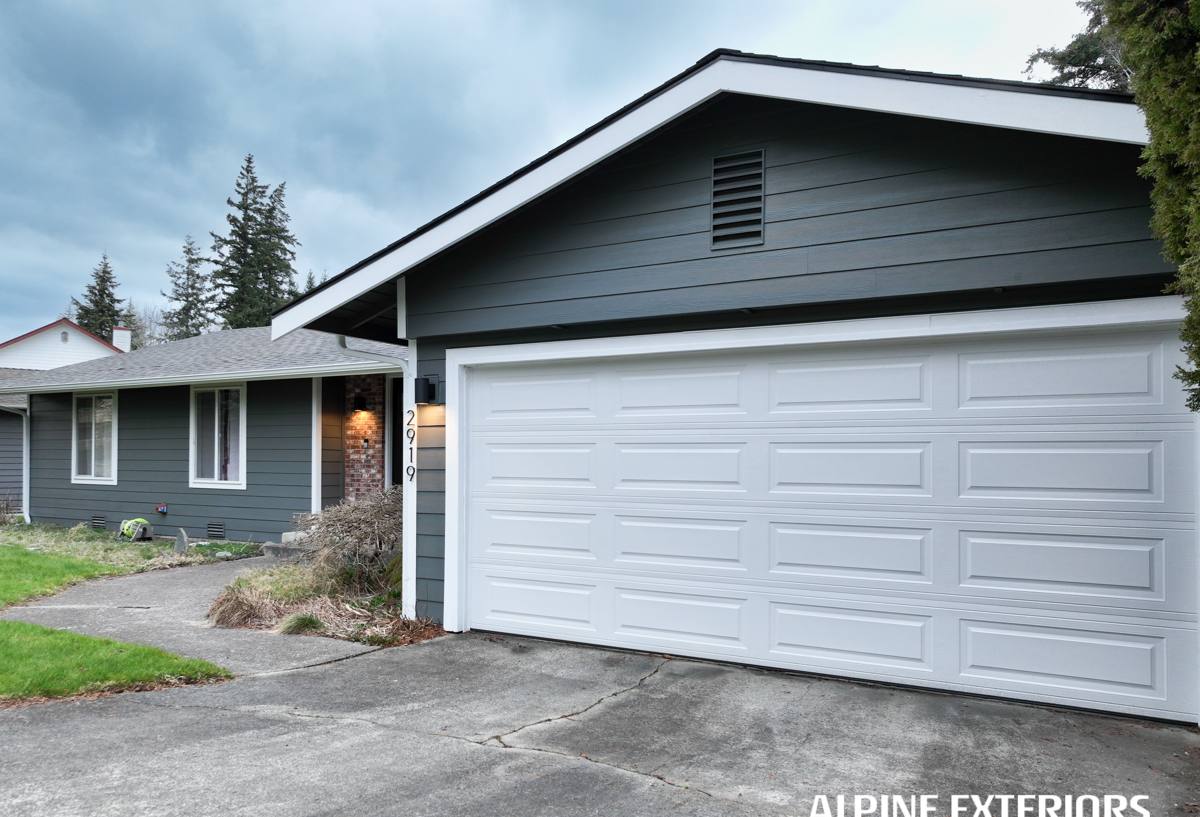
Signs an Alger Home Needs Siding Repair
Most siding failures don't happen overnight. They start small and get worse every wet season they're left alone. Here's what we tell Alger homeowners to watch for:
- Soft or spongy spots when you press on the siding, especially near the bottom courses or under windows
- Visible gaps, cracks, or separated joints where panels meet trim, corners, or window and door casings
- Peeling, bubbling, or chalky paint that keeps coming back even after a fresh coat
- Dark streaking, persistent moss or algae growth, or a musty smell near exterior walls
- Warped, buckled, or bowed panels, particularly on north- and west-facing walls that stay shaded and wet longest
- Nail pops, loose fasteners, or panels that flex or rattle in wind
- Interior clues — peeling paint, soft drywall, or musty odors on walls that back up to exterior siding
Any one of these on its own might be a minor fix. Several together, especially on the same wall, usually mean water has been getting behind the siding for a while and the repair needs to address more than just the surface.
What a Correct Siding Repair Actually Involves
A siding repair done right isn't just cutting out a bad board and nailing in a new one. In a climate like Alger's, the water management behind the siding matters as much as what you see on the wall.
Diagnosing the Real Problem First
Before we touch a single panel, we look at why that section failed. Was it a flashing detail that let water track behind the siding at a window head? A caulk joint that dried out and cracked? A missing or damaged weather-resistant barrier underneath? Moss and grime holding moisture against the wall long enough to soften the material? Repairing the visible damage without fixing the cause just buys a homeowner a repeat visit in a year or two.
Removing Damaged Material the Right Way
We pull back only what's necessary to expose sound material and inspect the sheathing and house wrap underneath. If we find rot in the framing or sheathing, that has to be addressed before any new siding goes back on — patching over hidden rot is one of the most common shortcuts that leads to bigger repairs down the road.
Restoring the Water Management System
Proper flashing at windows, doors, and any wall penetrations, correctly lapped house wrap, and the right fastening pattern all matter more than the siding material itself. This is the part of a repair that's invisible once the job is done, but it's what actually keeps Alger's driving rain out of the wall assembly.
Matching and Finishing
New siding needs to match the existing coursing, reveal, and profile so the repair blends in rather than standing out as a patch. Paint and caulk selection matters too — using products rated for exterior exposure in a marine climate, not whatever's on the shelf.
Repair or Replace? How We Help You Decide
Not every damaged section needs a full re-side, and not every "small" repair is actually small once you open the wall. We walk homeowners through the real trade-offs rather than defaulting to the most expensive option.
| Factor | Favors Repair | Favors Replacement |
|---|---|---|
| Extent of damage | Isolated to one or two wall sections | Multiple walls, widespread staining or rot |
| Underlying sheathing | Sound, no rot found on inspection | Soft spots or rot found in multiple areas |
| Siding material | Still in good shape overall, just localized failure | Original material at or past its service life |
| Age of siding | Relatively young, still under warranty coverage | Original install is decades old, already failing in several spots |
| Homeowner goals | Address the immediate problem cost-effectively | Want long-term, low-maintenance performance for a coastal climate |
When damage is isolated and the wall assembly underneath is sound, a targeted repair is the honest recommendation — and we'll tell you that even though a full re-side is a bigger job for us. When we find recurring failures across several walls, or rot that keeps turning up every time we open a section, we'll say so plainly and explain why continuing to patch is likely to cost more over time than addressing it properly.
Why We Repair — and Rebuild — with James Hardie
When a repair calls for replacing a section of siding, or when a homeowner decides it's time to stop patching and re-side a wall or the whole house, we use James Hardie fiber cement exclusively. It's the only siding material we install, full stop. We don't carry vinyl, LP SmartSide, primed spruce, cedar, or other fiber cement brands, and that's a deliberate standard, not a lack of options.
In a climate like Alger's — salt air, sustained rain, heavy moss pressure — the materials that struggle most are the ones that absorb moisture, swell, or rely on paint film alone to stay protected. Fiber cement is non-combustible and dimensionally stable, and James Hardie's ColorPlus factory finish is baked on and warranted against fading and peeling, which matters when a wall stays damp and shaded for months at a stretch. Hardie also engineers specific product lines (their HZ5 designation) for wetter, harsher climates like the Pacific Northwest, which is a meaningful difference from siding built to a national average spec.
None of that means every other product is a bad choice for every home. It means that after years of doing repair and replacement work in this specific climate, we made a call about what we're willing to put our name behind, and we stand by it. If your current siding is a different material and needs a small repair, we'll do that repair honestly. If it's time to replace a section or a wall, we'll explain why we'll only do that in Hardie.
Our Siding Repair Process
- Free on-site assessment — we look at the damaged area, check surrounding sections, and probe for soft spots or hidden moisture, not just the obvious problem.
- Honest diagnosis — we explain what caused the failure, what it will take to fix it correctly, and whether repair or replacement makes more sense for that section.
- Clear, written estimate — scope, materials, and cost laid out before any work starts, no surprise add-ons mid-job.
- Removal and inspection — damaged material comes off, sheathing and house wrap get inspected, and we flag anything additional we find before proceeding.
- Correct water management — flashing, house wrap laps, and fastening are restored to spec, not just covered back up.
- Matched, finished repair — new material installed to match existing coursing and profile, sealed and painted with exterior-rated products.
- Final walkthrough — we show you the completed work and explain any maintenance steps for that area going forward.
What Happens When Siding Repairs Get Put Off
In Alger's climate, a small siding problem rarely stays small. Wind-driven rain and long stretches of damp shade under moss growth mean a gap or crack that would sit relatively harmless in a dry climate keeps getting worse here with every storm. What starts as a soft spot at the bottom of one panel can, over a couple of wet seasons, turn into rot that reaches the sheathing or framing behind it — which turns a same-day repair into a multi-day project involving structural repair, not just siding.
Moss left to grow against siding does similar damage more slowly. It holds water against the surface long after a storm has passed, which is part of why we recommend addressing both the moss and the underlying siding condition together rather than just pressure-washing and calling it done. Washing without repairing the material underneath just resets the clock on damage that's already started.
Why Hiring a Crew That Already Works Alger Matters
Siding repair in this part of Whatcom County isn't identical to siding repair inland or in a drier climate. A crew that regularly works Alger and the surrounding Chuckanut area already knows which wall orientations fail first, how moss pressure behaves under the local tree cover, and how much margin to build into flashing and sealant details for the amount of driving rain this area gets. That local pattern recognition shows up in faster, more accurate diagnoses and repairs that are built for the conditions actually hitting the wall — not a generic spec sheet.
It also means accountability. A local crew is going to be back in this area next season and the one after that, which is a real incentive to do the repair right the first time rather than the fastest way to close out a job.
Maintaining Repaired Siding in a Coastal, Mossy Climate
A good repair holds up longer with a little ongoing attention, especially given what Alger's air and rainfall put siding through:
- Rinse siding periodically to clear salt residue and grime buildup, especially on walls that face open water or prevailing wind
- Keep gutters clear so overflow doesn't run down and pool against siding at the roofline
- Trim back vegetation and tree cover where practical to cut down on shade and moisture that feed moss growth
- Address new moss or algae promptly with an appropriate wash rather than letting it establish and spread
- Re-caulk joints and touch up paint as soon as cracking or peeling appears, not after it's spread
- Walk the exterior once or twice a year and press-test any areas that look suspect, particularly low on the wall and under windows
Get a Straight Answer About Your Siding
If you're seeing soft spots, gaps, moss buildup, or paint failure on your Alger home, it's worth getting a real assessment before the next round of winter rain finds its way in. We'll give you an honest read on whether it's a straightforward repair or something bigger, explain exactly what we'd do and why, and give you a clear estimate with no pressure to sign anything on the spot. Reach out through the form below for a free evaluation.