 Chuckanut Exterior
 Why Siding Choice Matters More in Alger Than Most Places
Homes around Alger sit in one of the more demanding exterior environments in Whatcom County. You've got salt-laden air drifting in off the water, long stretches of driving rain that come sideways off the water, and a wet, shaded moss season that can stretch for months at a time. Add in the tree cover that shades a lot of lots in this area, and you have siding conditions that punish anything less than a correctly installed, moisture-tolerant material. A siding job that would hold up fine in a dry inland climate can start failing within a few years out here if it's the wrong product or the wrong installation.
That's the lens we bring to every Alger project: this isn't a generic siding job, it's a job for this specific climate. What goes on the wall, how it's flashed, how it drains, and how it's fastened all matter more here than in most parts of the state.
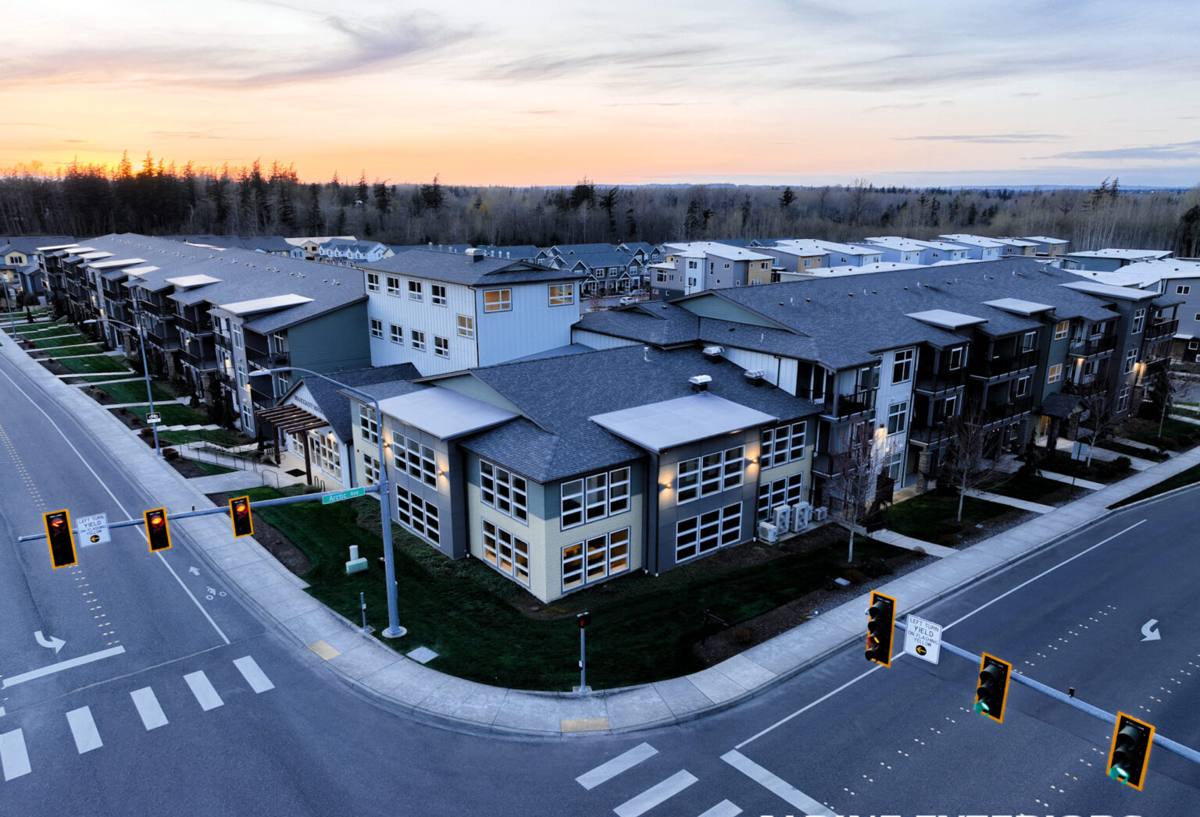
What Alger's Climate Actually Does to Siding
Three factors do most of the damage to exterior siding in this part of Whatcom County:
- Salt air — accelerates corrosion of fasteners, trim metal, and any hardware that isn't rated for coastal exposure, and it degrades cheaper paint and coating systems faster than inland conditions would.
- Driving rain — wind-driven rain doesn't just wet the surface of siding, it pushes moisture into laps, seams, and fastener penetrations. Siding that isn't installed with the right overlaps, gaps, and flashing details will eventually let water behind it.
- Moss and prolonged dampness — shaded, north-facing, and tree-covered walls stay damp longer here than almost anywhere else in the region. Moss and algae growth isn't just cosmetic — it holds moisture against the siding surface for extended periods, which is exactly the condition that rots wood-based products and delaminates lower-grade composites.
None of this is unique to any one house in Alger — it's the baseline condition for the whole area. Any siding installed here needs to be selected and installed with that baseline in mind, not treated like a standard job.
Why We Install Only James Hardie Fiber Cement Siding
We made a deliberate decision to install one product line — James Hardie fiber cement siding — and nothing else. Not vinyl, not LP SmartSide, not primed spruce or cedar, not other fiber cement brands. That's not a marketing position, it's a standard we hold because of what this climate does to exterior materials over time.
Fiber cement is non-combustible and dimensionally stable, meaning it doesn't swell, warp, or absorb water the way wood-based or engineered-wood siding products can. James Hardie specifically engineers its HardieZone products for regional climate conditions, factory-applies its ColorPlus finish so the color and coating are baked on rather than field-painted, and backs the product with a strong transferable warranty. When it's installed correctly, it holds up to exactly the combination of salt air, driving rain, and moss exposure that defines this area. That reliability is why we don't offer alternatives — we'd rather do one product exceptionally well than offer several and let a homeowner unknowingly pick one that struggles here.
What Correct Siding Installation Actually Involves
Fiber cement siding is only as good as the installation behind it. A lot of the failures we see on older homes in this area aren't product failures — they're installation shortcuts that let moisture get behind the siding. Correct installation includes:
Weather-Resistive Barrier and Drainage
A properly lapped weather-resistive barrier goes on before any siding, with a drainage gap where the wall assembly calls for it so bulk water can escape rather than sitting against the sheathing. In a driving-rain climate like this one, this layer is doing a lot of the real work.
Flashing at Every Penetration
Windows, doors, hose bibs, light fixtures, and any other wall penetration need proper flashing so wind-driven rain can't track in around the edges. This is one of the most commonly rushed steps on lower-quality jobs, and it's usually where leaks originate years later.
Fastener Selection and Placement
Corrosion-resistant fasteners, placed and set to manufacturer spec, matter enormously in a salt-air environment. Overdriven or underdriven fasteners, or the wrong fastener material, are a slow-motion failure point — they may look fine for a few years and then start staining, backing out, or letting water track along the shank.
Clearances and Gaps
James Hardie specifies minimum clearances from grade, roofing, decks, and other abutting surfaces, along with expansion gaps at butt joints and trim. Skipping these clearances is one of the most common causes of moisture damage and premature paint failure we see on homes that weren't installed to spec.
Our Installation Process for Alger Homes
The process doesn't change dramatically house to house, but the details we pay closest attention to are shaped by this specific area:
- On-site assessment — we look at sun exposure, tree cover, wind exposure, and existing moisture or moss issues on your specific walls before recommending a product line or color.
- Tear-off and sheathing check — old siding comes off and we inspect the sheathing underneath for rot or damage before anything new goes on. This is often where hidden problems from a prior installation surface.
- Weather barrier and drainage plane installation — installed to current best practice, not just to the minimum code requirement.
- Flashing and penetration detailing — every window, door, and penetration gets flashed before siding closes it in.
- Hardie panel or plank installation — installed to manufacturer fastening, overlap, and clearance specifications.
- Trim, caulking, and touch-up — factory-finished ColorPlus product means minimal field painting, which also means fewer seams where moisture and salt air can compromise a coating over time.
- Final walkthrough — we go over the finished job with you before we consider it done.
James Hardie Product Lines and Color Options
James Hardie builds its HardieZone system around regional climate profiles, and homes in this part of Washington typically fall into the HZ5 zone, engineered for wetter, more moisture-exposed conditions. Depending on the look you want, that generally means a choice between:
| Product | Look | Best Fit For |
|---|---|---|
| HardiePlank lap siding | Traditional horizontal lap | Most Alger-area homes, classic or updated exteriors |
| HardiePanel vertical siding | Board-and-batten, vertical panels | Modern exteriors, accent walls, gable ends |
| HardieShingle siding | Staggered or straight shingle profile | Craftsman or cottage-style homes |
| HardieTrim boards | Corner boards, fascia, window trim | Pairs with any of the above for a finished look |
ColorPlus finishes come pre-baked at the factory in a range of colors engineered to hold up against UV and moisture exposure better than field-applied paint, which matters in an area where repainting siding every several years isn't something most homeowners want to deal with.
What Siding Replacement Typically Costs — and What Drives the Price
Every home is different, but the price of a siding job in this area is generally driven by a handful of factors rather than square footage alone:
| Factor | Why It Matters |
|---|---|
| Existing wall condition | Rotted sheathing found during tear-off adds repair work before new siding can go on |
| Home shape and trim detail | More corners, gables, and window/door openings mean more flashing and cutting labor |
| Siding profile chosen | Lap, panel, and shingle products install at different rates and price points |
| Access and site conditions | Tree cover, slope, and staging space around the home affect labor time |
| Trim and color package | Custom trim details and premium ColorPlus colors can shift material cost |
We won't quote a number without seeing the home — anyone who does is guessing. What we can tell you is that the biggest cost swings usually come from what's discovered once old siding comes off, which is exactly why the tear-off and sheathing inspection step matters so much.
Choosing a Siding Contractor Who Knows This Area
A crew that's only worked drier, inland jobs can install siding perfectly well on paper and still get the details wrong for a coastal, moss-prone, wind-driven-rain environment like Alger. Local experience shows up in the small decisions — where extra flashing gets added, which fastener spec gets used, how clearances get handled around a shaded, damp wall. Before hiring anyone for a siding job in this area, it's worth asking:
- Do you install to the manufacturer's published fastening and clearance specifications, or your own shortcuts?
- How do you handle flashing at windows, doors, and penetrations?
- What weather-resistive barrier and drainage approach do you use behind the siding?
- Are your fasteners rated for coastal, salt-air exposure?
- What does the manufacturer's warranty actually cover, and does your installation keep it intact?
- Can you explain why you'd choose one Hardie product line over another for this specific home?
A contractor who can answer these clearly, without hedging, is one who's actually done the work in conditions like this — not just read the installation manual once.
Maintenance After Installation
Correctly installed James Hardie siding is low-maintenance, but "low" isn't "none" in this climate. A periodic rinse to clear off moss, pollen, and salt residue keeps the ColorPlus finish looking right and prevents organic growth from taking hold on shaded walls. Keeping gutters clear and grade clearances intact around the base of the home also goes a long way toward keeping water where it belongs — away from the wall assembly. None of this is heavy upkeep, but it's worth doing a couple of times a year given how much moisture this area sees.
If you're weighing a siding project for a home in or around Alger, we're happy to walk the property, look at your specific exposure and existing siding condition, and give you a straightforward, no-pressure estimate — just fill out the form below to get started.