 Chuckanut Exterior
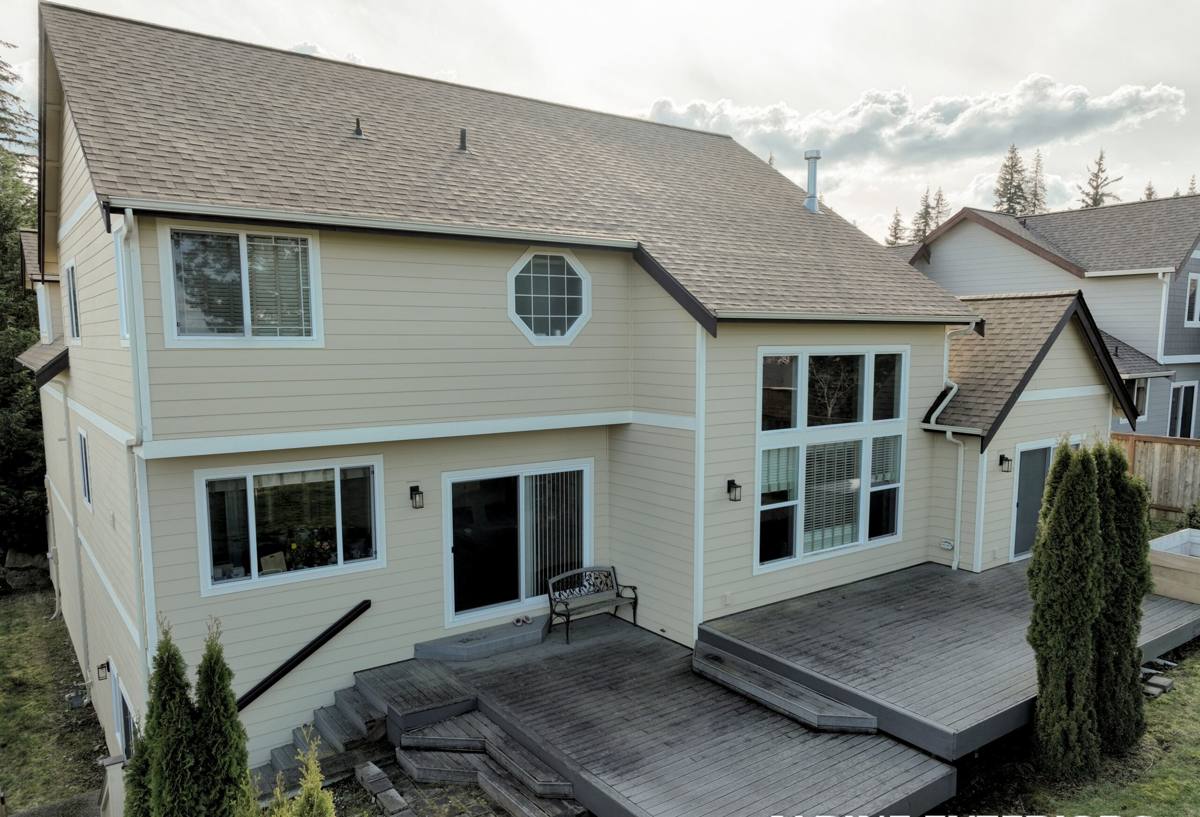
 Deck Replacement in Alger: What This Climate Actually Demands
Alger sits in the quieter, forested stretch of Skagit County near Lake Samish, just south of the Chuckanut corridor — a mix of tree cover, lake-influenced humidity, and enough distance from the coast that people sometimes assume the weather is gentler here than it is right on the water. It isn't. Salt air still reaches this far inland on a west wind, driving rain still comes in sideways off the Sound during winter storms, and the tree canopy that gives Alger its character also means decks here stay shaded and damp for long stretches after every storm. That combination is hard on a deck in ways that aren't always obvious from the top side.
A deck is one of the few parts of a house that's engineered to hold weight, exposed to weather on every surface, and fastened together with dozens of individual connections — any one of which can become the weak point that brings the whole structure into question. When a deck in Alger needs to come out, the goal of a proper replacement isn't just a new-looking surface. It's a structure built to actually shed water, resist the moss and mildew that this area's shade and humidity practically guarantee, and hold up under this specific climate for the next couple of decades.
Signs an Alger Deck Needs Replacing, Not Just Patching
Structural Warning Signs
Some problems are worth a repair; others mean the deck has reached the end of its safe life. Soft or spongy decking boards, a ledger board that's separated even slightly from the house, joists that flex noticeably underfoot, or any post base sitting in standing water or visibly rotted at the bottom are all structural red flags. Rust streaking around fasteners or hardware is another sign worth taking seriously — it usually means the connectors are corroding from the inside, which isn't something you can see just by looking at the surface.
When Repair Still Makes Sense
Not every issue means a full tear-out. A handful of failing boards on an otherwise sound frame, cosmetic graying, or isolated moss buildup on the surface can often be addressed with board replacement, cleaning, and refastening rather than a full rebuild. The distinction that matters is whether the problem is in the decking surface or in the framing underneath — surface problems are usually a repair, framing problems usually aren't.
What a Correct Deck Replacement Involves
Ledger Attachment and Flashing
The ledger board — where the deck attaches to the house — is the single most important connection on the entire structure, and it's also the one most likely to be done wrong on an older or lower-cost build. It needs proper flashing to keep water from wicking into the house's wall assembly, and it needs to be through-bolted or lag-bolted into solid framing, not just nailed to siding or trim. In a climate that gives Alger driving rain for months at a time, a poorly flashed ledger is one of the most common hidden causes of rot you'll find once old decking comes up.
Framing, Footings, and Fasteners
Joists, beams, and posts need to be sized correctly for the span and load, set on footings that are below frost depth and clear of standing water, and connected with hardware rated for exterior, moisture-heavy exposure — not just whatever fasteners happen to be on the truck. Galvanized or stainless connectors matter more here than in a drier climate, because sustained dampness under tree cover accelerates corrosion on anything undersized or improperly coated. This is also where a lot of the real cost of a deck lives, even though none of it is visible once the decking boards go down.
Decking Material and Fastening
The decking surface is what a homeowner sees and touches every day, but it's the last decision in the sequence, not the first. Board spacing has to account for this area's moisture and seasonal wood movement, fasteners need to be corrosion-resistant, and end cuts on wood decking should be sealed before installation rather than left raw. Whatever material is chosen, it only performs as well as the framing and fastening decisions made before it went down.
Choosing a Decking Material for Alger's Climate
There's no single right answer here — wood and composite decking are both legitimate choices, and the right one depends on budget, maintenance tolerance, and how much shade and moisture a given deck actually sits under. What matters is being honest about the trade-offs up front, rather than after a few Alger winters have made the decision for you.
| Factor | Wood Decking | Composite Decking |
|---|---|---|
| Upfront cost | Lower | Higher |
| Moisture behavior | Can cup, check, or decay if finish isn't maintained | Does not rot or absorb moisture into the core |
| Moss and mildew resistance | Porous surface holds organic growth without regular cleaning | Denser surface sheds growth more easily, still needs periodic cleaning |
| Maintenance | Re-stain or seal every 1-3 years in this climate | Periodic washing; no staining or sealing required |
| Typical lifespan here | 10-20 years with consistent upkeep | 25-30+ years, manufacturer-warrantied |
| Repair approach | Individual boards easy to replace, close color match harder over time | Individual boards replaceable; color consistency depends on age/fade of remaining boards |
Homeowners who like the look and feel of real wood and are willing to keep up a finishing schedule can still get good years out of a wood deck in Alger. Homeowners who want to spend less time maintaining the surface and more time using it usually land on composite. Either way, we'll walk through what your specific site — shade, sun exposure, drainage — means for that choice rather than defaulting to one answer for every deck.
Our Deck Replacement Process
- On-site assessment. We look at the existing structure, ledger connection, footings, and any signs of rot or corrosion before recommending replacement over repair.
- Honest scope and estimate. You get a clear picture of what's being replaced, what materials are involved, and a straightforward cost range — no vague allowances that turn into surprises later.
- Permitting. Deck replacements of most sizes require a permit in Skagit County; we handle that process as part of the job rather than leaving it for the homeowner to sort out.
- Demolition and disposal. The old deck comes out, including a check of the ledger area and any framing that was hidden underneath it.
- Framing and structural work. New footings, framing, ledger flashing, and hardware go in to current code and to standards that account for this area's moisture exposure.
- Decking installation. Boards are installed with correct spacing and fastening for the material chosen.
- Final walkthrough. We go over the finished deck with you, including what maintenance it will need going forward.
Permits and Local Considerations Around Alger
Because Alger is unincorporated Skagit County, deck permitting and setback requirements run through the county rather than a city building department. Requirements can vary based on deck height, proximity to property lines, and whether the structure is attached to the house, so we pull the specifics for your property rather than assuming a blanket answer applies. Homes near Lake Samish or on sloped, wooded lots sometimes have additional site considerations — drainage, tree root proximity, or grading — that a crew unfamiliar with the area might not think to check before framing goes in.
Why a Crew That Already Works Alger Matters
A deck built for a dry, open, inland climate and a deck built for a shaded lot near Lake Samish with year-round moisture and periodic salt-laden wind are not the same structure, even if they look identical from the driveway. A crew that regularly works this specific area already knows which fastener grade holds up here, how much drainage slope a footing actually needs given how slowly the ground dries out under tree cover, and which parts of a deck fail first when a house sits in Alger's combination of shade, dampness, and coastal-influenced wind. That's knowledge that comes from having repaired and rebuilt decks in this exact kind of setting before, not from a general framing background applied to a new zip code.
It also matters for something more practical: familiarity with Skagit County's permitting process for this area means fewer delays and fewer surprises mid-project. A crew that's pulled permits here before knows what the county will ask for and what documentation speeds that process along.
Keeping a New Deck Performing in Alger
Whatever material you choose, a little regular attention goes a long way in this climate. A short annual routine is usually enough to keep a properly built deck performing for its full expected lifespan:
- Clear leaves and debris from between boards and along the ledger line, especially going into fall
- Check for standing water pooling anywhere on the surface after rain
- Look at fasteners and visible hardware for early rust streaking
- Wash off moss or algae buildup on shaded sections before it spreads
- Re-seal or re-stain wood decking on the schedule the finish requires, not just when it looks faded
- Confirm the ledger flashing and house connection still look tight and undamaged
None of these take long individually, but skipping them for a few years in a row is usually how a deck that should have lasted two decades starts showing serious problems in half that time.
If your Alger deck is showing its age, or you're just not sure whether what you're seeing is a repair or a replacement, we're happy to take a look and give you a straightforward, no-pressure estimate — use the form below to get started.