 Chuckanut Exterior
 The Chuckanut Climate Puts Real Demands on an Alger Roof
Homes in Alger sit close enough to the water that salt-laden air is part of daily life, and that air is hard on any roofing material that isn't chosen and installed with it in mind. Combine that with the driving, wind-pushed rain that comes through this stretch of Whatcom County during fall and winter storms, and you've got two forces working against a roof at the same time: corrosion from salt exposure and water intrusion from rain that doesn't fall straight down.
Then there's moss. The tree cover and persistent moisture around Chuckanut mean many Alger roofs stay damp and shaded for long stretches of the year, which is exactly what moss and algae need to take hold. On an asphalt shingle roof, moss works its way under the granule surface and lifts shingles over time. On a correctly installed metal roof, moss has almost nothing to grip, which is one of the biggest reasons homeowners here look at metal in the first place.
None of this means metal roofing is automatically "storm-proof" or maintenance-free. It means the material choice, the panel system, and the installation details all need to match what this specific climate throws at a roof — not a generic install that would work fine in a drier inland climate.
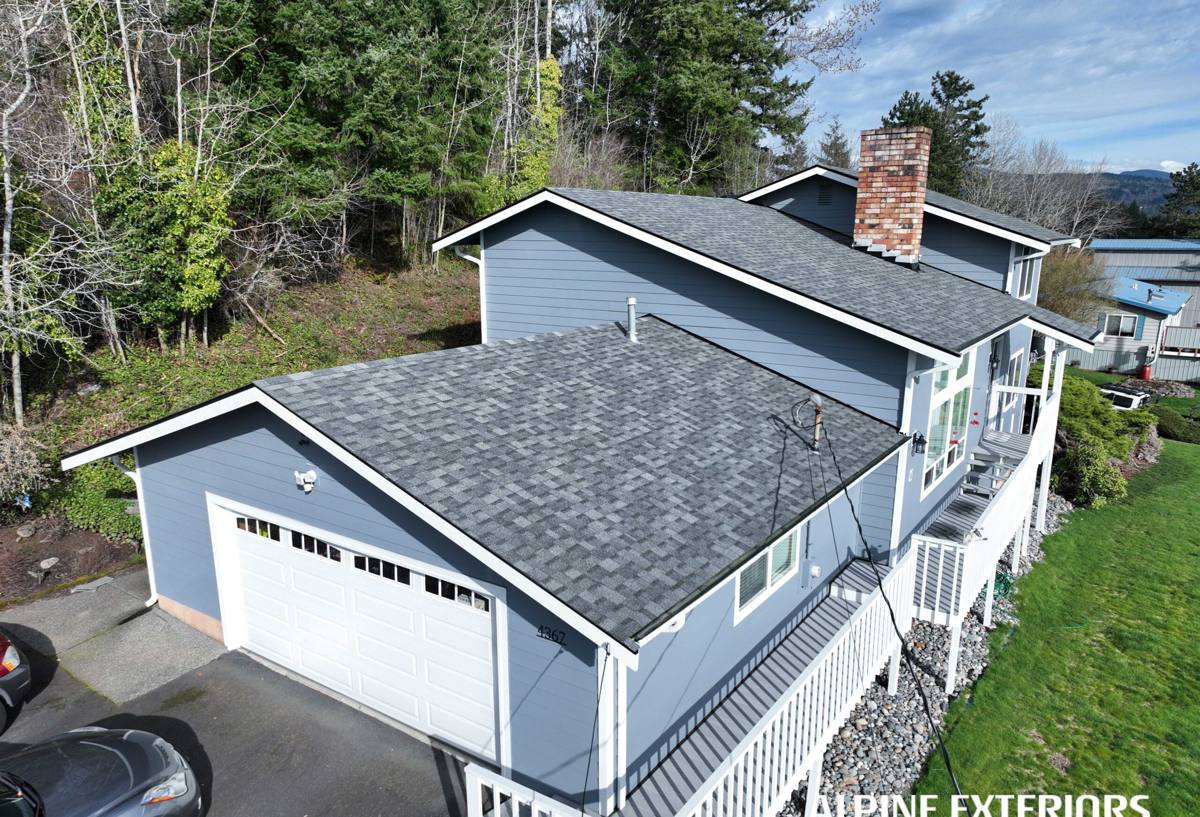
What a Correct Metal Roofing Installation Actually Involves
A metal roof is only as good as what's underneath it and how the details are handled. The panels themselves get most of the attention, but the underlayment, flashing, and fastening are what actually determine whether the roof holds up through years of Whatcom County weather.
Underlayment and Moisture Control
Given how much wind-driven rain this area sees, we treat underlayment as a real second line of defense, not an afterthought. That means a high-temperature synthetic underlayment across the full roof, with self-adhered ice-and-water membrane at eaves, valleys, and any low-slope transitions where water is most likely to back up or get pushed uphill by wind.
Flashing and Penetrations
Valleys, sidewalls, chimneys, vent stacks, and skylights are where most roof leaks actually start, regardless of the roofing material. Flashing has to be formed and layered correctly, and the metal used for flashing needs to be compatible with the panel metal and finish so you don't end up with galvanic corrosion between two dissimilar metals sitting next to each other in salt air.
Fastening and Thermal Movement
Metal panels expand and contract with temperature swings, and a roof near the water sees its own version of that with humidity and salt cycling. Standing seam systems use concealed clips that let panels move without stressing the fasteners. Exposed-fastener panels rely on gasketed screws that need to be set at the right torque and, over the life of the roof, occasionally checked and re-seated — something we walk owners through at handoff.
Choosing the Right Metal Roofing System for an Alger Home
Not all metal roofing is the same product wearing a different name. The three common categories perform differently once salt air and heavy rain are part of the equation.
| System | Corrosion Resistance | Maintenance | Best Fit |
|---|---|---|---|
| Standing seam (concealed fastener) | Highest — no exposed screw heads to corrode or work loose | Low; occasional seam and sealant check | Full coastal exposure, steeper roofs, long-term ownership |
| Exposed fastener panel | Good, but fastener gaskets and screw heads are the weak point over time | Moderate; fasteners should be inspected periodically | Budget-conscious projects, outbuildings, simpler rooflines |
| Metal shingle / shake profile | Good, similar to standing seam if properly coated | Low to moderate | Homes wanting a traditional shingle look with metal's durability |
For most Alger homes with direct or semi-direct salt air exposure, we lean toward standing seam because it removes the long-term weak point — exposed fasteners — from the equation entirely. That said, exposed-fastener systems installed correctly, with quality gasketed screws and a realistic maintenance plan, still perform well on many properties and cost less upfront.
Moss, Debris, and Salt Air: What Ongoing Care Looks Like
A metal roof resists moss far better than asphalt, but "resists" isn't "immune." Where branches overhang the roof or shaded valleys stay damp for days, moss and algae can still build up on the surface finish, especially in gutters and at panel overlaps where debris collects. Left alone, that buildup holds moisture against the panel longer than it should sit there.
Salt air adds its own maintenance item: a light film can settle on panels and fasteners over time, especially on roofs facing open water or exposed to onshore wind. A factory finish rated for coastal exposure holds up well, but gutters, flashing, and any exposed fasteners benefit from a periodic rinse-down to keep salt from concentrating in low spots.
The practical version of this: keep overhanging branches trimmed back, clear gutters and valleys before the fall rains ramp up, and do a visual check after major windstorms. That's a fraction of the upkeep an asphalt roof needs in this same environment, but it isn't nothing.
What Drives the Cost of a Metal Roofing Project in Alger
Metal roofing costs more upfront than asphalt shingles, and the final number on any given home depends on a handful of factors more than on the base price of the metal itself.
| Cost Factor | Why It Matters |
|---|---|
| Roof pitch and complexity | Steep slopes, multiple valleys, and dormers take more labor and more custom flashing work |
| Panel system chosen | Standing seam runs higher than exposed-fastener panel for the same square footage |
| Tear-off vs. overlay | Removing old roofing and inspecting the deck adds cost but avoids hiding existing problems |
| Deck condition and repairs | Rot or soft decking found during tear-off needs to be replaced before panels go on |
| Coastal-grade fasteners and finish | Upgraded corrosion resistance costs more but is worth it this close to salt air |
| Ventilation upgrades | Proper intake and exhaust venting protects the deck and can be required to keep some warranties valid |
We'd rather walk through these factors on your specific roof than quote a number that doesn't hold up once we're actually up there measuring and inspecting.
Our Process, Start to Finish
The process is the same whether it's a straightforward gable roof or something with more valleys and transitions — the details just take more time on the complicated ones.
- On-site inspection and measurement, including a look at current ventilation, flashing condition, and any signs of past leaks
- Walkthrough of panel system, gauge, and finish options based on your roof's exposure and your budget
- Written scope covering underlayment, flashing details, fastening method, and ventilation — not just "install metal roof"
- Tear-off (when applicable) with a deck inspection before anything new goes down
- Installation to manufacturer specification, including flashing and sealant details at every penetration
- Final cleanup and a walk-through so you know what maintenance, if any, the system needs
- Warranty paperwork covering both the material and our workmanship
Why a Crew That Already Works Alger Matters
A lot of what makes a metal roof last in this area comes down to judgment calls that aren't in a manufacturer's install manual — how much a particular roofline catches wind off the water, which valleys tend to hold debris longest, how much ventilation a given attic actually needs given the humidity here. A crew that's worked other roofs in and around Alger and Chuckanut has already seen how these homes weather over time, not just how they look on install day.
There's also a practical side: familiarity with local permitting expectations, and being close enough to respond quickly if a storm causes damage or a detail needs a second look after the first heavy rain season. That's harder to get from a crew that's driving in from well outside Whatcom County for a single job.
A Quick Checklist Before You Hire
Before signing a contract for metal roofing on your Alger home, it's worth confirming a few basics:
- Contractor is licensed, bonded, and insured in Washington State
- They're certified or trained to install the specific panel system being quoted
- The written estimate details underlayment, flashing, and fastening — not just panel type
- Warranty terms are spelled out separately for materials and workmanship
- They can speak to salt air and coastal exposure specifically, not just generic roofing
- There's a clear answer for what maintenance, if any, you'll need to do after install
- No pressure to sign same-day or "before a price goes up tomorrow"
If you're weighing metal roofing for a home in Alger, we're happy to take a look, walk you through what your specific roof needs, and give you a straightforward, no-pressure estimate — just fill out the form below.