 Chuckanut Exterior
 Why Alger Siding Wears Differently Than Siding Inland
Alger sits close enough to the water and the timber that its exterior surfaces deal with a specific combination of stress: salt-laden air moving in off the Sound and bay areas, driving rain that comes in sideways during winter storms, and long stretches of shade and dampness that let moss and algae take hold on north- and west-facing walls. None of these things alone is unusual for Western Washington. Together, on the same wall, year after year, they shorten the life of siding that wasn't built or installed with this climate in mind.
Salt air accelerates corrosion on fasteners, trim flashing, and any metal component that isn't rated for coastal exposure. Driving rain finds every gap in a siding system that relies on caulk alone rather than proper flashing and drainage. And a long moss season means organic growth sits against the wall surface for months at a time, holding moisture in place long after the rain has stopped. Siding that can't tolerate sustained dampness — or that traps water behind it instead of shedding it — starts failing from the inside long before it looks bad from the street.
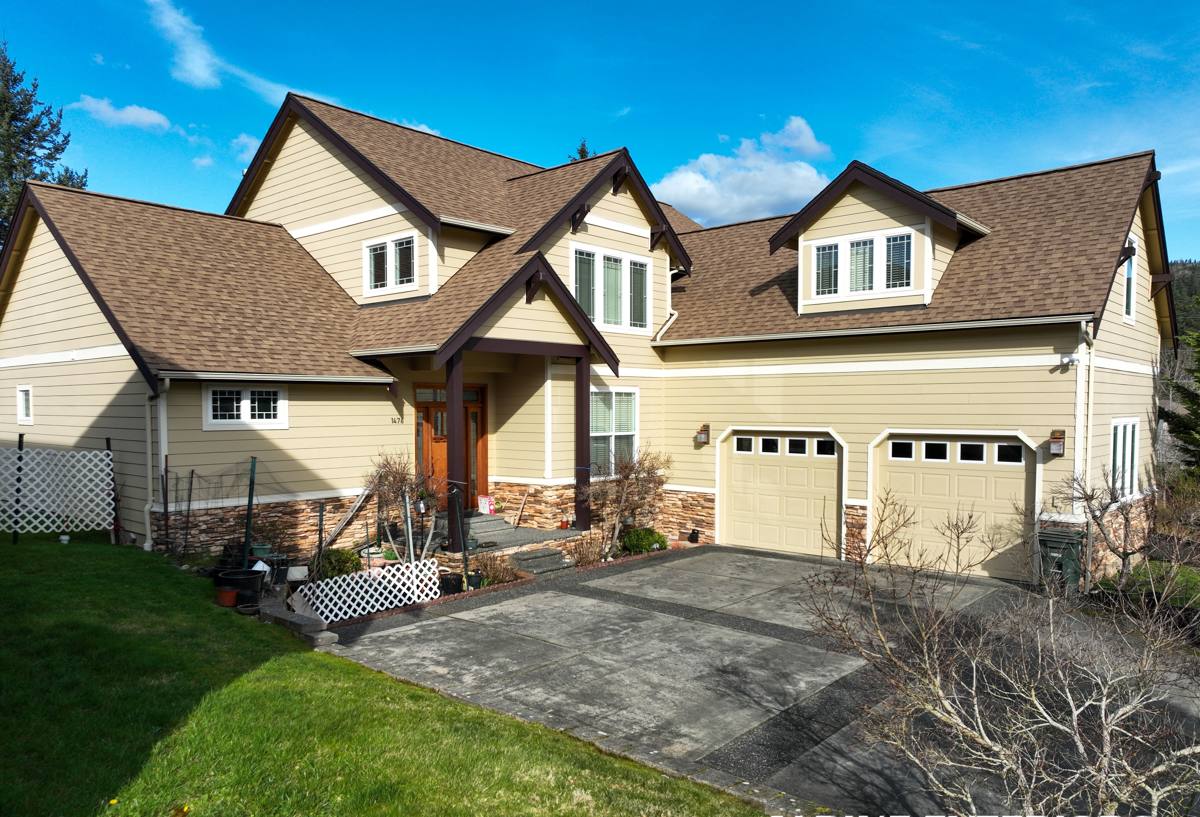
Why We Standardized on James Hardie for This Climate
We install James Hardie fiber cement siding exclusively. We don't install vinyl, LP SmartSide, Cemplank, Allura, primed spruce, or cedar, and that's a deliberate call, not a brand preference. Fiber cement doesn't swell, rot, or delaminate the way wood-based products can when they stay damp for weeks at a stretch, which matters directly in a moss-prone, high-moisture area like Alger. It's also dimensionally stable in a way vinyl isn't — vinyl expands and contracts more with temperature swings and can warp or bow over time, especially on walls that see direct afternoon sun after a cold, wet morning, which is a normal day here.
James Hardie backs its siding with a factory-applied ColorPlus finish and engineers specific product lines for different climate zones, including versions built for high-moisture, coastal conditions like ours. That combination — a material that handles sustained dampness well, a finish that doesn't rely on field-applied paint holding up against salt air, and a warranty structure that reflects manufacturer confidence in the product — is why we standardized on it rather than offering multiple siding brands and letting price decide the outcome.
What We're Not Claiming
We're not going to tell you every other siding product on the market is junk — that's not honest, and it's not our call to make about a competitor's product line. What we will say is that after years of installing and repairing siding in this climate, fiber cement done right has given us the fewest callbacks, the least moisture damage, and the longest service life. That's the standard we hold our own work to, and it's why we only put our name behind one system.
The James Hardie Product Lines We Use in Alger
Not every Hardie product fits every home. Part of a correct estimate is matching the product line to the house — its exposure, its architectural style, and how much of the wall actually sees weather versus how much is protected by roof overhang or landscaping.
| Product | Best Use | Why It Fits Here |
|---|---|---|
| HardiePlank lap siding | Most standard walls, full re-sides | Widest color and texture range, proven track record in coastal PNW conditions |
| HardieShingle | Accent gables, dormers, feature walls | Cedar-shake look without the moisture susceptibility of real wood shingle |
| HardiePanel | Modern/vertical designs, garages, shop buildings | Clean vertical lines, works well with board-and-batten detailing |
| HardieTrim | Corners, window and door casing, fascia | Matches the siding's moisture resistance so trim doesn't fail before the field material does |
All of these are available with the ColorPlus factory finish, which matters more here than in a drier climate — a factory-baked finish holds its color and its seal against sustained damp and salt exposure far better than field-applied paint, and it's backed by its own finish warranty separate from the substrate.
What Correct Installation Actually Involves
Fiber cement siding is only as good as the installation behind it. Most of the siding failures we get called out to inspect in this region aren't a material problem — they're a flashing, gap, or fastening problem that let water get behind the siding and stay there. That's a bigger risk in a climate with this much sustained rainfall and shade.
The details that matter most in Alger's conditions
- A proper rain-screen gap behind the siding so any moisture that does get past the surface can drain and dry instead of sitting against the sheathing
- Correct flashing at every window, door, and horizontal trim transition — the points where driving rain actually gets pushed into a wall
- Fasteners rated for the exposure, driven to Hardie's specified depth and spacing — over- or under-driven nails are one of the most common causes of early siding failure
- Proper clearance between the bottom of the siding and grade, decks, and roof lines, so splash-back and standing water don't sit against the material
- Factory-cut and field-cut edges sealed per Hardie's specifications, since an unsealed cut edge is the one place fiber cement can actually take on water
- Caulking used only where Hardie's install guide calls for it — over-caulking traps moisture just as much as under-caulking lets it in
None of this is exotic. It's the difference between following the manufacturer's installation manual to the letter and treating siding like a cosmetic wrap. In a climate that punishes shortcuts with moss, rot, and callback repairs, that difference shows up within a few wet seasons, not decades.
Our Process, Start to Finish
- Walkthrough and assessment — we look at your home's exposure (how much wind-driven rain and shade it actually gets), current siding condition, and any moisture or rot already present behind existing material
- Product and color selection — matching Hardie lines and ColorPlus colors to the home's style and exposure, not just the homeowner's first color pick
- Written estimate — scope, product lines, and a real cost range, with no pressure to sign on the spot
- Removal and inspection of the wall behind the old siding — this is where hidden rot or moisture damage from the old system gets found and addressed before new siding goes up over it
- Installation to Hardie's specification — rain-screen, flashing, fastening, and sealing done the way the manufacturer engineered the system to work
- Final walkthrough — checking trim, caulk lines, and finish before we consider the job done
Cost Factors on an Alger Siding Project
| Factor | Why It Moves the Price |
|---|---|
| Wall condition underneath old siding | Rot or moisture damage found during tear-off means sheathing repair before new siding goes on |
| Home size and wall complexity | More corners, gables, and trim details mean more labor and material cuts |
| Product line mix | Combining HardiePlank with HardieShingle accents or HardieTrim detailing adds cost over a single-product install |
| Site access | Steep lots, tree cover, or tight setbacks common around Alger can slow staging and scaffolding |
| Color and finish selection | Standard ColorPlus colors versus custom or field-painted finishes affect both cost and long-term maintenance |
We don't quote a number without seeing the house — anyone who does is either padding the estimate to cover surprises or planning to hit you with change orders once the old siding comes off.
Living With Hardie Siding in a Moss-Prone, Salty Climate
Correctly installed Hardie siding is low-maintenance, not no-maintenance. In Alger's conditions, that means an occasional gentle wash to keep moss and algae from establishing on shaded walls, keeping gutters clear so overflow doesn't run down the siding face, and trimming back vegetation that keeps a wall damp and shaded longer than it needs to be. None of this is labor-intensive, but skipping it for years lets organic growth build up in a climate that's especially good at producing it.
The ColorPlus finish means you're generally not repainting on the schedule that field-painted wood siding demands, which matters in a region where a paint job barely gets a full dry season before winter rain returns. That's a real, practical advantage here — not a marketing point.
Why a Crew That Already Works This Area Matters
Siding installed correctly on paper can still underperform if it's not adapted to the specific micro-conditions of a given property — how much shade a particular wall gets, how wind moves across a particular lot, where snow or rain tends to pool. A crew that's worked multiple homes around Chuckanut and Alger has already seen what actually happens to siding here over several wet seasons, not just what a spec sheet predicts. That local track record shapes small decisions — flashing details, product line choices, where extra attention to sealing pays off — that a crew unfamiliar with this specific stretch of Whatcom County wouldn't necessarily know to prioritize.
If your Alger home needs new siding, or you're trying to figure out whether your current siding is failing from age or from an installation shortcut, we're happy to take a look and give you a straightforward, no-pressure estimate — use the form below to get started.