 Chuckanut Exterior
 Why Siding Takes a Beating in the Alger Area
Homes around Alger sit close enough to the water and the tree line to catch the worst of both worlds. Salt-laden air moves in off the Salish Sea and settles on exterior surfaces, where it accelerates corrosion on fasteners, trim, and any siding material that isn't built to resist it. Add the driving, wind-pushed rain that comes through this part of the Pacific Northwest for much of the year, and you get moisture finding its way into every gap, seam, and butt joint that wasn't detailed correctly the first time.
Then there's moss. The long, damp, shaded season here isn't just a lawn and roof problem — moss and algae colonize siding too, especially on north-facing walls and anywhere tree cover blocks sun and airflow. Moss holds moisture against the surface long after the rain stops, which is exactly the condition that rots wood-based products and delaminates poorly-sealed panels. None of this is unique to any one street or subdivision near Chuckanut — it's the baseline climate load every exterior surface in this area has to survive, year after year.
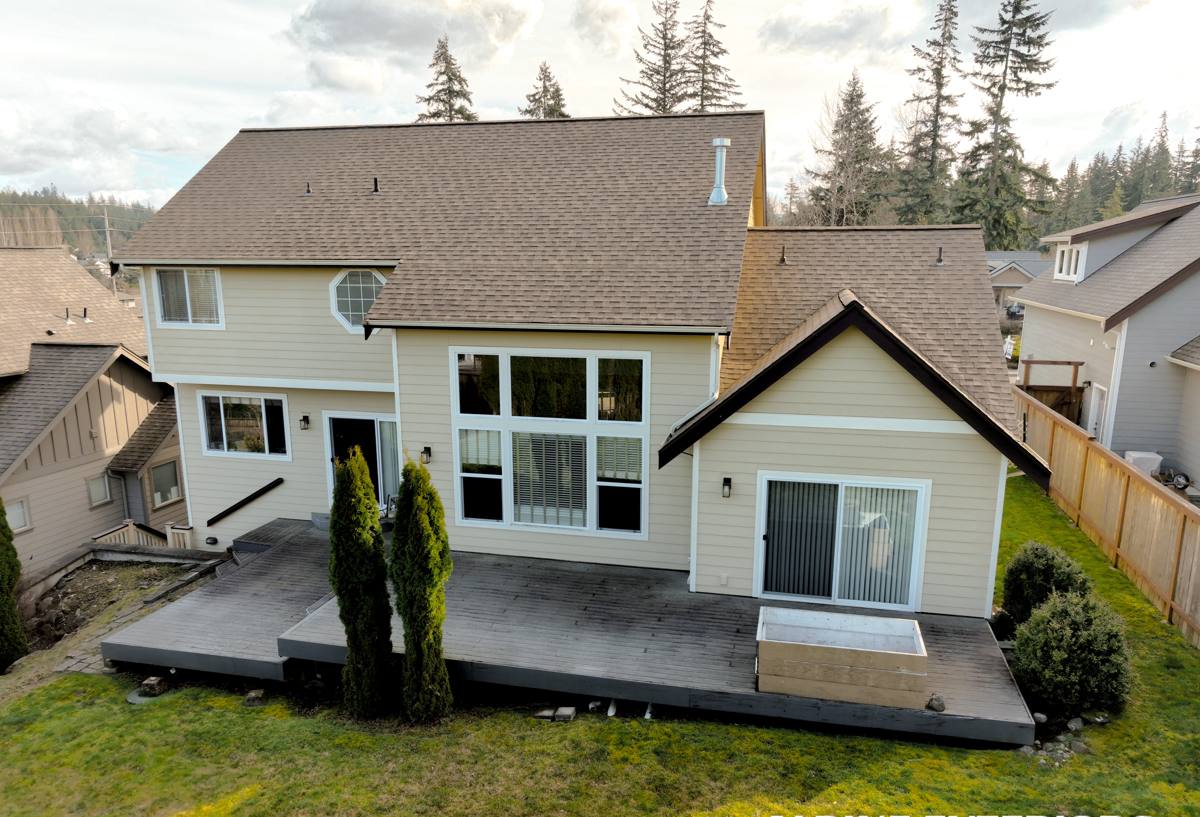
Signs Your Alger Home Is Overdue for Siding Replacement
Siding failure is rarely sudden. It shows up as a pattern of small symptoms that add up. Before scheduling any work, walk your exterior and look for:
- Soft or spongy spots when you press on the siding, especially near the bottom courses and around window and door trim
- Persistent moss or dark streaking that comes back within weeks of cleaning, particularly on shaded or north-facing walls
- Visible cupping, warping, or separation at seams and panel joints
- Paint that's failing faster than it should — bubbling, peeling, or needing repainting far more often than a normal maintenance cycle
- Rust staining bleeding down from fasteners or metal trim pieces
- A musty smell or interior wall staining that suggests moisture is getting past the exterior skin
- Visible gaps, cracks, or missing caulk at corners and trim that haven't been addressed in a while
Any one of these on its own might just need a repair. Several of them together, especially on a home more than 15-20 years old, usually means the siding system itself — not just the surface — has reached the end of its useful life.
What a Correct Siding Replacement Actually Involves
Siding replacement done right is not just swapping old panels for new ones. It's a full rebuild of the exterior moisture management system, and in a climate like this one, skipping steps is how a brand-new install fails in five years instead of lasting decades.
Tear-Off and Sheathing Inspection
Once the old siding comes off, the sheathing underneath gets inspected for rot, soft spots, and prior water damage — problems that are invisible until the wall is opened up. Any compromised sheathing gets replaced before anything new goes back on. This step matters more here than in drier climates, because trapped moisture behind old, failing siding has often had years to do quiet damage.
Weather-Resistive Barrier and Flashing
A correctly installed weather-resistive barrier, with properly lapped and sealed seams, is what actually keeps wind-driven rain out of the wall assembly — the siding itself is the first line of defense, not the only one. Flashing at windows, doors, roof-to-wall intersections, and any penetration needs to be installed to shed water outward and downward, never in a way that channels it back into the wall.
Fastening and Clearances
Corrosion-resistant fasteners matter in salt-air environments — the wrong fastener will rust and streak long before the siding itself shows its age. Proper clearance between the bottom of the siding and grade, decks, roofs, and other surfaces keeps splash-back moisture and standing water away from the material's most vulnerable edge.
Finish and Trim Details
Caulking, trim board selection, and paint or factory finish all affect how well the system sheds water and resists the moss and algae growth that thrives in this climate. Details like drip caps above windows and doors, and proper venting behind the cladding, are small line items that make a large difference over the life of the siding.
Why We Install Only James Hardie Fiber Cement
We made the decision to install James Hardie fiber cement siding exclusively, and nothing else. It's non-combustible, which matters given wildfire smoke seasons are now a regular part of Pacific Northwest summers. It's manufactured with ColorPlus factory-applied finish technology, which holds color and resists fading and moisture intrusion far better than field-applied paint on wood-based alternatives. Hardie also engineers specific product lines (its HZ5 formulation, for example) for regions with heavy moisture exposure — which describes the Chuckanut and Alger area well. The backing warranty is transferable and substantial, which protects the investment for whoever owns the home next.
We don't install vinyl, LP SmartSide, primed wood, or other fiber cement brands. That's not a knock on every homeowner's past choice — it's a standard we hold because we've seen how each of those products performs, or struggles, under sustained salt air, driving rain, and moss exposure specifically. Fiber cement done right, installed to spec, is what we're willing to warranty and put our name behind.
Comparing Siding Options for a Coastal, Moss-Prone Climate
| Material | Moisture & Moss Resistance | Maintenance Burden | Typical Lifespan Here |
|---|---|---|---|
| James Hardie fiber cement | High — non-combustible, engineered for wet climates, factory finish resists moss staining | Low — periodic cleaning, minimal repainting | 30+ years with correct install |
| Vinyl siding | Moderate — can trap moisture behind panels; seams can allow water intrusion | Low, but prone to cracking and fading in UV and cold snaps | 15-25 years |
| Primed wood / cedar | Low to moderate — absorbs moisture, most susceptible to moss and rot without diligent upkeep | High — regular painting, caulking, moss treatment | 10-20 years without heavy maintenance |
| LP SmartSide (engineered wood) | Moderate — better than raw wood but still moisture-sensitive at cut edges and seams | Moderate — finish upkeep required | 20-30 years, install-dependent |
These are general patterns, not guarantees — installation quality affects every material's real-world lifespan more than the spec sheet does. But the pattern holds across the industry: materials that absorb or trap moisture ask more of the homeowner every year they're on the wall.
Our Siding Replacement Process
- On-site assessment — we walk the exterior, check for the failure signs listed above, and look at sun/shade exposure and prevailing wind direction on your specific lot
- Tear-off and sheathing check — old siding comes off, sheathing is inspected and repaired as needed
- Weather barrier and flashing installation — the moisture management layer goes in and gets detailed at every window, door, and penetration
- James Hardie installation — panels or planks installed to manufacturer spec, with correct fasteners, clearances, and seams
- Trim, caulking, and finish work — the details that determine how the system performs over the next several decades
- Final walkthrough — we review the finished work with you before we consider the job done
Cost Factors for Siding Replacement in Alger
Every home is different, so we don't quote broad averages that don't reflect your actual project. What genuinely moves the number:
| Factor | Why It Matters |
|---|---|
| Sheathing condition | Hidden rot found during tear-off adds repair scope you can't price until the old siding is off |
| Home size and wall complexity | More corners, gables, and trim detail means more labor and material |
| Existing siding material | Some tear-offs are more labor-intensive than others depending on how the old material was fastened |
| Product line and color | Hardie offers multiple plank styles, textures, and ColorPlus color options at different price points |
| Site access | Tight lots, slopes, or limited staging area can affect labor time |
We give straightforward written estimates after an in-person look at the home — not a phone-quote guess.
Why Hiring a Crew That Already Works This Area Matters
A crew that regularly works homes around Chuckanut and Alger already knows how to orient a job around the prevailing wind and rain direction on a given lot, which walls take the worst salt and moisture exposure, and where moss tends to establish first. That's the difference between a generic install and one detailed specifically for how weather actually hits this stretch of coastline. Local experience also means fewer surprises with Whatcom County permitting requirements and a crew that isn't learning the region's climate quirks on your project.
If your Alger home's siding is showing its age, we'll come take a look, walk you through what we find, and put together a free, no-pressure estimate — no obligation, just a straight answer about what your home actually needs.