 Chuckanut Exterior
 Asphalt Shingle Roofing Built for the Alger Stretch of Coastline
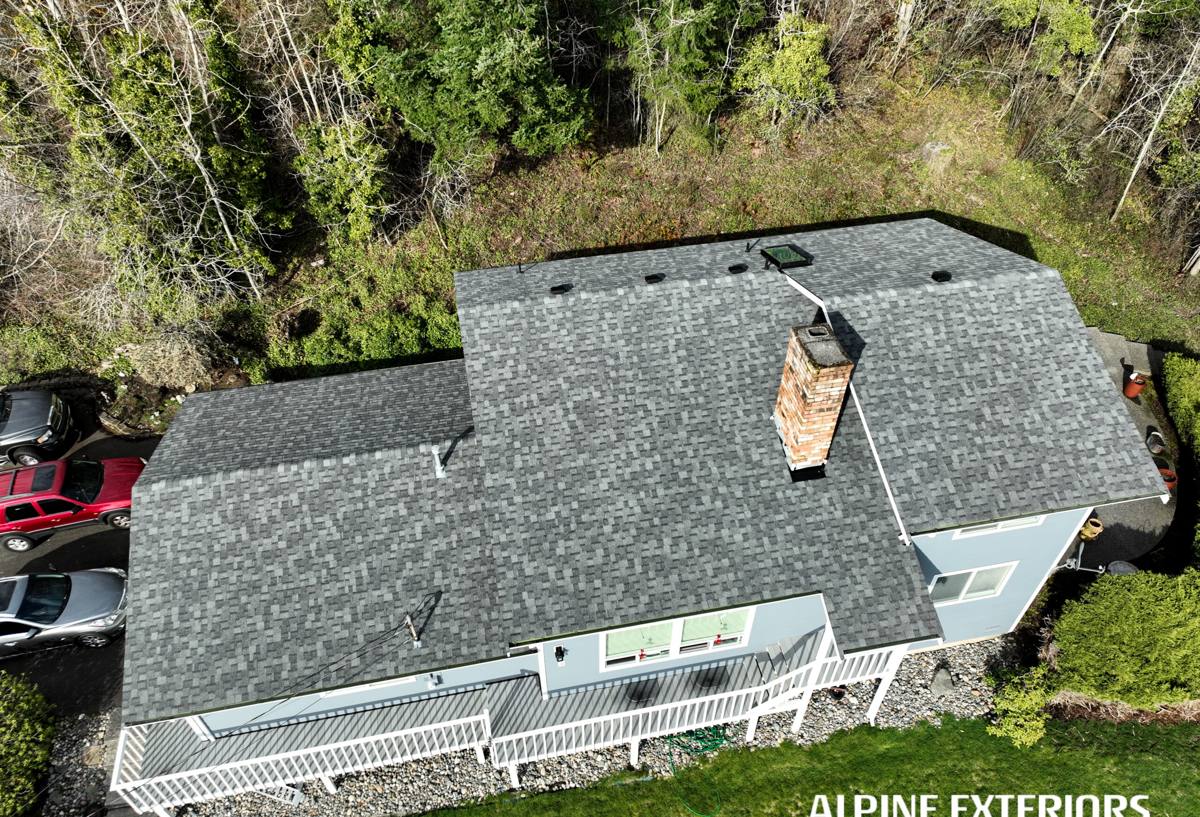
Homes in the Alger area, tucked along the Chuckanut coastline, deal with a roofing climate that's more demanding than it looks from the ground. You've got salt-laden air coming off the water, rain that doesn't just fall but drives sideways during winter systems, and enough shade and moisture from the surrounding trees to keep a moss problem going nearly year-round. Asphalt shingle roofing is still the most practical, cost-effective choice for the vast majority of homes out here — but only when it's specified and installed with this exact climate in mind. A shingle roof that would hold up fine twenty miles inland can wear out early on a home closer to the water if the underlayment, ventilation, and fastening weren't matched to local conditions.
This page covers what asphalt shingle roofing actually needs to look like for a home in and around Alger, what our installation and repair process involves, and how to tell the difference between a roof that's built to last here and one that just looks finished on install day.
What Salt Air, Driving Rain, and Moss Actually Do to a Shingle Roof
Salt air and metal components
Salt-laden air accelerates corrosion on anything metal on your roof — flashing, nail heads, vent caps, and drip edge. Standard electro-galvanized fasteners and thin-gauge flashing can start showing rust streaks and pinholing years before they would inland. This doesn't ruin the shingles directly, but it compromises the metal components that keep water out at valleys, chimneys, and roof-to-wall transitions, which is where most leaks actually start.
Driving, wind-driven rain
Rain that comes in at an angle, rather than straight down, tests parts of a roof that vertical rain never touches — the exposed edges of shingle tabs, the laps at hips and ridges, and any place where sealant strips haven't fully bonded. A roof installed with standard nailing patterns and minimal underlayment overlap can pass a light rain with no issue and still leak during a driving winter storm.
Moss and sustained moisture
The combination of shade, humidity, and a long wet season means moss and algae have plenty of time to establish themselves, especially on north-facing slopes and anywhere debris collects. Moss doesn't just sit on top of shingles — its root structure lifts shingle tabs and holds moisture directly against the granule surface, which speeds up granule loss and can eventually work water underneath the shingle course itself.
What a Correct Asphalt Shingle Installation Involves Here
A shingle roof is a system, not a single product. For Alger-area homes, every layer of that system earns its place:
- Underlayment: A full synthetic or self-adhered underlayment layer, with extra ice-and-water-shield membrane at eaves, valleys, and any low-slope transitions where wind-driven rain is most likely to find a way under the shingle course.
- Flashing: Corrosion-resistant flashing at all penetrations, chimneys, and wall intersections — this is where we deviate from bare-minimum-code metal, because standard flashing is one of the first things salt air degrades.
- Fasteners: Corrosion-resistant nails, correctly placed per the shingle manufacturer's nailing pattern. Under-nailing or mis-placed nails are a common cause of shingles lifting in wind long before they'd otherwise wear out.
- Ventilation: Balanced intake and exhaust ventilation so moisture from inside the home doesn't condense against the roof deck — this matters as much as anything on the outside, and it's routinely skipped on quick reroofs.
- Sealant strip activation: Shingles rely on sun-warmed adhesive strips to seal down. In shaded, cooler parts of a roof, that seal can take longer to set, which is one more reason attention to detail during install matters more here than in a drier, sunnier climate.
Choosing the Right Shingle for This Climate
Not every asphalt shingle product is a good match for a moss-prone, salt-air environment. Here's how the common options compare for a home in the Alger area:
| Shingle Type | Typical Lifespan Here | Best Fit For |
|---|---|---|
| 3-tab shingles | Shorter end of the range; wears faster under driving rain and moss exposure | Budget-driven projects, secondary structures |
| Architectural / laminate shingles | Longer lifespan; thicker profile resists wind uplift and granule loss better | Most primary homes in this climate |
| Algae-resistant (AR) shingles | Comparable to standard architectural, but slower to develop algae/moss staining | Shaded lots, north-facing roof slopes, homes near tree cover |
| Impact-rated shingles | Similar weather performance, added resistance to debris impact | Homes with overhanging trees or storm debris exposure |
For most homes near Alger, we recommend a mid-to-upper-tier architectural shingle with algae-resistant granules as the baseline, not an upgrade. Given how much of this area sits in partial shade with regular moisture, the algae-resistant granule treatment usually pays for itself in fewer years spent looking streaked and in less moss establishing a foothold in the first place.
Our Process
- On-site inspection: We walk the roof (or inspect from the ground and attic when conditions call for it) and check deck condition, ventilation, flashing, and existing moss or moisture damage — not just shingle wear.
- Honest scope and estimate: We tell you plainly whether you're looking at a repair, a partial reroof, or a full replacement, and what's driving that recommendation.
- Deck and structure check: Before any new shingles go down, we confirm the roof deck itself is sound. Installing new shingles over a soft or water-damaged deck just hides a bigger problem.
- System installation: Underlayment, flashing, ventilation, and shingles installed as a matched system — not shingles alone on top of whatever was already there.
- Final walkthrough: We review the finished roof with you, including care and moss-prevention basics specific to your lot's sun and shade exposure.
Repair, Restore, or Replace?
Not every roofing problem in the Alger area means a full replacement. A lot of what we get called out for is isolated flashing failure, localized moss damage, or a handful of wind-lifted shingles — all repairable if caught in time. Here's a quick way to think about it:
- Isolated leak at a chimney, vent, or valley with otherwise sound shingles — usually a flashing repair.
- Patchy moss on a shaded slope with granules still intact underneath — cleaning and a moss-prevention treatment, not replacement.
- Widespread granule loss, multiple soft spots on the deck, or shingles cracking across large sections — replacement is the honest recommendation.
- Roof original to the home and past its expected service life, even if it "looks okay" from the ground — worth a full inspection before you're dealing with an active leak.
Maintenance That Actually Matters in This Climate
A shingle roof in the Alger area needs a little more attention than the same roof would need somewhere drier and sunnier — not a lot, just consistent. A simple annual checklist covers most of it:
- Clear gutters and valleys of needles and debris before the fall rains set in — clogged valleys are one of the most common causes of driving-rain leaks.
- Check north-facing and shaded slopes for early moss growth and address it before it establishes root structure under the shingle tabs.
- Look at flashing around chimneys and vents for early rust or lifted edges, since metal fails before the shingles do in salt air.
- Confirm attic ventilation isn't blocked by insulation or debris — poor airflow shortens shingle life from underneath, where you can't see it.
- After any major windstorm, do a visual check for lifted or missing shingle tabs rather than waiting for a leak to show up inside.
Why a Crew That Already Works Alger Makes a Difference
Roofing specs written for a national average climate don't account for what a home fifty feet from salt air and under a tree canopy actually needs. A crew that regularly works the Chuckanut and Alger area already knows which slopes on a given lot tend to hold moss, where flashing typically fails first in this air, and how much underlayment overlap actually holds up against a real winter storm here — not just what a spec sheet says is minimum. That local pattern recognition is the difference between a roof that's technically up to code and one that's actually built for where it sits.
It also means faster, more accurate estimates. We're not guessing at how this climate treats a roof — we're working from what we've already seen hold up and what we've already seen fail on homes like yours.
Get a Straightforward Estimate
If you're dealing with an aging shingle roof, a persistent moss problem, or you just want an honest read on where your roof stands, we're happy to take a look. Fill out the form below for a free, no-pressure estimate on asphalt shingle roofing for your Alger-area home.