 Chuckanut Exterior
 Board & Batten in a Marine Climate
Board and batten has become one of the most requested siding styles in Whatcom County, and Silver Beach homeowners have good reason to like it. The vertical lines read as clean and modern on newer builds, and they suit the more traditional Northwest homes just as well when mixed with a horizontal lap accent. But board and batten is also one of the least forgiving siding styles when the install cuts corners. The same vertical seams and batten strips that give it character are also where water, salt-laden air, and moss get their foothold if the job isn't done right.
Homes near the water in this part of Whatcom County deal with a specific combination of stressors: salt air that accelerates corrosion on fasteners and hardware, driving rain that gets pushed sideways into seams during winter storms, and a moss season that can run most of the year on north-facing and shaded walls. None of that is unique to Silver Beach, but the combination is more constant here than it is a few miles inland, and it changes what "correct installation" actually means for this style of siding.
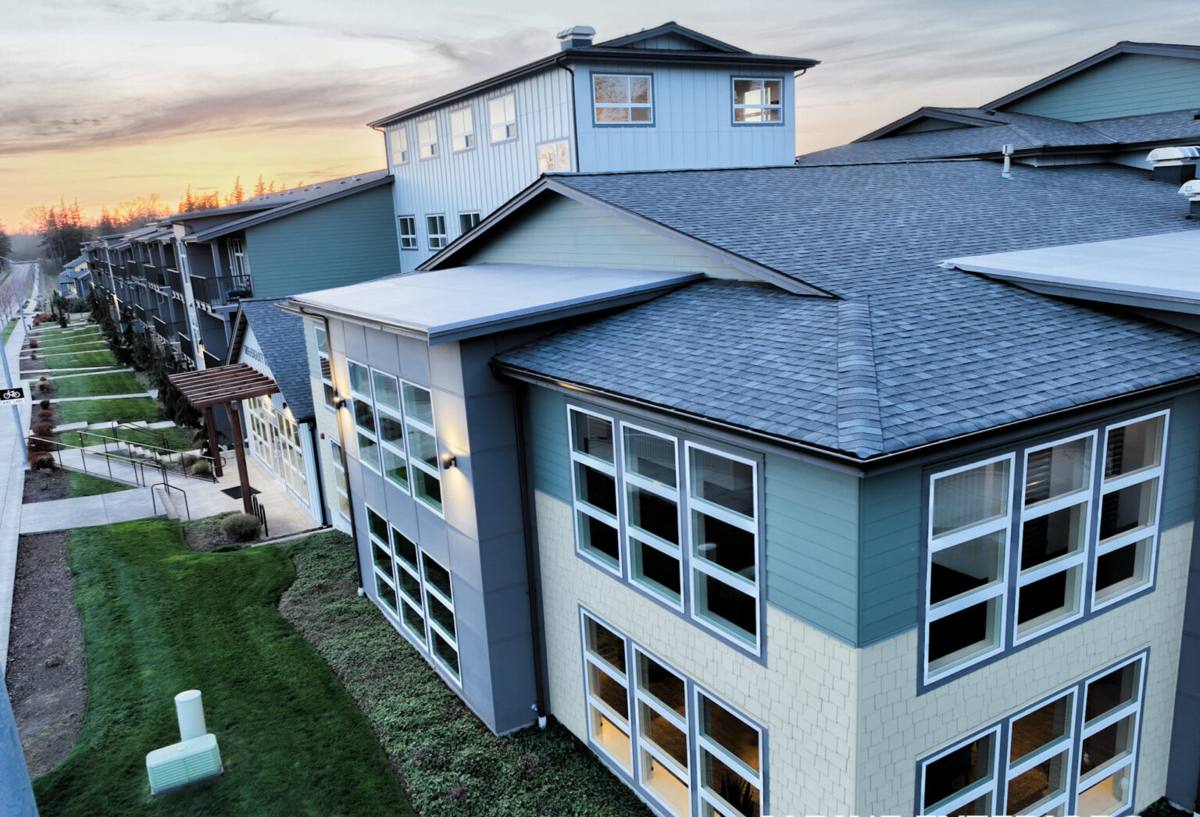
What Board and Batten Actually Is
Board and batten is a siding pattern, not a single product. It's built from wide flat panels or boards installed vertically, with narrower strips (the battens) covering the seams between them. That's the whole idea — it's a very old technique, originally developed to shed water off barns and farmhouses using simple materials. The pattern still does that job well when the materials and the flashing behind them are right.
Where it's usually installed
We see the most requests for board and batten on gable ends, entry features, dormers, and accent walls, though full-house applications are common too, especially paired with a horizontal lap field for contrast. On a house near the water, accent placement matters: a gable end facing the prevailing weather takes a very different amount of rain than a covered entry a few feet away, and the detailing should account for that difference wall by wall.
Panel systems vs. true board-on-board
There are two general approaches. A panel system uses a single wide sheet with battens applied over the joints — this is how most fiber cement board and batten is built today, including the systems we install. A true board-on-board approach uses individual boards with a batten overlapping each seam, which is closer to the original farmhouse method but has more seams, more fasteners, and more opportunities for water to find a path if it's not detailed correctly. We steer homeowners toward the panel approach for exactly that reason — fewer seams means fewer places for a marine climate to go to work.
Why the Vertical Seams Matter Here
Every vertical batten strip creates a seam, and every seam is a place where wind-driven rain can be pushed uphill against gravity during a real storm — which is exactly the kind of weather that comes off the water into Whatcom County in the fall and winter. A batten that's simply nailed over a joint with no attention to the water plane behind it will hold up fine in a light rain and fail during the storm that actually tests it. The failure isn't dramatic — it's slow. Moisture gets behind the batten, the wood-based trim or the underlying sheathing stays damp longer than it should, and a few winters later there's soft trim, staining, or paint failure that traces straight back to a seam that was never properly flashed.
Salt air adds a second layer to this. It's harder on any exposed metal — nail heads, flashing, screws — and it speeds up the breakdown of anything that isn't rated to handle it. A board and batten job on a home exposed to salt air needs corrosion-resistant fasteners and flashing details specified for that exposure, not generic hardware pulled off the shelf because it's what's on the truck.
Why We Only Install James Hardie for This Application
We install James Hardie fiber cement exclusively, and board and batten is one of the applications where that standard matters most. Fiber cement doesn't absorb water the way wood-based or wood-composite trim boards do, and it doesn't swell, cup, or rot at the seams the way those products can over time. James Hardie's HZ5 product line is engineered specifically for wet, marine-influenced climates like this one — it's built to hold paint and resist moisture-related damage in exactly the conditions Silver Beach sees most of the year.
The factory-applied ColorPlus finish matters here too. A field-painted batten seam is only as good as the paint job and the substrate underneath it; a factory finish is baked on under controlled conditions and backed by its own finish warranty, which takes one more variable out of a joint that's already working hard in this climate. We're not going to install board and batten in a product line that wasn't built for the weather it has to survive — that's the whole reason we standardized on Hardie rather than the primed wood, vinyl, or other fiber cement alternatives on the market.
What a Correct Installation Involves
Board and batten fails or succeeds almost entirely on what's behind the panel, not what you can see on the wall. The visible battens are the last five percent of the job. The first ninety-five percent is water management: house wrap or weather-resistive barrier, flashing at every horizontal transition, proper fastening pattern, and — on a home with this level of moisture exposure — a rain screen gap that lets any water that does get behind the siding drain and dry out instead of sitting against the wall.
| Detail | Why it matters in Silver Beach's climate |
|---|---|
| Rain screen / drainage gap | Lets wind-driven rain that gets behind panels drain and dry instead of soaking sheathing |
| Flashing at all horizontal breaks | Prevents water from tracking behind the siding at window heads, band boards, and roof lines |
| Corrosion-resistant fasteners | Salt air accelerates rust on standard hardware; the wrong fastener fails years before the siding does |
| Correct batten spacing and fastening | Battens fastened through the field panel into structure, not just cosmetically applied, keep seams tight through wind events |
| Factory-finished panels (ColorPlus) | Removes reliance on field paint holding up in constant damp, low-sun conditions |
Any one of these done wrong won't necessarily show up in year one. Board and batten problems tend to surface in year three to seven, which is exactly why the installation detail matters more than the finished look on install day.
Moss and the Vertical Line
Moss season in this part of Washington is long, and shaded or north-facing walls near the water rarely get enough sun to fully dry out between rain events. Board and batten's vertical channels can actually help here compared to a rougher horizontal lap profile — smooth fiber cement sheds moss more easily than porous wood-based products, and there are fewer horizontal ledges for spores and debris to sit on. That's not a reason to skip maintenance, but it is one more place where the material choice does real work for the homeowner instead of just looking the part.
Our Process for Silver Beach Homes
We start with a walk of the exterior to look at wall-by-wall exposure — which sides take the worst of the wind and rain, where the existing moisture damage (if any) already shows, and where the current siding or trim has failed. From there we put together a scope that specifies the Hardie board and batten product, the flashing and drainage detail for each wall, and the fastener spec appropriate for a marine-influenced site. We tear off old material down to the sheathing, repair or replace anything compromised underneath, install the weather-resistive barrier and rain screen, then run flashing, panels, and battens in that order — never skipping straight to the visible layer. We walk the finished job with the homeowner before we call it done.
Choosing a Contractor for This Job
Board and batten is easy to install badly and look fine for a season or two, which is part of why it's worth being careful about who does the work. A few things worth checking before you hire:
- Ask specifically how they detail the drainage plane behind the battens — not just "we use house wrap," but the actual gap and flashing approach
- Confirm the fastener spec accounts for salt air exposure, not a generic interior-grade nail
- Ask to see how they handle horizontal transitions (window heads, band boards, roof-to-wall lines) — this is where most water intrusion actually starts
- Get the product line in writing — HZ5 or equivalent for this climate, not a lower-tier line meant for drier regions
- Ask how long they've worked in this specific area and whether they can speak to how homes here perform over time, not just how the job looks on install day
A crew that already works homes in this part of Whatcom County has usually already seen what happens when a batten seam is flashed wrong, and builds around it as a matter of habit rather than as an afterthought.
What to Expect Over Time
A correctly installed Hardie board and batten system in this climate should need very little from a homeowner beyond normal exterior upkeep — periodic washing to keep moss and organic growth from building up, and an eye kept on caulking at trim intersections over the years. It won't need repainting on the schedule wood-based siding does, and it won't be swelling or delaminating at the seams the way lower-grade products can in a wet, salty environment. The goal of the install detail described above is exactly that: a siding system that's still doing its job with minimal intervention a decade or two down the road, not one that looks right on installation day and starts showing problems the first time a real winter storm tests it.
If you're considering board and batten for a home in Silver Beach, we're happy to walk the exterior with you, look at wall-by-wall exposure, and put together a straightforward, no-pressure estimate — just fill out the form below.