 Chuckanut Exterior
 Windows Built for Silver Beach's Waterfront Climate
Silver Beach sits close enough to the water that its homes take on a different kind of weather than houses a few miles inland in Chuckanut. Salt-laden air moves through the neighborhood on a regular basis, wind-driven rain hits window assemblies at angles that never show up in a showroom demo, and the shaded, moisture-heavy stretches of the year keep moss and algae established on north-facing walls and trim for months at a time. Windows here don't fail because the glass wears out. They fail at the seams, the sills, and the flashing details that were never designed for this combination of salt, standing moisture, and prolonged shade.
When we talk about custom windows in Silver Beach, we mean windows specified and installed to match this exact exposure — not a generic product pulled off a national price list and installed the same way it would be in a dry inland climate.
What "Custom" Actually Means Here
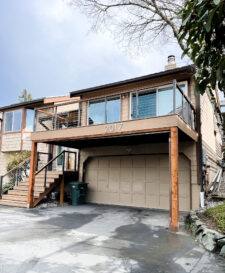
Custom doesn't have to mean unusual shapes or premium upgrades, though we do plenty of that too. In Silver Beach, custom most often means matching the window to the specific wall it's going into — its orientation to the water, how much direct weather it sees, and how the existing structure was built around it. A window on a sheltered, inland-facing wall of a Silver Beach home doesn't need the same spec as one facing open water or prevailing wind. Treating every opening on a house the same way is one of the most common mistakes we see from past work in this neighborhood.
Factors We Actually Weigh
- Which walls face the water or prevailing wind versus which are sheltered by the house itself or neighboring structures
- How much direct sun a wall gets — shaded, north-facing walls hold moisture and grow moss longer into the year
- The age and material of the existing wall assembly, since older Whatcom County homes weren't always built with modern moisture barriers
- Whether the current window failure is glass, frame, or flashing — each points to a different fix
- Roofline and eave overhang, which affects how much wind-driven rain actually reaches the window face
How Salt Air and Driving Rain Damage Windows
Salt air is corrosive to exposed metal hardware — hinges, cranks, locking mechanisms, and some low-grade cladding fasteners — long before most homeowners notice anything wrong with the glass or frame itself. Once hardware starts to corrode, windows get harder to open and close properly, and a window that doesn't seal tightly anymore is a window that starts leaking.
Driving rain is a separate problem. In a straight-down rain, a well-built window barely gets tested. In a wind-driven rain coming sideways off the water, water gets forced up and under trim, into gaps around the frame, and behind flashing that was installed correctly for gravity but not for wind pressure. This is why so many window leaks in this area show up at the bottom corners of the frame or along the sill — those are the points where wind-driven water collects and finds the weakest path inward.
Common Failure Points We See in This Area
- Corroded cranks, hinges, and locks on older aluminum or steel-hardware windows
- Soft or discolored wood trim and sills from repeated wetting without enough drying time between storms
- Flashing that was installed flat or without a drip edge, letting water track back toward the sheathing
- Failed or missing kickout flashing where a roofline meets a wall near a window
- Interior sill staining or bubbling paint — often the first visible sign of a leak that's been happening for a while
Moss Season and Why It Matters for Window Longevity
Whatcom County's long stretch of damp, low-light months keeps moss and algae active on shaded surfaces far longer than in drier parts of the state. Around windows, that growth tends to establish on horizontal trim, sills, and the tops of frames where debris and moisture collect. Left alone, moss holds moisture directly against wood and painted surfaces, which accelerates rot and finish failure in exactly the spots that are already hardest to keep dry. A window with clean sightlines and unobstructed drainage paths sheds this kind of buildup far better than one with deep horizontal ledges or ornate trim that traps organic debris.
This is one of the reasons we talk through trim profile and sill design as part of a Silver Beach window job, not just frame material and glass package. A window that looks right but collects debris will cost more in maintenance over the years than one designed with this climate in mind from the start.
Choosing Frame Materials for a Silver Beach Home
There's no single "best" window frame material — there's a best material for a given wall, budget, and maintenance appetite. Here's how the common options actually perform in a salt-air, high-moisture setting.
| Frame Material | Salt Air Performance | Maintenance | Notes for This Area |
|---|---|---|---|
| Vinyl | Good — won't corrode or rot | Low | Solid value option; quality varies a lot between manufacturers |
| Fiberglass | Very good — dimensionally stable | Low | Handles temperature and moisture swings well; higher upfront cost |
| Wood | Fair — needs protection | High | Best appearance for period homes but demands regular upkeep in this climate |
| Clad wood (wood interior, metal/vinyl exterior) | Good on the exterior face | Moderate | A reasonable middle ground; exterior cladding takes the weather, interior keeps the wood look |
| Aluminum | Fair — prone to corrosion near salt water without proper coatings | Moderate | We're selective about where we recommend this given the exposure here |
We don't push one material as universally correct. We'll tell you honestly where a cheaper option is a fine choice and where spending more up front will actually save money in avoided repairs over the next decade.
What a Correct Installation Involves
Most window problems in Silver Beach aren't really window problems — they're installation problems. The product can be excellent and still fail early if it goes in without the right prep. A correct install, in our process, includes:
- Removing the old window and inspecting the surrounding framing and sheathing for hidden rot or moisture damage before anything new goes in
- Repairing or replacing any compromised framing rather than boxing a new window in around a soft spot
- Installing a proper weather-resistive barrier and flashing sequence — sill pan, side flashing, and head flashing lapped in the correct order so water sheds outward at every layer
- Setting the window level, plumb, and square, with shims that won't compress or rot over time
- Sealing with the correct sealant for the substrate, not just running a bead of whatever's on the truck
- Confirming proper drainage at the sill so any water that does get past the outer seal has somewhere to go
Skip any one of these steps and you can end up with a brand-new window that leaks within a couple of wet seasons — which is exactly the kind of repeat call we get from homeowners who had windows installed by a crew unfamiliar with this exposure.
Our Process for a Silver Beach Window Project
1. On-Site Assessment
We look at each opening individually — its exposure, its current condition, and whether the issue is glass, frame, hardware, or flashing. We'll point out anything we find, including problems unrelated to the windows themselves, like trim or siding that's already showing moisture damage.
2. Honest Recommendation
We'll walk you through frame material, glass package, and hardware options with real trade-offs — cost, maintenance, and expected performance for your specific walls — instead of steering you toward the most expensive package by default.
3. Careful Removal and Prep
Old windows come out cleanly, and we address any framing or moisture issues we find before the new window goes in. We don't install over a problem and hope it holds.
4. Installation to Spec
Flashing, sealing, shimming, and drainage are done to the sequence outlined above, not shortcut to save an hour on the job.
5. Walkthrough and Cleanup
We show you the finished work, confirm everything operates properly, and leave the site clean.
Signs Your Silver Beach Windows Need Attention
- Cranks, locks, or hinges that feel stiff, gritty, or corroded
- Visible moss or algae buildup on sills, trim, or the top of the frame
- Drafts or whistling during windy, wet weather
- Soft, discolored, or bubbling paint on wood trim near the window
- Interior staining, musty smell, or peeling paint below or beside a window
- Fogging between panes on double- or triple-glazed units, which signals a failed seal
- Visible gaps between the frame and siding or trim
Why Local Experience Matters for This Job
A crew that mostly works drier inland areas can install a perfectly good window and still get the flashing detail wrong for wind-driven rain, because they've rarely had to solve for it. Working regularly in Silver Beach and the rest of Chuckanut and Whatcom County means we've already seen how salt air corrodes specific hardware types, which flashing details actually hold up against driving rain off the water, and which trim profiles shed moss instead of collecting it. That's the kind of judgment that doesn't come from a spec sheet — it comes from working this exact coastline, season after season.
If your windows are showing wear, leaking, or just past their functional life, we're happy to take a look and give you a straightforward assessment — no pressure, no upsell. Reach out through the form below to set up a free estimate for your Silver Beach home.