 Chuckanut Exterior
 Decking Built for Silver Beach's Marine Climate
Silver Beach sits close enough to the water that homes here deal with a specific combination of stresses most inland Whatcom County properties don't face to the same degree: salt-laden air, long stretches of driving rain off the Sound, and a moss and algae season that can stretch from fall well into spring. A deck in this neighborhood isn't just outdoor flooring — it's a structure that has to shed water fast, resist corrosion at every fastener, and stay walkable when it's damp more often than it's dry. Composite decking, installed correctly for these conditions, holds up to that combination better than most alternatives. Installed poorly, it fails in the same ways wood does, just more slowly and more expensively.
We work on decks throughout Chuckanut and the surrounding Bellingham-area shoreline, and Silver Beach's mix of older homes and newer builds means we see a wide range of existing conditions — from decks that were never designed for this exposure to newer ones that are due for a material upgrade. This page covers what actually matters for a composite deck built to last here.
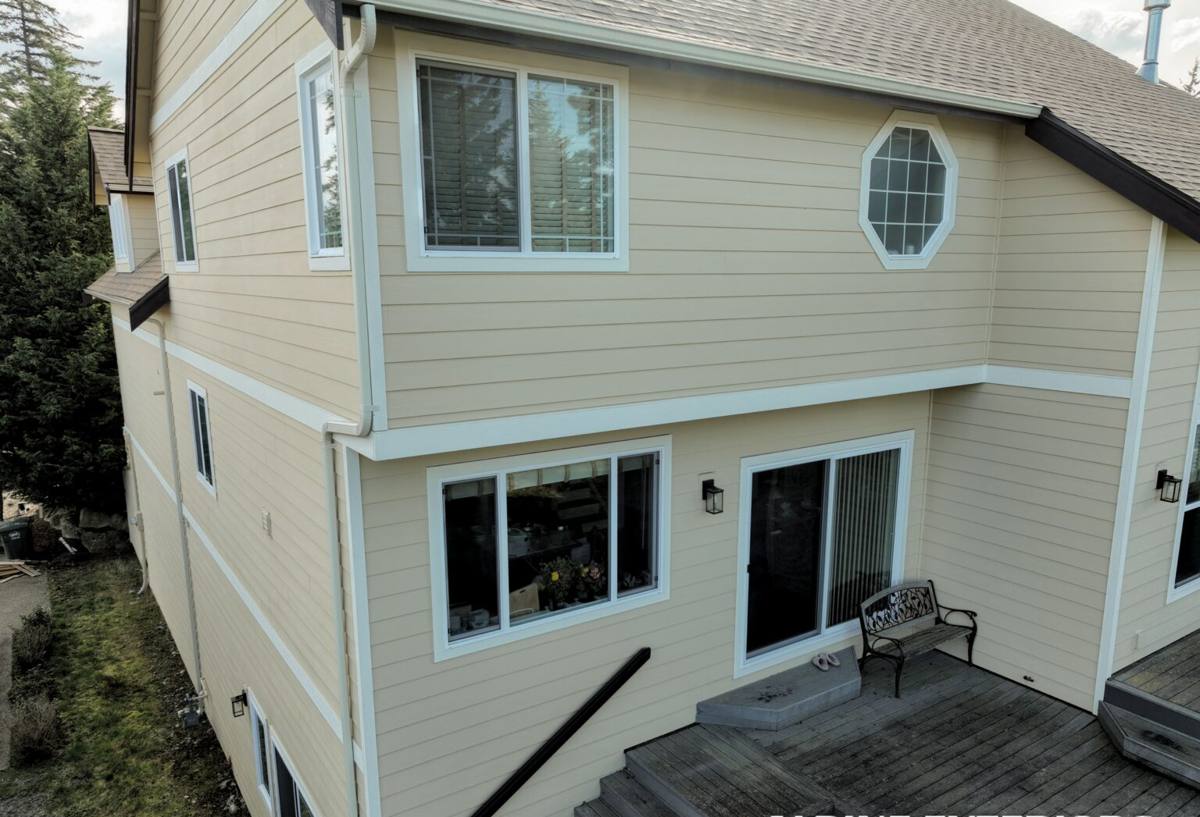
What Salt Air, Rain, and Moss Actually Do to a Deck
Each of these three conditions attacks a deck differently, and understanding the failure mode helps explain why the build details matter as much as the decking material itself.
Salt air and corrosion
Airborne salt accelerates corrosion on any exposed metal — fasteners, joist hangers, ledger flashing, railing brackets. A deck can have flawless composite boards on top and still fail early if the hardware underneath was standard-grade instead of rated for coastal or marine exposure. This is one of the most common shortcuts we find when we're asked to look at an older deck near the water.
Driving rain and water intrusion
Rain that comes in at an angle off the water doesn't just fall on the deck surface — it drives against ledger boards, gets under poorly flashed rim joists, and pools wherever drainage wasn't planned for. Composite boards themselves don't rot, but the framing underneath them still can if water is allowed to collect and sit against wood substructure.
Moss, algae, and surface buildup
A long damp season means organic growth gets a real head start and doesn't fully dry out between rain events. Moss and algae on a deck surface aren't just cosmetic — they hold moisture against the boards and make the surface genuinely slick, which is a real slip hazard on stairs and low-light areas of a deck.
Composite vs. Wood vs. Other Decking Materials
There's no universally "best" decking material — the right choice depends on how much upkeep a homeowner wants to do and what they're trying to avoid. Here's how the common options compare specifically for a Silver Beach-type exposure.
| Material | Moisture & Salt Air Behavior | Moss/Algae Resistance | Ongoing Maintenance |
|---|---|---|---|
| Pressure-treated wood | Prone to swelling, cupping, and fastener corrosion over time near salt air | Low — porous surface holds growth | Annual cleaning, periodic sealing/staining |
| Cedar or other natural wood | Better rot resistance than treated pine, still moisture-sensitive | Low to moderate | Regular sealing to maintain appearance and protection |
| Uncapped composite | Won't rot, but surface can absorb moisture and stain | Moderate — can still host surface growth | Periodic cleaning; more prone to staining than capped boards |
| Capped composite | Sealed outer shell resists moisture absorption and salt exposure well | Higher — smoother, less porous surface sheds growth more easily | Occasional washing; lowest overall upkeep |
For most Silver Beach homes, we steer people toward capped composite specifically because of the moisture and moss factors above — not because uncapped products or wood are bad materials, but because the extra protective layer is doing real work in this particular climate.
What a Correct Composite Deck Build Involves
The decking boards get the attention, but the substructure and details underneath them determine whether the deck performs for its full warranty life or starts having problems in five years. A correct build for this area includes:
Substructure and fasteners
Framing lumber should be rated for ground contact or exterior exposure as appropriate, and every fastener — joist hangers, structural screws, hidden fastener clips — should be corrosion-resistant hardware suited to coastal exposure, not the standard-grade hardware that's fine further inland. This is the single most common place we see cost-cutting on older decks in this area, and it's the least visible until it fails.
Ledger flashing and water management
Where the deck attaches to the house, proper flashing keeps driving rain from working its way behind the ledger board and into the wall assembly. This detail is invisible once the deck is finished, but it's one of the most consequential for long-term water damage to the home itself, not just the deck.
Drainage and slope
Decking should be built with a slight slope away from the house and enough airflow underneath to let the structure dry out between rain events. In a climate where it rains often and dries slowly, a deck built dead-flat with poor underside ventilation stays damp longer than it should.
Hidden fastener systems
Composite decking installed with a hidden fastener system (versus surface screws) reduces the number of penetration points where water can sit against the board core, and it gives a cleaner surface with fewer places for moss to establish itself in fastener heads.
Railings and stairs
Stair treads and railing posts see more direct weather exposure and more foot traffic than the main deck field, so hardware and post-base connections here deserve the same corrosion-resistant standard as the rest of the structure — plus attention to slip resistance where moss buildup is most likely.
Choosing the Right Composite Board
Not every composite product is built the same way, and board choice affects how the deck performs specifically in a damp, salt-influenced environment.
- Capped composite over uncapped: the polymer shell resists moisture absorption, staining, and fading better than uncapped boards.
- Darker colors show less moss and pollen staining between cleanings, though all colors will need occasional washing here.
- Grooved-edge boards paired with hidden fasteners give a cleaner surface with fewer screw heads for grime and organic buildup to collect in.
- Textured or grip-enhanced surfaces are worth prioritizing on stairs and shaded areas of the deck, where moss and algae take hold first.
- Manufacturer warranty terms vary on staining, fading, and structural integrity — worth reading closely rather than assuming all composite warranties cover the same things.
We'll walk through specific board lines and colors during an estimate rather than push one brand — the right choice depends on the home's exposure, the homeowner's maintenance preferences, and budget.
Our Process, Start to Finish
- On-site assessment — we look at the existing structure (if there is one), sun and wind exposure, drainage patterns, and how close the deck sits to salt air influence from the water.
- Design and material selection — board style, color, railing type, and layout, matched to how the homeowner actually uses the space.
- Permitting — decks in Whatcom County and within Chuckanut-area jurisdiction typically require permits depending on size, height, and attachment to the home; we handle that process rather than leaving it to the homeowner.
- Demolition of the old deck (if replacing), including an honest look at whether ledger and framing conditions were contributing to the deck's problems.
- Framing and flashing — corrosion-resistant hardware, proper ledger flashing, and slope/drainage built in from the start.
- Decking, stairs, and railing installation using hidden fastener systems where the product allows.
- Final walkthrough — we go over basic care so the homeowner knows what upkeep, if any, the specific product needs.
Living With a Composite Deck in This Climate
Composite decking is lower-maintenance than wood, not maintenance-free — especially in a neighborhood dealing with salt air and a long moss season. A little seasonal attention keeps it looking and performing the way it should.
- Rinse or sweep off debris, pollen, and organic buildup regularly, especially in shaded areas and on stairs.
- Wash the deck surface a couple of times a year with a composite-safe cleaner to prevent moss and algae from establishing.
- Keep gutters and downspouts near the deck clear so runoff isn't dumping extra water onto the structure.
- Check railing posts and stair connections periodically for any looseness, which can be an early sign of hardware corrosion underneath.
- Avoid pressure-washing at close range or high PSI, which can damage the surface texture or cap layer on some composite products.
Permits and Whatcom County Considerations
Deck projects near the water in Chuckanut can involve additional review depending on setbacks, shoreline proximity, and the scope of the project — this varies enough by property that it's not something to guess at from a general web page. Part of what we handle as the contractor is figuring out what permitting actually applies to a specific Silver Beach lot before work starts, so there are no surprises partway through the build.
Why Local Experience Matters for This Job
A crew that hasn't worked near the water regularly will often build a technically sound deck for an inland climate — and that's exactly where problems show up two or three years later near Silver Beach. The corrosion-resistant hardware, the flashing details, the drainage planning, and the board selection all come from having seen what actually fails on decks in this specific exposure, not from a general decking checklist. We've built and repaired decks throughout the Chuckanut area and understand which shortcuts show up first when salt air and long wet seasons are part of the equation.
That local knowledge also shows up in smaller ways — knowing which board colors hold up visually against the pollen and moss cycle here, knowing what County permitting actually asks for on shoreline-adjacent lots, and knowing how to sequence a build around the wetter months so framing isn't left exposed longer than it needs to be.
Get a Free Estimate for Your Silver Beach Deck
If you're planning a new composite deck or replacing one that's showing its age, we're glad to come take a look and give you an honest, no-pressure estimate — including what we'd do differently for your specific spot near the water. Fill out the form below to get started.