 Chuckanut Exterior
 Siding Built for What Silver Beach Actually Throws at a House
Homes around Silver Beach take a beating that a lot of siding products were never designed for. Between salt-laden air rolling off the water, driving rain that comes in sideways during winter storms, and a moss season that can stretch for months in the shade of the surrounding trees, the exterior of a house here is under near-constant pressure. We've worked on enough homes in this part of Whatcom County to know that siding failures in this neighborhood almost never come from one dramatic event. They come from years of moisture finding a weak seam, a poorly caulked joint, or a paint film that couldn't keep up with the climate.
This page is about one thing specifically: installing James Hardie fiber cement siding correctly on a Silver Beach home. Not a general overview of siding, and not a sales pitch — just what this climate demands, what a correct installation actually involves, and why the crew doing the work matters as much as the material itself.
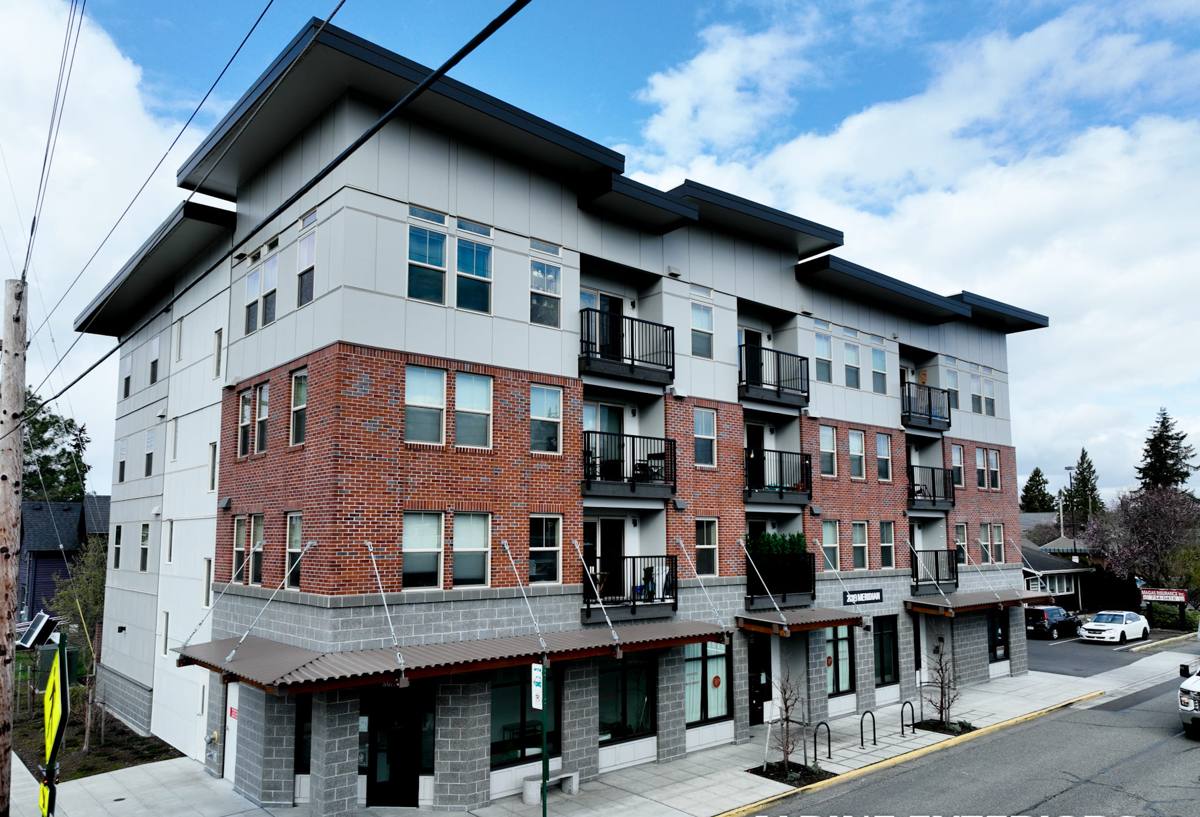
Why This Local Climate Is Hard on Exterior Walls
Salt Air and Slow Corrosion
Airborne salt doesn't just affect metal railings and hardware — it accelerates the breakdown of paint films and adhesives over time, and it's harder on fasteners and trim components that aren't rated for coastal-adjacent exposure. Siding systems that rely on face-nailing with standard fasteners, or trim pieces with unprotected cut edges, tend to show their age faster in homes exposed to this kind of air.
Driving Rain and Wind-Driven Moisture
Rain that falls straight down is manageable for almost any siding product. Rain that gets pushed sideways by wind, and finds its way behind lap joints, around window trim, and into unsealed penetrations, is a different problem entirely. This is where the difference between a correctly installed siding system and a merely adequate one shows up — usually five or ten years later, as hidden rot behind the wall rather than anything visible from the curb.
A Long Moss and Mildew Season
Shaded, moisture-retentive conditions are ideal for moss and mildew growth, and siding that stays damp longer between rain events gives both a head start. This matters most on north-facing walls and anywhere tree cover blocks sun and airflow — common conditions for homes tucked into this landscape.
Why We Install Only James Hardie Fiber Cement
We don't install LP SmartSide, vinyl, Cemplank, Allura, or unfinished wood siding on the homes we work on — and that's a deliberate standard, not an oversight. Each of those products has legitimate strengths, but each also carries trade-offs — moisture sensitivity at cut edges, a maintenance schedule that depends on the homeowner staying ahead of it, or a factory finish that isn't backed the same way — that we're not willing to build our reputation around, especially in a climate this demanding.
James Hardie fiber cement is non-combustible, dimensionally stable in wet-dry cycling, and available in an HZ5 formulation engineered specifically for climates like ours — freeze-thaw cycles, sustained moisture, and coastal-adjacent air. The ColorPlus factory finish is baked on under controlled conditions rather than field-applied, which matters enormously in a region where a rushed paint job can fail within a few seasons. It's the one product line we've found holds up to Silver Beach conditions without asking the homeowner to babysit it.
What a Correct Fiber Cement Siding Job Actually Involves
Fiber cement siding is only as good as its installation. The material itself is durable, but nearly every siding failure we're called out to inspect traces back to installation shortcuts, not the product. A correct job includes:
- Proper clearance between the bottom edge of the siding and grade, decks, patios, and roof lines — typically a minimum of 6 inches from grade and 2 inches from horizontal surfaces, to keep splash-back moisture off the cut edges
- Corrosion-resistant fasteners driven to the manufacturer's specified depth — overdriven or underdriven nails are one of the most common causes of early failure
- Correctly lapped and back-primed cut edges, since an unsealed cut edge is the most moisture-vulnerable point on any fiber cement board
- A properly installed weather-resistive barrier and flashing at every window, door, and penetration — the siding is the visible layer, but the drainage plane behind it does the real work
- Caulking only where the manufacturer specifies it, with a quality sealant rated for exterior movement — over-caulking traps moisture just as often as under-caulking lets it in
- Touch-up painting matched to the ColorPlus finish at cut ends and any field-cut trim, so the factory finish isn't compromised at the seams
None of this is exotic. It's disciplined, unglamorous work — but skipping any one of these steps is exactly how a fifty-year siding product ends up needing repairs in year eight.
Our Process for a Silver Beach Installation
Assessment and Moisture Check
We start by walking the exterior and checking for existing moisture damage, soft sheathing, or rot behind the current siding — especially at grade level, around window and door openings, and on shaded walls where moss and mildew have had the most time to work. This tells us what we're actually dealing with before any material gets ordered.
Prep and Weather Barrier
Old siding comes off, damaged sheathing gets replaced, and a new weather-resistive barrier goes on with properly lapped and taped seams. Flashing at windows, doors, and any wall penetrations gets installed or corrected here — this step matters more than the siding itself for keeping water out long-term.
Installation to Spec
Hardie boards are installed with correct clearances, fastener patterns, and lap spacing, following James Hardie's published installation guidelines for HZ5 climate zones. We don't shortcut clearances to save material or time.
Final Detailing and Walkthrough
Cut edges get sealed, caulking is applied only where specified, touch-up paint is matched to the ColorPlus finish, and we walk the finished job with the homeowner before calling it done.
James Hardie Product Lines Suited to This Climate
We typically spec HZ5-rated products for homes in this area, since that formulation is built for the freeze-thaw and moisture cycling common to Western Washington. Depending on the home's architecture and the homeowner's preference, that usually means HardiePlank lap siding for the primary wall surfaces, with HardiePanel or HardieShingle used selectively for accent areas, gables, or architectural detail. All of it comes with the factory-applied ColorPlus finish, which carries its own separate finish warranty on top of the product warranty — a meaningful difference from field-painted siding, where the paint job's longevity depends entirely on how it was applied that day.
Cost Factors for a Silver Beach Fiber Cement Project
Every home is different, and we won't quote a number without seeing the house, but these are the main factors that move the price on a project like this:
| Factor | Why It Matters |
|---|---|
| Extent of existing moisture or rot damage | Sheathing repair and framing repair add labor and material before new siding can even start |
| Home size and wall complexity | More corners, gables, and window/door openings mean more cutting, flashing, and detail work |
| Siding profile and accent choices | HardiePlank lap siding is the baseline; shingle or panel accents add labor for the added detail |
| Removal and disposal of existing siding | Tear-off and haul-away of old material (especially old paint-coated or asbestos-era siding) is its own line item |
| Trim and flashing condition | Failing trim or missing flashing found during prep often needs replacing before siding goes on |
Why a Crew That Already Works This Neighborhood Matters
A siding crew that's worked homes throughout the Chuckanut area and greater Whatcom County isn't guessing at how this climate behaves — they've already seen which walls take the worst of the wind-driven rain, which shaded spots grow moss fastest, and which older homes in this area tend to have moisture issues hiding behind the siding before the tear-off even starts. That local pattern recognition shortens the assessment phase and reduces surprises mid-project. It also means faster response if a warranty question or minor issue comes up after the job is done — you're not waiting on a crew that has to drive in from another region and relearn the local conditions each time.
Keeping Fiber Cement Siding Performing Long-Term
Correctly installed Hardie siding is low-maintenance, not no-maintenance. A short seasonal routine goes a long way in this climate:
- Rinse siding annually to remove salt residue, pollen, and grime buildup, especially on walls facing prevailing wind
- Check and clear any moss or algae growth on shaded, north-facing walls before it spreads, using a soft wash rather than high-pressure blasting
- Inspect caulking around windows, doors, and trim once a year and re-seal any cracked or separated joints promptly
- Keep gutters clear and downspouts directed away from siding to prevent chronic wet spots at grade
- Trim back vegetation and tree cover that keeps siding shaded and damp longer than necessary
- Touch up any chips or scratches in the ColorPlus finish promptly to keep cut edges and impact points protected
If your siding is showing moss staining, soft spots, or paint failure — or you're just planning ahead for a home in the Silver Beach area — we're happy to take a look and walk you through what we're seeing, with no pressure to commit. Reach out below for a free estimate.