 Chuckanut Exterior
 Why Silver Beach Decks Take a Beating
A deck near the water in Silver Beach doesn't age the same way a deck does twenty miles inland. Salt-laden air corrodes fasteners and hardware from the inside out, driving rain drives moisture sideways into places a flat roof or a wall never has to deal with, and the long, damp shoulder seasons here in Whatcom County give moss and algae months at a time to take hold on any horizontal wood surface that doesn't dry out quickly. Put those three things together — salt air, driving rain, and a moss season that can stretch from fall through spring — and you get decks that look fine on the surface while the framing underneath is quietly failing.
We see the same pattern on property after property in this neighborhood: a deck that's maybe twelve to twenty years old, boards that still look serviceable, and then a homeowner presses a thumb into a joist near the ledger board and it goes soft. That's not bad luck. That's what this specific climate does to a structure that wasn't built or maintained with these conditions in mind.
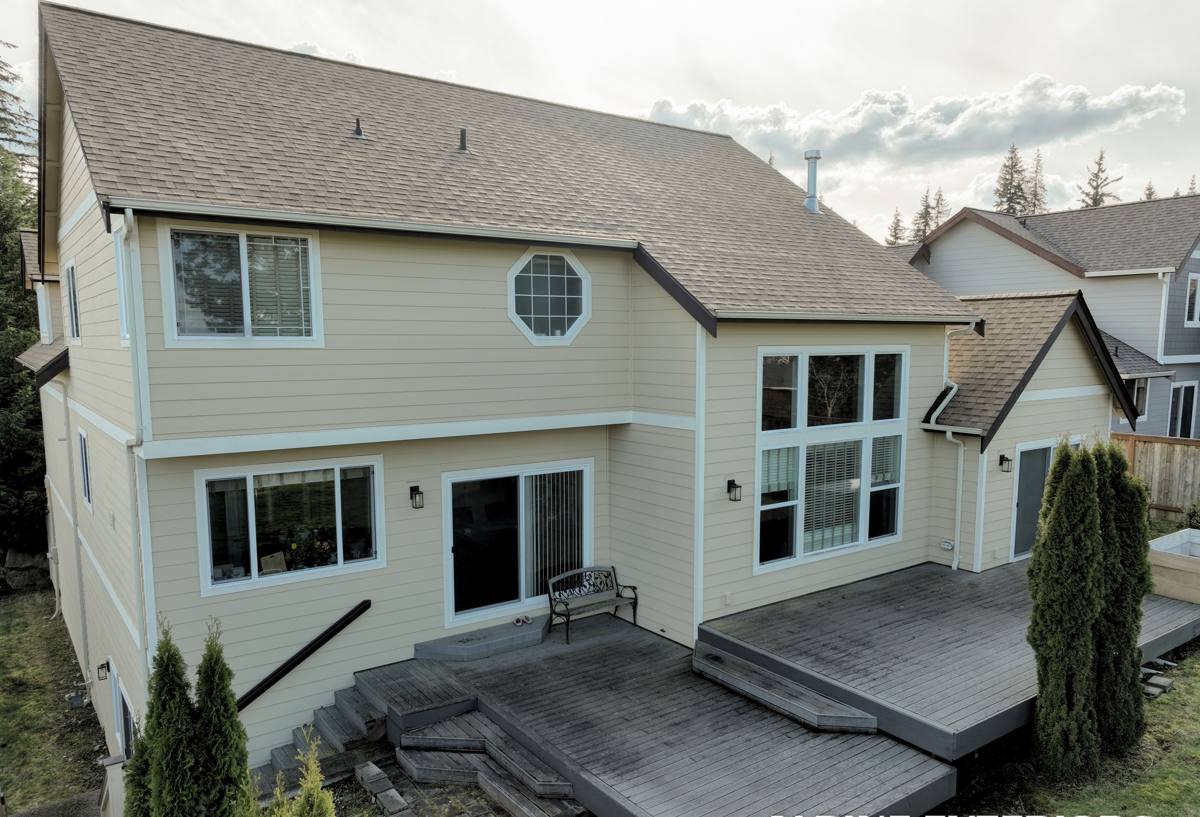
Repair or Replace? Reading the Signs
Not every tired deck needs a full replacement. But there's a point where patching individual boards or sistering a joist here and there stops being a repair and starts being a way to delay an inevitable, larger job — usually at a higher eventual cost because more of the structure fails while you wait. Here's what tells us a deck has crossed that line:
- Soft or spongy spots anywhere in the decking, especially near the house or along the rim joist
- Rust streaking or visibly corroded fasteners, common on older decks built with standard hot-dip galvanized hardware instead of coastal-rated fasteners
- Persistent moss or algae growth that comes back within weeks of cleaning, which usually means the deck isn't drying between rain events
- Gaps opening up between the ledger board and the house, or flashing that's cracked, missing, or was never properly installed
- Railings that flex or wobble under hand pressure — a safety issue, not a cosmetic one
- Visible rot or insect damage on posts, beams, or the ledger, especially at ground contact points
If a deck is showing one or two of these on an otherwise sound structure, targeted repair can make sense. When several show up together, or when the framing itself is compromised, replacement is the honest recommendation — and it's usually the more cost-effective path once you account for what repeated patch repairs actually cost over a few years.
What a Correct Deck Replacement Actually Involves
Structural Work Below the Decking
The part of a deck that determines how long it lasts isn't the decking boards — it's everything underneath them. That means the ledger board connection to the house, the footings, the beams, and the joists. On a replacement, we don't just match what was there before; we look at whether the original structure was built to current code and to what this specific site actually needs. In a wet, coastal-influenced climate, that often means larger or better-spaced footings, proper standoff between wood framing and the ground or concrete, and ledger flashing that actually sheds water away from the house rather than trapping it against the siding.
Fasteners and Hardware Built for Wet Climates
This is where a lot of decks fail early, and it's easy to miss because it's invisible once the boards go down. Standard fasteners and structural hardware corrode faster in salt-influenced air than most manufacturers' general warranty language accounts for. We use fasteners and structural connectors rated for coastal and treated-lumber exposure, and we pay attention to how dissimilar metals interact — mixing the wrong hardware and fastener types accelerates corrosion in ways that aren't obvious until years later when a connection lets go.
Railings, Stairs, and Code Compliance
Railings and stairs are the part of a deck most likely to be out of code on an older structure — baluster spacing, railing height, and stair rise-and-run requirements have all been tightened over the years. A full replacement is the right time to bring these up to current code rather than rebuilding the same non-compliant configuration, which matters both for safety and for resale or insurance purposes down the road.
Choosing a Decking Material for a Silver Beach Property
There's no single right answer here — it depends on how much maintenance you want to do, your budget, and how close the deck sits to salt spray and standing moisture. What we won't do is push a single product because it's easier for us to install; we'll walk through the honest trade-offs so you're picking based on how the material actually behaves in this climate, not a sales pitch.
| Material | Moisture & Moss Resistance | Maintenance | Typical Lifespan |
|---|---|---|---|
| Pressure-treated wood | Good if sealed and cleaned regularly; moss takes hold faster without upkeep | Annual cleaning and periodic sealing | 15–20 years with maintenance |
| Cedar | Naturally moisture-resistant but still needs sealing near the water | Sealing every 1–2 years to hold color and resist moss | 15–25 years with maintenance |
| Composite decking | Very good — resists moisture absorption, but low-quality boards can still grow surface algae if not cleaned | Occasional washing, no sealing or staining | 25–30+ years |
| PVC decking | Excellent — non-porous, minimal moss adhesion | Low; occasional rinsing | 30+ years |
Composite and PVC decking cost more upfront but remove most of the maintenance burden that wood carries in this climate. Wood costs less initially but only performs well if someone stays on top of cleaning and sealing on a schedule — which is a real commitment given how quickly moss re-establishes here. We'll size up the site, talk through what you're willing to maintain, and give you honest numbers for each option rather than steering you toward whichever is most profitable for us.
Our Deck Replacement Process
- On-site assessment. We inspect the existing structure from the ground up, including footings, ledger connection, and framing condition, and identify anything driving premature failure.
- Written scope and estimate. You get a clear breakdown of what's being replaced, material options with real trade-offs, and a firm price before any work starts.
- Permitting. Deck replacements typically require a permit; we handle the application and inspections so it's built to code from the start, not something you discover is a problem when you go to sell the house.
- Demolition and disposal. Old decking, framing, and hardware are removed and hauled off; we protect landscaping and adjacent structures during teardown.
- Rebuild. New footings or structural upgrades where needed, corrosion-resistant fasteners and hardware throughout, correct ledger flashing, and code-compliant railings and stairs.
- Final walkthrough and inspection sign-off. We review the finished deck with you and make sure any required inspections are closed out.
Why Hiring a Crew That Already Works Silver Beach Matters
A contractor who only sees a property once, for one bid, is working from general assumptions. A crew that's already worked multiple projects in this specific neighborhood has seen which slopes hold water longest after a storm, which exposures grow moss the fastest, and how the local building department wants ledger flashing and footing details documented. That familiarity shows up in fewer surprises mid-project and in a deck that's actually built for this site's conditions instead of a generic set of assumptions about "Pacific Northwest weather."
It also matters for permitting and inspection timing. A crew that regularly pulls permits in Whatcom County knows what inspectors here are looking for and schedules around it, rather than guessing and hoping for the best. That local track record is worth asking about directly when you're comparing bids — not as a sales pitch, but because it genuinely affects how smoothly the job goes.
Keeping a New Deck Looking Good Through Moss Season
Even a well-built deck needs some seasonal attention in this climate, especially through the wetter months when moss and algae growth is most active. A little consistency here goes a long way toward protecting the investment you just made.
- Sweep debris and standing leaves off the deck regularly in fall — trapped organic matter holds moisture and feeds moss
- Rinse or lightly scrub the surface once or twice a year to remove early moss and algae before it establishes
- Check that gaps between boards stay clear so water drains through rather than pooling
- Inspect the ledger flashing and any areas where the deck meets the house once a year for signs of water intrusion
- For wood decking, reseal on the schedule appropriate to the species — don't wait until it's visibly graying
- Keep gutters and downspouts near the deck clear so runoff isn't dumping extra water onto the structure
Timeline and What to Expect
Most single-level deck replacements in this area run from a few days to about two weeks of active work once permits are in hand, depending on size, framing scope, and whether stairs or multiple levels are involved. Permitting timelines vary by jurisdiction and season, so that's usually the biggest variable in the overall schedule — we'll give you a realistic timeframe once we know the scope, rather than a generic number that doesn't hold up.
If you're weighing a deck replacement on a Silver Beach property, we're glad to come take a look, walk the existing structure with you, and put together a straightforward, no-pressure estimate. There's no obligation — just an honest read on what your deck needs and what it would take to get it right. Use the form below to get started.