 Chuckanut Exterior
 Roofing in Silver Beach Comes With Its Own Set of Problems
Silver Beach sits close enough to the water that the air itself works against a roof, day in and day out. Salt-laden air off the Salish Sea corrodes exposed metal fasteners, flashing, and vents faster than it would a few miles inland. Add Whatcom County's long wet season, driving rain that comes in sideways off the water during winter storms, and a shade canopy heavy enough to keep moss growing nearly year-round, and you've got a roof that's under more stress than most homeowners realize. A roof that looks fine from the driveway can be hiding granule loss, soft decking, or a slow leak that's been tracking moisture into the attic for months.
We work on roofs in this neighborhood regularly, which matters more than it sounds like. A crew that only sees Silver Beach once knows what "normal wear" looks like here versus what's actually a problem. That local pattern recognition is the difference between a repair that solves the issue and one that just covers it up for a season.
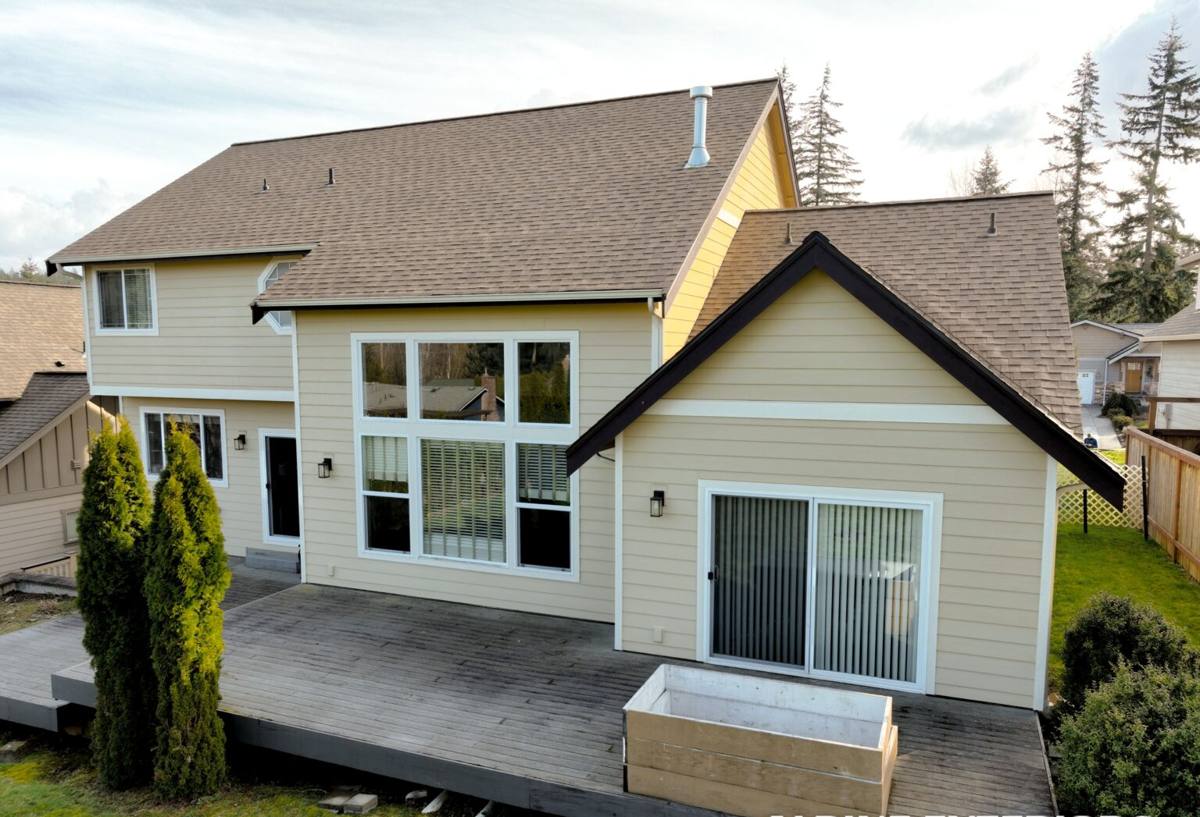
What the Climate Actually Does to a Silver Beach Roof
Salt Air and Metal Fatigue
Salt in the air accelerates corrosion on anything metal on your roof — nail heads, drip edge, flashing around chimneys and skylights, and the metal components in ridge and soffit vents. Corroded fasteners back out or lose their grip on shingles. Corroded flashing develops pinholes that let water in at the exact spots roofs are most likely to leak: valleys, walls, and penetrations. This isn't a defect in the roofing material itself — it's a normal consequence of living near saltwater, and it's why we pay close attention to metal condition on every Silver Beach inspection, not just the shingles.
Driving Rain and Wind-Driven Water
Winter storms here don't just drop rain straight down — wind pushes it sideways and up under laps, seams, and shingle edges that were never designed to shed water from that angle. This is why proper underlayment, correctly lapped flashing, and tight seals at every penetration matter more here than in a drier, calmer climate. A repair that would hold up fine in a low-wind area can fail here if it doesn't account for wind-driven rain finding its way in from an unexpected direction.
Moss, Shade, and Trapped Moisture
Tree cover keeps a lot of Silver Beach roofs shaded for large parts of the day, which is great for the yard and hard on the roof. Shade means slower drying after rain, and slower drying means moss and moisture-loving growth get a real foothold. Moss holds water against the roofing surface, works its way under shingle edges as it grows, and can lift tabs enough to let wind-driven rain underneath. Left alone through a few wet seasons, it can shorten the life of an otherwise sound roof by years.
Signs a Repair Is Needed — Not Just Cosmetic Cleanup
- Granules collecting in gutters or at downspout outlets, a sign shingles are wearing thin
- Dark streaking or thick moss growth, especially on north-facing or heavily shaded slopes
- Soft or spongy spots when walking the roof, which usually means the decking underneath has taken on moisture
- Water stains on ceilings or in the attic, even faint ones that come and go with weather
- Curling, cracked, or missing shingles after a windstorm
- Rust streaks below metal flashing or vents
- Daylight visible through the roof deck from inside the attic
- Higher heating bills with no clear cause, which can point to attic moisture affecting insulation
Any one of these on its own might be minor. Two or three together, especially on a roof that's ten or more years old, usually means it's time for a real inspection rather than a wait-and-see approach.
What a Correct Roof Repair Actually Involves
A roof repair done right isn't just slapping a patch of matching shingle over the spot that's visibly damaged. It starts with figuring out why that spot failed in the first place, because if the underlying cause isn't addressed, the same failure shows up again — often somewhere new nearby.
Our Process
- Inspection. We walk the roof (weather permitting) and check the attic from the inside, looking at decking, insulation, and any signs of moisture tracking away from the visible problem area.
- Diagnosis. We identify the actual cause — failed flashing, worn underlayment, moss undermining shingles, corroded fasteners, or storm damage — and explain it in plain terms before recommending anything.
- Scope and options. Not every issue needs the same fix. We'll tell you honestly if a targeted repair will hold, or if the roof's age and condition mean a repair is just delaying a replacement you'll need soon anyway.
- The repair itself. This typically means removing damaged material back to sound decking, replacing or re-flashing as needed, matching shingles as closely as possible, and resealing every penetration and seam we touch — not just the original problem spot.
- Cleanup and check. We clear debris and old material, and we check drainage paths (gutters, downspouts, valleys) so water has a clear way off the roof once we're done.
Repair, Not Replacement — Setting Honest Expectations
Most homeowners assume a roof problem means a full replacement, and most of the time it doesn't. A well-maintained roof can absorb a fair number of localized repairs over its life. The factors that actually decide whether a repair makes sense are the roof's overall age, how widespread the damage is, and whether the decking underneath is still sound.
| Factor | Favors Repair | Favors Replacement |
|---|---|---|
| Roof age | Under 15 years, materials still flexible | Near or past manufacturer's expected lifespan |
| Damage extent | Isolated to one area or slope | Spread across multiple slopes or the whole roof |
| Decking condition | Firm, dry, no soft spots | Soft, delaminating, or water-stained in multiple areas |
| Shingle granule loss | Minor, localized | Widespread, bald patches visible |
| Moss/moisture history | First occurrence, caught early | Repeated growth despite past cleaning |
| Flashing condition | Solid, isolated corrosion | Corroded or failing throughout |
We'll walk you through where your roof lands on that table before we recommend anything. A repair that's set up to fail within a year isn't a good use of your money, and neither is a full replacement when a targeted fix would genuinely hold.
Preventing the Next Repair
Once a repair is done, a little maintenance goes a long way toward not needing another one soon — especially in a shaded, salt-air neighborhood like Silver Beach.
- Keep gutters and downspouts clear so water isn't backing up under shingle edges
- Have moss treated or removed before it works its way under shingle tabs, not after
- Trim back overhanging branches where practical to cut down on shade and debris buildup
- Check attic ventilation — poor airflow traps moisture and speeds up decking damage
- Schedule a walk-through inspection after major windstorms, not just once a year
- Address small leaks immediately rather than waiting to see if they get worse
Why a Crew That Knows Silver Beach Makes a Difference
Roofing crews that don't work this area regularly tend to treat every roof the same way, using the same assumptions they'd use inland or in a drier climate. That approach misses things here. A crew that's worked Silver Beach roofs knows which slopes tend to hold moss longest based on tree cover and sun exposure, which flashing details tend to corrode first given the salt air, and where wind-driven rain during winter storms typically finds its way in. That familiarity means faster, more accurate diagnosis and fewer surprises once work is underway.
It also means honesty you can check. A local crew has a reputation in the neighborhood to protect, not just a one-time job to close out. We'd rather tell you a repair will hold for several more years than talk you into work you don't need — and we'd rather tell you plainly when a repair genuinely isn't the right call anymore.
Materials and Workmanship Standards We Hold To
On repair work specifically, we match materials as closely as possible to what's already on your roof rather than mixing in whatever's on the truck. We use fasteners and flashing rated for coastal, high-moisture conditions rather than standard-grade materials that corrode faster in this environment. And we seal every seam and penetration we open up during a repair, not just the specific spot that was originally damaged — half-finished sealing is one of the most common reasons a "fixed" roof leaks again within a year.
If you're seeing signs of wear, a stain on the ceiling, moss creeping across a slope, or you just want a second opinion before winter storms roll back in, we're happy to take a look. Reach out for a free, no-pressure estimate using the form below, and we'll give you a straight answer about what your roof actually needs.