 Chuckanut Exterior
 Why Silver Beach Homes Take a Different Kind of Beating
Every siding repair job is shaped by the weather it has to survive, and Silver Beach doesn't get an easy version of Pacific Northwest weather. Homes here deal with salt-laden air, wind-driven rain that gets pushed sideways into wall assemblies, and a moss season that can stretch for the better part of the year. None of that is dramatic on its own, but stacked together year after year, it's exactly the combination that finds every weak point in a home's exterior — a nail pop, a hairline crack, a seam that was never quite sealed right the first time.
Whatcom County's marine climate means moisture is almost never fully gone from the air, even during dry stretches. Siding doesn't just get rained on; it stays damp longer than it would in a drier climate, which gives moss, algae, and rot more time to take hold before anyone notices a problem. A repair approach that works fine in a dry inland town often falls short here, because it doesn't account for how long materials stay wet and how much that matters.
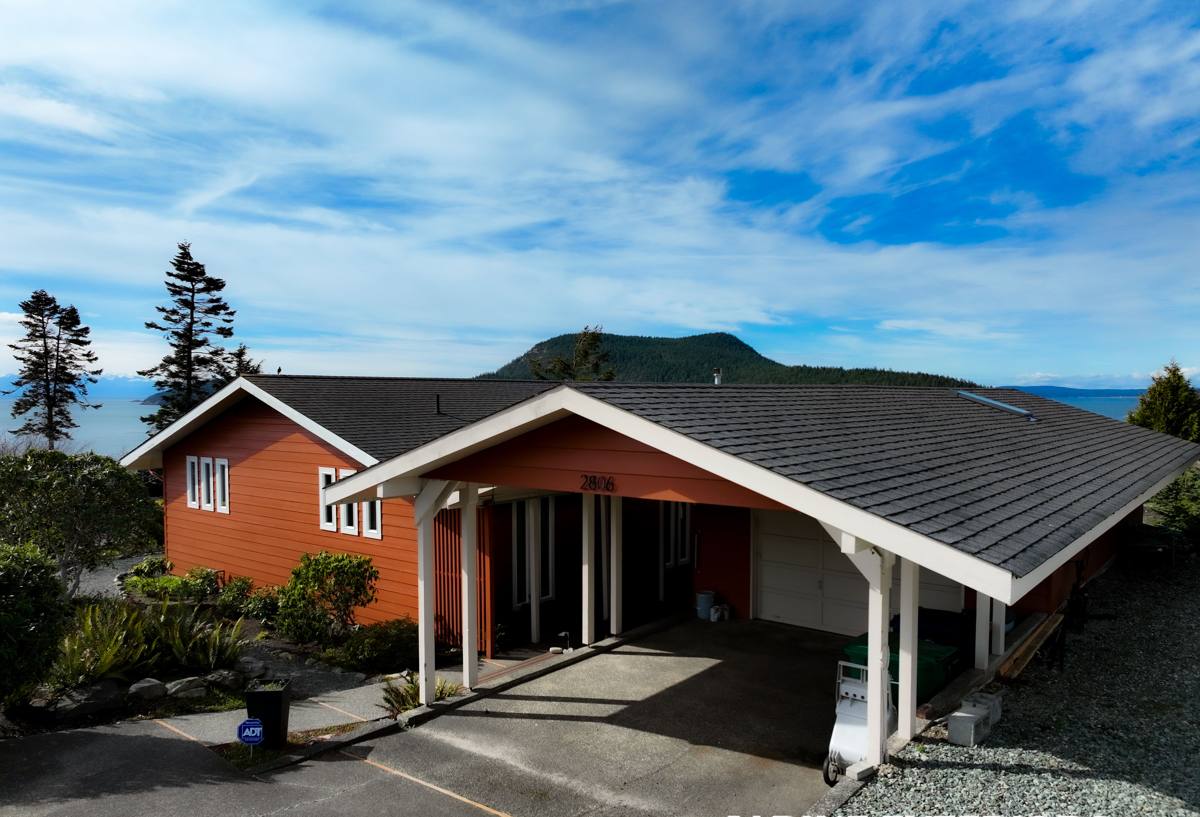
Signs Your Siding Needs Repair, Not Just a Wash
A lot of homeowners in Silver Beach reach for a pressure washer when they see dark streaks or green patches, and sometimes that's genuinely all it takes. But some symptoms point to a problem underneath the surface that cleaning won't touch. Here's what should prompt a closer look:
- Soft or spongy spots when you press on the siding, especially near the bottom courses or around windows
- Visible cracking, splitting, or warping in individual boards or panels
- Paint that's bubbling, peeling, or failing faster than it should
- Persistent moss or algae growth that comes back within weeks of cleaning
- Gaps opening up at seams, corners, or where siding meets trim
- Discoloration or staining that follows a seam line, which often means water is getting behind the material
- A musty smell near exterior walls, or interior signs like peeling paint on inside walls that back up to exterior siding
Any one of these can be minor. Several at once, especially clustered on the same side of the house, usually means water has been getting in longer than it looks from the outside.
The Repair Issues We See Most Often in This Area
Moisture Intrusion at Seams and Penetrations
The most common failure point isn't the siding material itself — it's the transitions. Where siding meets a window, a door, a vent, or another piece of siding, the seal is only as good as the flashing and caulking behind it. Driving rain finds these gaps and pushes water in, and once it's behind the siding, it can sit against sheathing and framing for a long time before it ever shows up as a visible problem.
Moss and Organic Growth
A long moss season means organic growth isn't just a cosmetic issue here — it holds moisture against the siding surface and, over time, can degrade paint film and caulking faster than it would in a drier climate. Repairs in shaded, north-facing, or tree-covered sections of a home often need more attention to drainage and airflow, not just a fresh coat of paint.
Impact and Wear Damage
Cracked or chipped boards from storms, falling branches, or general wear are usually the most straightforward repairs — but only if the replacement piece matches the existing material and finish. Mismatched patches are one of the most common complaints we hear about prior repair work.
Failed Caulking and Sealant
Caulking has a service life, and in a climate with this much sun-to-rain cycling, it can fail years before homeowners expect. Once it cracks or shrinks away from the joint, it stops doing its job even though it might still look intact from a distance.
What a Correct Siding Repair Actually Involves
A proper repair isn't just swapping a damaged board for a new one. It starts with figuring out why that section failed in the first place — otherwise you're patching a symptom and leaving the cause in place to cause the same damage again in a year or two.
| Step | What It Involves | Why It Matters |
|---|---|---|
| Diagnosis | Checking behind the visible damage — sheathing, house wrap, flashing condition | A new board over rotten sheathing just hides the problem |
| Moisture check | Assessing how far water intrusion has traveled from the visible damage point | Determines whether the repair is one board or a wider section |
| Flashing and sealant repair | Correcting the water management detail that let moisture in | Without this, the new siding fails the same way the old siding did |
| Material matching | Sourcing siding that matches profile, thickness, and finish | Mismatched patches are visible and can also perform differently in weather |
| Finish and paint match | Matching factory or field finish so the repair blends in | A repair that looks obvious hurts curb appeal and resale |
Our Process for a Silver Beach Repair Call
We keep the process straightforward because homeowners deserve to know exactly what's happening to their home and why:
- On-site inspection. We look at the damaged area and the surrounding sections, since siding problems rarely stay isolated to one board.
- Root-cause diagnosis. We check flashing, seams, and any penetrations near the damage before assuming the siding itself is the only issue.
- Honest scope and options. We tell you plainly whether this is a targeted repair, a larger section replacement, or something that's approaching the point where full replacement makes more financial sense.
- Repair execution. We correct the underlying water management detail first, then install matching material and finish it to blend with the existing siding.
- Final check. We confirm the repaired section sheds water correctly and matches the surrounding siding in both appearance and performance.
Repair or Replace? How We Help You Decide
Not every damaged section needs a full re-side, and we're not going to tell you it does. But there's a point where repeated repairs cost more over time than replacement would, especially if the underlying siding is aging out or the damage is spread across multiple elevations.
| Factor | Leans Toward Repair | Leans Toward Replacement |
|---|---|---|
| Extent of damage | Isolated to one or two sections | Spread across multiple walls or elevations |
| Age of existing siding | Relatively young, otherwise sound | Nearing or past its expected service life |
| Underlying structure | Sheathing and framing intact | Rot or damage found behind multiple areas |
| Material availability | Matching material and finish still obtainable | Discontinued profile or faded finish that won't match |
| Repair history | First repair needed in this area | Same area has needed repeated repairs |
Why We Repair With James Hardie Materials
When a repair calls for new material — whether it's a few boards or a larger section — we use James Hardie fiber cement. It's the only siding product we install, on repairs and full replacements alike, and there's a practical reason for that beyond preference. Hardie's ColorPlus factory finish is engineered for consistent, long-lasting color, which makes matching an existing wall far more reliable than trying to blend field-painted repairs. The material itself is non-combustible and manufactured to resist the freeze-thaw and moisture cycling that's constant in this part of Whatcom County. And because Hardie backs its products with a strong transferable warranty, a repair done with Hardie material carries that same manufacturer backing forward — not just our workmanship guarantee, but the product's own coverage too.
We don't patch Hardie siding with vinyl, LP SmartSide, or other alternative materials, even when it might be technically possible. Mixing siding systems on one home creates mismatched expansion rates, different moisture behavior, and finish inconsistencies that show up as problems down the road. If your home isn't currently sided in Hardie, we'll talk through what an honest repair looks like versus when it makes more sense to plan for a full re-side in Hardie down the line.
Why It Matters That We Already Work in Silver Beach
A repair crew that already works in this neighborhood knows what to look for before they even get on a ladder. They know which sides of a house in this area typically take the worst weather exposure, how long moss tends to sit before it's noticed, and what water intrusion patterns look like on homes built to the styles and eras common around Chuckanut. That local pattern recognition shortens the diagnosis phase and reduces the chance of a repair that misses the real cause of the damage.
It also means accountability. A contractor working steadily in Silver Beach and the surrounding Chuckanut area has a reputation to protect with neighbors who talk to each other. That's a different incentive structure than a crew passing through from out of the area for a one-off job.
Get an Honest Look at Your Siding
If you're seeing cracked boards, stubborn moss, soft spots, or siding that just doesn't look right anymore, it's worth getting an honest assessment before the damage spreads further. We'll walk your home, tell you plainly what's a simple repair and what isn't, and give you options — no pressure, no upsell. Fill out the form below to schedule a free estimate.