 Chuckanut Exterior
 Building Decks That Hold Up in Sehome's Climate
A deck in Sehome lives a harder life than the glossy photos in a lumberyard catalog suggest. Between the salt-laden air drifting in off the water, the long stretches of driving rain that define a Whatcom County winter, and a moss season that can stretch from October well into spring, the structure under your feet is under constant, quiet pressure. Most deck problems we get called out for weren't caused by one dramatic storm — they were caused by years of moisture finding the same weak spot, over and over, until wood fiber broke down or a fastener corroded through.
Building a deck correctly for Sehome isn't about using fancier materials than anyone else. It's about understanding exactly how this climate attacks a structure and designing every layer — footings, framing, fasteners, decking, railings — to shed water instead of holding it.
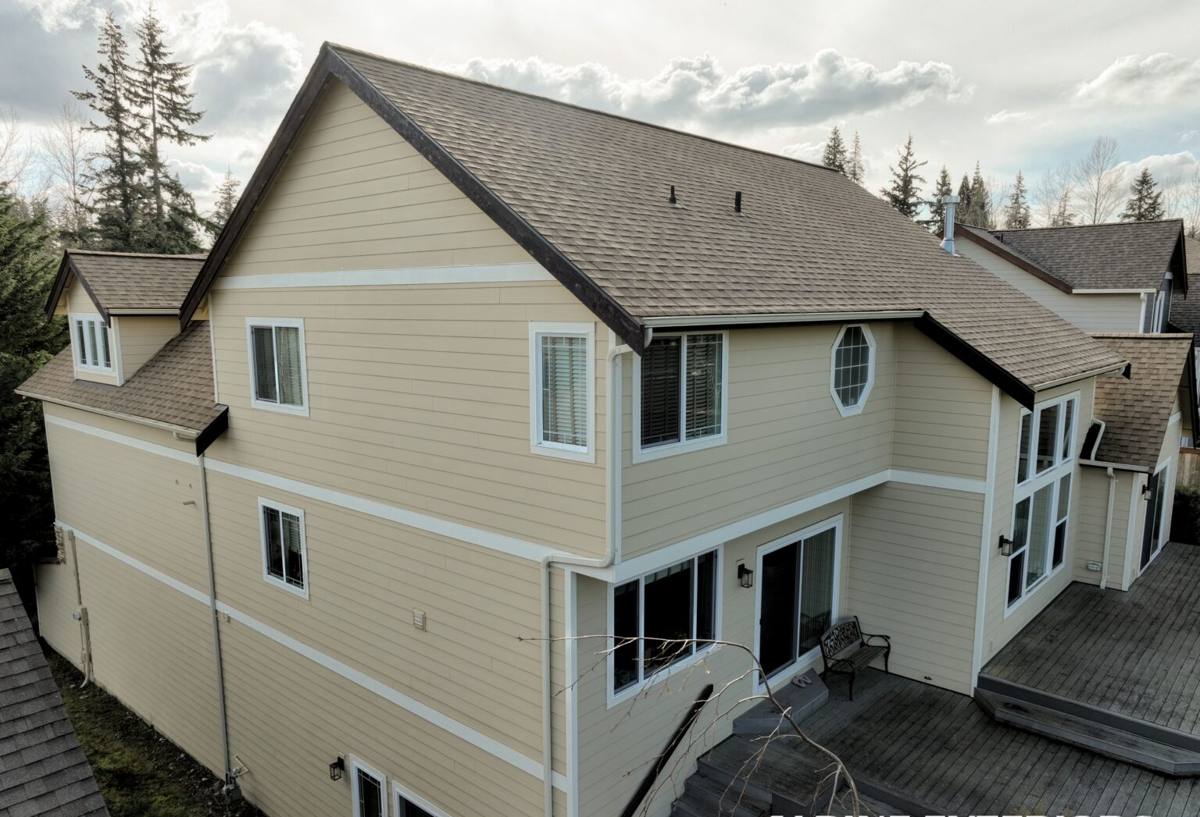
What Sehome Homes Actually Need From a Deck
Sehome's mix of mature tree cover, hillside lots, and proximity to the water creates a specific set of conditions that a deck has to be built around, not just placed on top of.
Shade and Moisture Retention
Homes shaded by fir, cedar, or maple canopy keep decks damp longer after every rain. Less direct sun means slower drying, which means more time for moss, algae, and mildew to establish themselves on horizontal surfaces and in the gaps between boards.
Salt Air and Corrosion
Even a few miles inland from Bellingham Bay, airborne salt accelerates corrosion on anything metal — fasteners, joist hangers, railing hardware. Standard hardware that would last decades in a dry inland climate can start showing rust streaks and pitting in a fraction of that time here.
Driving Rain and Wind-Driven Moisture
Chuckanut-area storms don't just drop rain straight down — wind pushes it sideways, into ledger connections, under railing posts, and into any seam that isn't properly flashed or sealed. A deck designed for calmer weather patterns elsewhere in the country often has gaps that simply don't matter until they're facing this kind of weather.
Choosing the Right Decking Material
There is no single "best" decking material — there's a best fit for your home's exposure, your maintenance appetite, and your budget. We walk every Sehome homeowner through the real trade-offs rather than pushing whatever has the highest margin.
| Material | How It Handles This Climate | Maintenance | Typical Lifespan |
|---|---|---|---|
| Pressure-treated fir/hem-fir | Good rot resistance when installed with proper drainage; needs sealing to resist moss and graying | Annual cleaning, re-sealing every 2-3 years | 15-25 years |
| Western red cedar | Naturally rot- and insect-resistant; still needs finish maintenance in constant damp shade | Cleaning and oil/stain every 1-2 years in shaded areas | 20-30 years |
| Composite/PVC decking | Excellent moisture and moss resistance; surface doesn't absorb water like wood | Periodic washing to prevent surface mildew film | 25-30+ years, often warrantied |
| Tropical hardwood (ipe, garapa) | Very dense and rot-resistant, but expensive and unforgiving of poor drainage beneath | Oiling to maintain color; low rot maintenance | 25-40 years |
Composite has become the most common choice for shaded, moss-prone lots because it doesn't give algae the same foothold that raw wood grain does — though it still needs washing, since moss and mildew can form a film on any surface that stays damp. Cedar and quality pressure-treated lumber remain honest, cost-effective choices when the homeowner is willing to keep up with a sealing schedule. We'll tell you plainly if a lot's shade and moisture levels make a low-maintenance material the smarter long-term call.
Framing and Structure: Where Decks Actually Fail
The decking boards are what you see. The framing underneath is what determines whether the deck is safe in ten years. Most structural failures we find in this region trace back to moisture trapped where it can't dry.
Ledger Board Flashing
The ledger — where the deck attaches to the house — is the single most critical waterproofing detail on the entire structure. Without proper flashing and a water-resistant barrier between the ledger and the house sheathing, driving rain works its way behind the board and rots both the deck framing and the wall structure it's attached to. This is invisible until it's a serious repair.
Joist Protection
Top-cut joists that sit exposed to rain trap water at every fastener penetration. Joist tape or a comparable flashing membrane over the top edge of each joist keeps water from wicking into the end grain, which is the fastest path for rot to start.
Air Gaps and Drying Space
Decking boards need enough gap and enough airflow underneath to actually dry out between storms. Boards installed too tight, or over framing with no ventilation, stay damp for days after a system passes through — which is exactly what moss and rot need.
Footings, Drainage, and Ground Contact
Whatcom County's wet ground season makes footing depth and drainage non-negotiable. Footings need to be sized and set below frost depth per local code, on undisturbed or properly compacted soil, so the deck doesn't shift as ground saturation changes through the winter.
Post bases should hold the post above grade and above standing water, never buried directly in soil or concrete where moisture collects at the base. On sloped or low-lying Sehome lots, simple grading or a gravel drainage path beneath the deck can be the difference between a dry crawlspace and a permanently damp one that feeds moss and mildew growth for the life of the structure.
Railings, Fasteners, and Hardware for a Marine-Influenced Climate
Hardware is where a lot of otherwise well-built decks quietly fail. In a salt-air environment, the fastener grade matters as much as the decking species.
- Stainless steel or hot-dip galvanized fasteners rated for ground contact and coastal exposure — not standard interior-grade hardware
- Joist hangers and structural connectors matched to the same corrosion-resistance rating as the fasteners holding them
- Railing posts through-bolted to framing, not just screwed to a rim board, for both strength and long-term stability as wood moves with moisture cycles
- Cap rails and post tops detailed to shed water rather than pool it, since flat horizontal surfaces on railings are prime moss and rot starting points
Mixing corrosion grades — for example, standard screws in a stainless hanger, or vice versa — can actually accelerate corrosion through galvanic reaction. Matching the hardware system correctly the first time avoids streaking, staining, and premature hardware failure.
Our Deck Building Process
Every deck we build in the Sehome area follows the same sequence, adjusted for the specific site conditions of your lot.
- Site assessment — sun exposure, drainage patterns, existing grade, and how close the lot sits to salt air influence
- Design and material selection — honest conversation about which decking and hardware make sense for your shade, budget, and maintenance preferences
- Permitting — pulling the required permits and building to current code for footing depth, railing height, and structural spans
- Footings and framing — properly sized footings, flashed ledger connections, joist protection, and corrosion-rated hardware throughout
- Decking and railings — installed with correct spacing for drainage and airflow, detailed to shed water at every horizontal surface
- Final walkthrough — reviewing maintenance expectations specific to your deck's material and exposure before we call the job done
Living With Your Deck: Moss Season Maintenance
No deck in this region is maintenance-free, regardless of material. What changes by material is how much maintenance and how often.
Plan on an annual cleaning before moss season sets in — clearing debris from between boards, sweeping standing water off flat surfaces, and washing down algae and mildew film before it has a chance to establish. Wood decking needs its sealant or stain checked yearly in shaded areas and reapplied as it wears. Composite decking needs less frequent attention but still benefits from a wash a couple of times a year to keep organic growth from taking hold in a shaded, damp yard. Keeping nearby vegetation trimmed back so more light and air reach the deck surface also goes a long way toward slowing moss regrowth between cleanings.
Why Hire a Crew That Already Works in Sehome
A deck built from a generic, one-size-fits-all spec sheet often looks fine the day it's finished and starts showing problems within a few wet seasons. A crew that already works this area knows which details actually matter here — where ledger flashing gets missed, which hardware grade holds up against salt air, and how much drainage a shaded Sehome lot really needs before moss becomes a maintenance headache instead of an occasional chore.
That local experience shows up in choices you won't necessarily notice at handoff — the flashing detail behind the ledger, the hardware grade in the railing posts, the gap left between boards — but you'll notice the difference in how the deck holds up five and ten years down the road.
If you're planning a new deck or replacing one that's showing its age, we're happy to walk your property, look at your sun and drainage conditions, and put together a free, no-pressure estimate using the form below.