 Chuckanut Exterior
 Why Sehome Roofs Wear Differently
Sehome sits close enough to the water and to heavy tree cover that its roofs take a different kind of beating than a roof twenty miles inland. Salt-laden air moves through the neighborhood on marine winds, driving rain comes in sideways during winter storms, and the combination of shade, moisture, and mild temperatures gives moss a long growing season — often eight months or more out of the year. None of these things alone destroys a roof quickly. Together, over ten or fifteen years, they explain most of the premature roof failures we see in this part of Whatcom County.
A new roof installed for Sehome needs to be built with all three of those factors in mind from the start — not patched around later. That means fastener selection, underlayment choice, ventilation design, and moss-resistant detailing all get decided differently here than they would on a roof in a drier, less shaded part of the county.
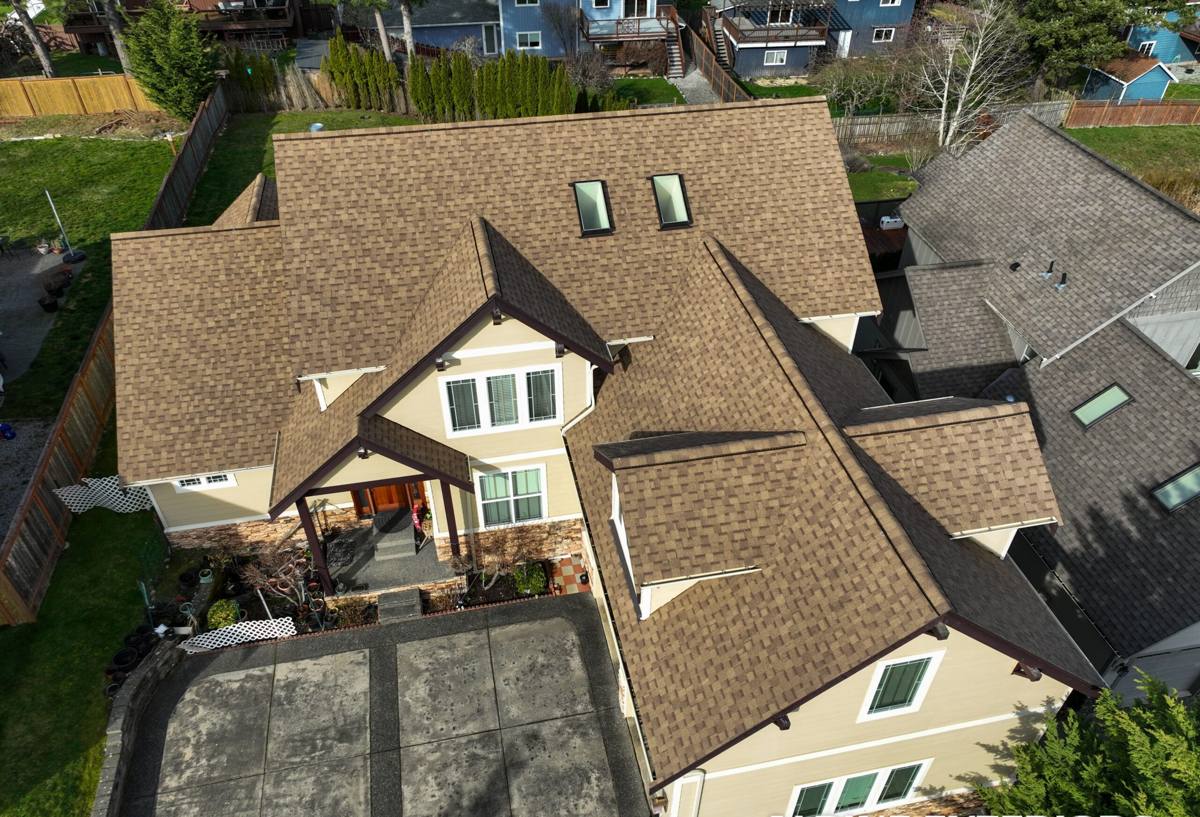
What Salt Air, Rain, and Moss Actually Do to a Roof
Salt Air
Airborne salt accelerates corrosion on any exposed metal — flashing, fasteners, vent caps, and drip edge. Standard galvanized fasteners can start showing rust streaks years before the shingles around them are due for replacement. It's a slow process, but it's steady, and it's one of the reasons material and fastener grade matter more here than in a landlocked neighborhood.
Driving Rain
Wind-driven rain doesn't just fall on a roof, it pushes sideways and upward under shingle edges, around chimneys, and into valleys. A roof that would shed water fine in a calm rain can leak in a Whatcom County windstorm if the underlayment, valley flashing, and shingle overlap weren't installed with wind-driven conditions in mind.
Moss
Moss holds moisture against the roof surface long after the rain has stopped. On shaded, north-facing slopes — common on Sehome lots with mature trees — that constant dampness works into shingle granules, fasteners, and eventually the decking underneath. Moss growth also lifts shingle edges slightly as it establishes, which gives wind and rain an entry point they wouldn't otherwise have.
Signs a Sehome Roof Needs Replacement, Not Another Repair
- Granules collecting in gutters or at downspout outlets, especially after a storm
- Shingles that are curling, cupping, or have visibly thinned edges
- Moss or dark streaking covering more than a third of any slope
- Soft spots or slight sagging felt when walking the roof or visible from the ground
- Daylight visible through the roof deck from inside the attic
- Rusted flashing, exposed nail heads, or corroded vent caps
- Repeated leaks in the same spot after prior patch repairs
- A roof older than 20-25 years for asphalt, or showing granular wear well ahead of that age
One or two of these on their own might just mean a repair. Several at once, especially on a roof already past the middle of its expected life, usually means repair costs are about to outrun what the roof is worth saving.
What a Correct Installation Actually Involves
A new roof is more than shingles nailed to a deck. The parts homeowners don't see are what determine whether the roof performs well in Sehome's specific conditions for its full expected lifespan.
Tear-Off and Deck Inspection
We remove the old roofing down to the deck rather than layering over it. That lets us check the actual condition of the sheathing — moisture damage and soft spots are common on older roofs that have had chronic moss or leak issues, and any damaged decking gets replaced before anything new goes down. Roofing over a compromised deck just hides the problem.
Underlayment
Given how much wind-driven rain this area sees, we treat underlayment as a real second layer of protection, not a formality. Self-adhering ice-and-water membrane goes in valleys, around penetrations, and along eaves where wind-driven rain is most likely to work its way underneath the shingle layer.
Flashing
Flashing around chimneys, skylights, sidewalls, and valleys is where most leaks originate on an otherwise sound roof. We use corrosion-resistant flashing material given the salt air exposure, and we install it in a shingled, overlapping sequence rather than relying on sealant to do the work sealant shouldn't have to do.
Ventilation
Balanced intake and exhaust ventilation keeps the attic temperature and moisture level in check, which matters for shingle lifespan and for controlling condensation — a real issue in a marine climate with high ambient humidity. Poor ventilation shortens shingle life and can contribute to moisture problems in the attic regardless of how good the roofing material is.
Fasteners and Metal Components
We use fasteners and metal accessories rated for coastal or high-moisture exposure rather than standard-grade hardware, since standard galvanized components tend to show corrosion sooner in salt-air conditions.
Roofing Material Options for Sehome Homes
There's no single "right" material for every house — pitch, budget, tree cover, and how long the homeowner plans to stay in the house all factor in. Here's how the common options stack up against Sehome's specific conditions.
| Material | Moss Resistance | Salt Air Durability | Typical Lifespan | Best Fit |
|---|---|---|---|---|
| Standard 3-tab asphalt | Low — needs regular cleaning | Fair with proper fasteners | 15-20 years | Budget-conscious, sun-exposed slopes |
| Architectural/dimensional asphalt | Moderate, better with algae-resistant granules | Good | 25-30 years | Most Sehome homes — balance of cost and durability |
| Standing seam metal | High — sheds moss more effectively | Very good with coated/coastal-rated panels | 40-50+ years | Shaded, moss-prone lots and long-term owners |
| Synthetic/composite shingle | Moderate to high | Good | 30-50 years | Homeowners wanting the wood or slate look without the maintenance |
For heavily shaded lots — common around Sehome's mature tree canopy — we lean toward materials with better moss resistance even if the upfront cost is higher, since the long-term cleaning and repair burden on a moss-prone asphalt roof adds up.
Our Installation Process
- On-site assessment — we inspect the existing roof, attic ventilation, and any problem areas (valleys, chimneys, shaded slopes) before quoting anything.
- Written estimate — material options, scope, and a clear price, with no pressure to decide on the spot.
- Permitting — we pull the required permits through the local building jurisdiction before work starts.
- Tear-off and deck check — old roofing removed, deck inspected and repaired as needed.
- Underlayment and flashing — installed per the details above, prioritizing valleys, eaves, and penetrations.
- Roofing material installation — installed to manufacturer specification to keep warranty coverage intact.
- Ventilation check — intake and exhaust balanced for the specific attic and roof design.
- Cleanup and final walkthrough — site cleared of debris and nails, roof reviewed with the homeowner before we consider the job done.
What Drives the Cost of a New Roof
| Factor | Why It Matters |
|---|---|
| Roof size and pitch | More surface area and steeper pitches mean more material and labor time |
| Number of existing layers | Tear-off of multiple old layers adds disposal and labor cost |
| Deck condition | Rotted or soft sheathing found during tear-off needs repair before roofing goes on |
| Material choice | Asphalt, metal, and composite options span a wide cost range |
| Ventilation upgrades | Adding or correcting intake/exhaust vents affects labor and materials |
| Site access | Steep lots, limited driveway access, or heavy tree cover can affect equipment staging and cleanup time |
We don't quote a roof over the phone. Every estimate is based on an actual look at the roof and attic, because two houses of the same size can have very different scopes of work once you get up there.
Local Permitting and Code Considerations
Roof replacement in Whatcom County typically requires a building permit, and the local jurisdiction has its own inspection and code requirements around ventilation, ice-and-water shield placement, and fire rating depending on the home's location. We handle the permit process as part of the job so homeowners don't have to navigate it themselves, and we build to current code rather than just matching what was there before.
Why Local Experience in Sehome Matters
A crew that regularly works Sehome and the surrounding Chuckanut area already knows which slopes tend to hold moss, which older homes commonly have ventilation problems, and how the local building department wants things documented. That's not something you get from a crew that mostly works other parts of the state and treats every roof the same way. It shows up in fewer surprises during tear-off, fewer callbacks for leaks in valleys and flashing points, and a roof that's actually built for the conditions it has to survive here rather than a generic install.
After the Install: Keeping a New Roof Performing
- Have gutters cleared at least twice a year, more often under heavy tree cover
- Have moss treated or removed before it establishes, rather than after it's spread across a slope
- Keep overhanging branches trimmed back to reduce shade and debris buildup
- Schedule a roof check after any major windstorm
- Address small leaks or lifted shingles immediately rather than waiting
A well-installed roof handles Sehome's climate for decades, but a little seasonal attention protects that investment and catches small issues before they become expensive ones.
If your roof is showing wear, or you just want an honest read on how much life it has left, we're happy to take a look. Request a free, no-pressure estimate using the form below and we'll walk the roof with you before recommending anything.