 Chuckanut Exterior
 Siding Built for What Sehome Actually Deals With
Homes in and around the Sehome area sit close enough to the water and the marine weather patterns of Whatcom County that siding gets tested in ways a lot of manufacturers' spec sheets don't account for. It's not one big storm that causes trouble here — it's the accumulation. Salt-laden air moving off Bellingham Bay, wind-driven rain that hits siding sideways instead of falling straight down, and a wet season that stretches long enough for moss and algae to get a real foothold on north-facing walls. Any one of those is manageable. All three, year after year, is what separates siding that looks good at year fifteen from siding that's chalking, swelling, or growing green by year five.
This page is specifically about fiber cement siding for Sehome-area homes — what the climate demands, what a correctly done installation looks like, and how our process works when we take on a project in this neighborhood. We're not going to give you a generic rundown of siding materials. We install James Hardie fiber cement exclusively, and we'll explain why that matters here specifically, not just in the abstract.
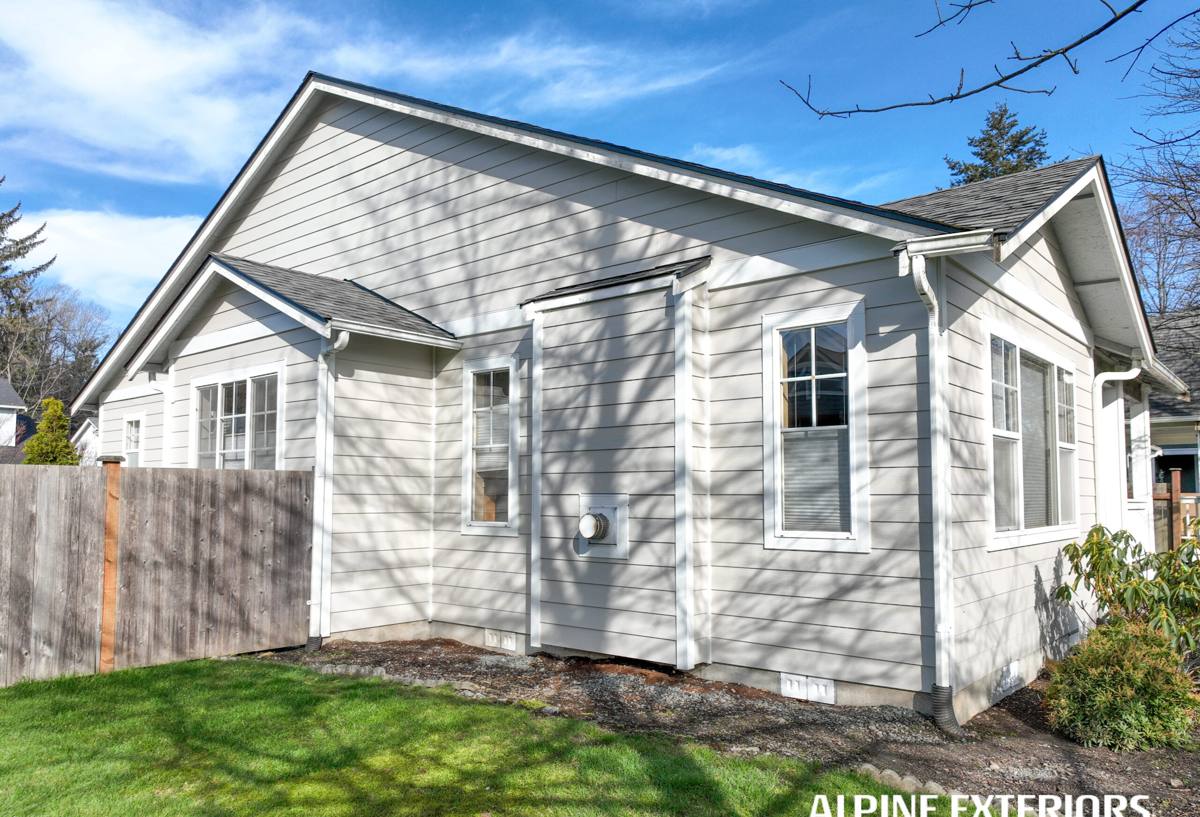
What Salt Air, Rain, and Moss Actually Do to Siding
Salt Air and Corrosion
Salt in the air isn't just a coastal curiosity — it's a slow chemical attack on anything with exposed metal or a porous surface. Fasteners, trim flashing, and caulk joints take the brunt of it. Over time, salt exposure accelerates corrosion on lower-grade fasteners and breaks down cheaper sealants faster than their warranties assume. It also settles into porous or poorly sealed siding surfaces, which is one more reason factory-cured, factory-finished material has a real advantage over anything painted or primed on site.
Driving Rain and Water Intrusion
Whatcom County doesn't just get a lot of rain — a good share of it comes in sideways during winter storm systems, which pushes water into laps, seams, and butt joints that would stay dry in a straight-down rain. Siding that isn't installed with the right clearances, flashing, and overlap will let water track behind the cladding and into the wall assembly, even if the surface material itself never fails. This is why installation quality matters as much as the product choice — a great siding material installed with tight-to-the-trim clearances or missing flashing will still lead to rot underneath.
The Long Moss Season
Shaded, north- and east-facing walls in this part of Washington stay damp for months at a stretch, which is exactly what moss and algae need to establish. Wood-based and wood-composite sidings are especially vulnerable because moss holds moisture against an absorbent surface, which speeds up rot from the inside out. Fiber cement doesn't feed moss the way organic materials do, but it isn't immune to growth sitting on its surface either — which is why product choice and a few basic maintenance habits both matter.
Why We Install Only James Hardie Fiber Cement
We made a deliberate decision to standardize on James Hardie fiber cement siding and not offer vinyl, LP SmartSide, cedar, primed spruce, or other fiber cement brands. That's not a marketing position — it's a practical one, built around what holds up in exactly the conditions described above.
Fiber cement is non-combustible, dimensionally stable in swings between soaked and dry, and doesn't feed moss or rot the way wood-based products can. James Hardie's ColorPlus finish is baked on at the factory under controlled conditions, which gives it a more consistent, UV- and salt-resistant top coat than field-applied paint typically achieves — and it comes backed by a real finish warranty. Hardie also engineers regional product formulations (their HZ5 line, for example) specifically for wetter, harsher climates, which is directly relevant to a neighborhood dealing with salt air and long wet seasons. We'd rather install one product system well, understand its quirks completely, and stand behind it, than offer a menu of materials with different failure modes and different levels of confidence.
What a Correct Fiber Cement Siding Job Actually Involves
The Weather Barrier Comes First
Before a single piece of siding goes up, the wall needs a continuous, correctly lapped weather-resistive barrier with properly integrated flashing around every window, door, and penetration. This layer is what actually keeps water out of the wall — the siding sheds the bulk of it, but the barrier behind it is the real defense against wind-driven rain finding a way in.
Fastening and Clearances
James Hardie publishes specific fastener patterns, nailing zones, and minimum clearances from grade, roofing, and decks — and those specs exist for a reason. Too-tight clearances trap moisture against the bottom edge of the siding; incorrect fastening can cause boards to crack, cup, or work loose over time, especially with the freeze-thaw and wet-dry cycling this area sees. Following the manufacturer's installation manual isn't optional if you want the warranty to actually mean something.
Joints, Caulking, and Trim
Butt joints, corners, and trim transitions are where most siding failures actually start, not in the field of the wall. Correctly installed joint flashing, quality sealant at the right locations (and no sealant where it isn't needed), and properly integrated trim keep driving rain from finding a path behind the cladding.
Our Process for Sehome-Area Installations
- Assessment and measurement — we walk the exterior, check existing sheathing and moisture conditions, and identify problem areas (shaded walls, low clearances, prior water damage) specific to the property.
- Tear-off and prep — old siding comes off, sheathing is inspected and repaired where needed, and the weather barrier is installed or verified before anything new goes up.
- Installation to Hardie spec — siding, trim, and flashing go in following the manufacturer's fastening, clearance, and joint requirements, not shortcuts.
- Final walkthrough — we go over the finished job with the homeowner, point out anything worth knowing for maintenance, and address punch-list items before we call it done.
Choosing the Right Hardie Product Line for This Area
James Hardie makes several siding profiles, and the right one depends on the home's style and exposure — not just personal preference.
| Product Line | Best Suited For | Local Consideration |
|---|---|---|
| HardiePlank Lap Siding | Traditional and most common home styles | Most versatile choice; performs well on both sheltered and wind-exposed walls |
| HardiePanel Vertical Siding | Modern designs, accent walls, gable ends | Fewer horizontal laps means fewer joints for wind-driven rain to test |
| HardieShingle Siding | Craftsman and cottage-style homes | More surface texture; benefits from good airflow on shaded, moss-prone walls |
| HardieTrim Boards | Corners, fascia, window and door trim | Pairs with any of the above; consistent finish across the whole exterior |
Cost Factors for a Sehome Siding Project
We don't publish fixed pricing because every home's exposure, existing condition, and design details change the scope — but these are the factors that actually move the number:
| Factor | Why It Matters |
|---|---|
| Condition of existing sheathing | Hidden water damage from past siding failures may need repair before new siding goes on |
| Home size and wall complexity | More corners, dormers, and trim details mean more labor and material cuts |
| Product line and profile | Panel, plank, and shingle profiles carry different material and labor costs |
| Access and site conditions | Slopes, tight setbacks, and limited staging area affect crew efficiency |
| Trim and detail scope | Full trim replacement versus reusing sound existing trim changes the total |
Maintenance in a Moss-Prone, Salt-Air Climate
Fiber cement is low-maintenance compared to wood, but "low" isn't "none," especially in this climate. A few habits go a long way toward protecting the investment:
- Rinse down siding, especially shaded and north-facing walls, once or twice a year to clear off moss spores and salt residue before they build up
- Keep gutters clear so overflow doesn't run down the siding face repeatedly in the same spot
- Trim back vegetation and tree cover that keeps walls damp and shaded longer than necessary
- Check caulking at trim joints and penetrations periodically — sealant is the first thing to wear out, well before the siding itself
- Address any paint chips or damage promptly so bare edges aren't left exposed to moisture
Why Hiring a Crew That Already Works Sehome Matters
Whatcom County's building requirements, wind exposure categories, and moisture conditions aren't identical to what a crew coming from a drier or more sheltered region is used to accounting for. A crew that regularly works this area already understands which walls typically take the worst weather, where moss tends to establish first, and how to sequence a tear-off and install around this region's rain patterns instead of fighting them. That local familiarity shows up in fewer surprises mid-project and a finished job that's actually built for the conditions it has to survive, not just the conditions on a spec sheet.
If you're weighing a siding replacement or repair for a home in the Sehome area, we're happy to take a look and walk you through what we're seeing and what it would take to do it right. Reach out below for a free, no-pressure estimate — there's no obligation, just a straight assessment of your home's siding and what it needs.