 Chuckanut Exterior
 Roof Repair in Sehome: What the Climate Actually Demands
Homes in and around Sehome sit in one of the more demanding roofing climates in Whatcom County. You've got salt-laden air drifting in off the water, long stretches of driving rain that comes in sideways during winter storms, and tree cover dense enough to keep roofs shaded and damp for months at a time. None of that is unusual for this part of Washington, but it does mean a roof here ages differently than one in a drier, sunnier region. Repairs that would be minor cosmetic fixes elsewhere can turn into real leak problems if they're ignored through even one wet season.
A correct roof repair in this area isn't just about patching the spot that's obviously failing. It's about understanding why that spot failed — moss holding moisture against shingles, a flashing seam that's corroded from years of salt exposure, or wind-driven rain finding its way under a lifted shingle edge — and fixing the cause, not just the symptom.
Common Roof Problems We See on Sehome Homes
Moss and Organic Growth
Chuckanut's tree canopy and consistently damp, shaded conditions make this prime moss territory. Moss doesn't just sit on top of a roof looking messy — its root structure lifts shingle edges, holds water against the roofing material for extended periods, and accelerates granule loss. Left long enough, moss growth turns from a maintenance issue into an active leak source, especially around butt joints and valleys where debris and moisture collect.
Salt Air Corrosion
Homes closer to the water deal with airborne salt that speeds up corrosion on exposed metal — flashing, fasteners, vent boots, gutter hardware. A fastener or flashing seam that would last decades inland can develop pinholes or rust-through years earlier here. This is one of the most common causes of a "mystery leak" that shows up on a ceiling nowhere near an obvious roof problem.
Wind-Driven Rain Intrusion
Winter storms in this part of Washington don't just drop rain straight down — they push it sideways and upward under roof edges, around chimneys, and through any gap in flashing or sealant. A roof that sheds a light rain just fine can still leak during a real storm if the flashing details weren't installed with driving rain in mind.
Valley and Flashing Failures
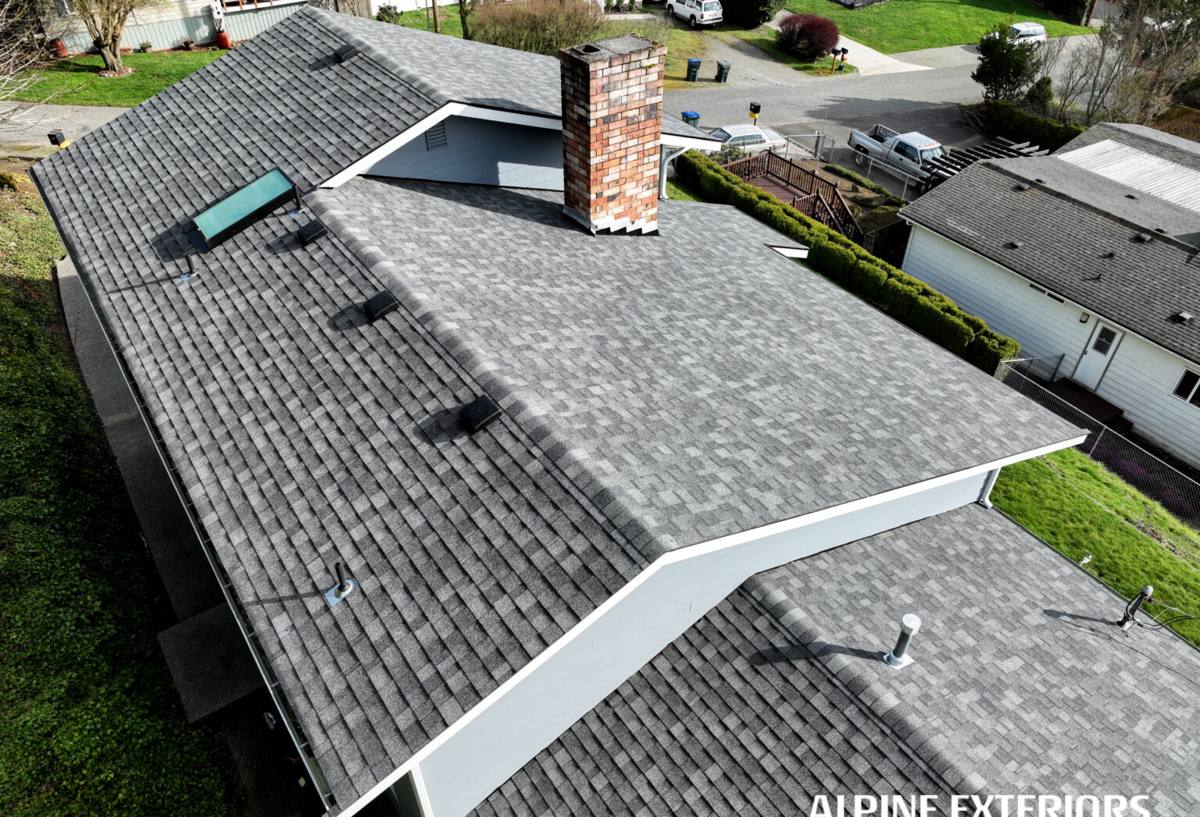
Valleys, chimney flashing, skylight curbs, and roof-to-wall transitions are where the vast majority of leaks actually start — not out in the open field of shingles. These are also the areas most affected by moss buildup and debris accumulation, since they're natural collection points for organic material and standing water.
What a Correct Roof Repair Actually Involves
A repair done right starts with figuring out the real source of the problem, which is often not where the water is showing up inside the house. Water can travel along rafters or sheathing for several feet before it finds a gap to drip through, so an honest assessment means tracing the path back to the actual entry point rather than just patching wherever the ceiling stain appears.
- Inspecting the full roof plane, not just the reported problem area — one failure point often means others are close behind
- Checking flashing at every penetration: chimneys, vents, skylights, and roof-to-wall junctions
- Assessing moss and debris buildup, including how far it's progressed under the shingle surface
- Evaluating decking condition where leaks have been present for a while, since prolonged moisture can soften sheathing
- Matching replacement materials to the existing roof as closely as possible, in both product type and color
- Confirming the repair addresses the cause — not just resealing the surface symptom
Sealant-only fixes are the most common shortcut we see and correct after the fact. Caulk over a failing flashing seam might stop a drip for a season, but it's not a repair — it's a delay. Once the underlying metal or membrane has failed, the water finds a new path.
Our Roof Repair Process
1. Assessment and Honest Recommendation
We walk the roof, document what we find, and tell you plainly whether it's a repair situation or whether the roof is old enough or damaged enough that repair would just be a short-term patch on a longer-term problem. We'd rather tell you a repair makes sense than push a replacement you don't need yet.
2. Scoped, Written Estimate
You get a clear description of what's being fixed and why, not a vague line item. If moss removal, flashing replacement, and decking repair are all part of the job, each is spelled out.
3. The Repair Itself
Work is done to match your existing roofing material where possible, with attention to the details that matter most in this climate — proper flashing laps, correctly sealed penetrations, and fastening that accounts for salt exposure over time.
4. Cleanup and Walkthrough
We clear debris, remove old material, and walk the repair area with you before we consider the job done.
Repair vs. Replacement: How We Decide
Not every roof problem needs a full replacement, and not every roof problem should be patched indefinitely. The table below covers the general factors that push a decision one way or the other — every roof is different, so this is a starting point for the conversation, not a substitute for an actual inspection.
| Factor | Leans Toward Repair | Leans Toward Replacement |
|---|---|---|
| Roof age | Well within expected lifespan for the material | At or past the material's typical service life |
| Leak pattern | Isolated to one flashing point or valley | Multiple unrelated leak points across the roof |
| Moss/organic growth | Surface-level, recently developed | Long-established, granule loss visible underneath |
| Decking condition | Solid, no soft spots | Soft, spongy, or visibly water-damaged sheathing |
| Shingle condition overall | Rest of the roof is in good shape | Widespread curling, cracking, or granule loss |
What Affects the Cost of a Roof Repair
Repair costs vary a lot depending on scope, and we're not going to pretend there's one number that applies to every Sehome roof. In general, the cost of a repair is driven by a handful of factors:
- Size and location of the damaged area — a single flashing repair is a very different job from a multi-point leak investigation
- Roof pitch and access — steeper or harder-to-access roofs take more time and equipment
- Decking damage — if water has softened the sheathing, that adds material and labor beyond the surface repair
- Material matching — matching an older or discontinued shingle color or profile can take more sourcing time
- Extent of moss remediation needed — light cleaning is quick; long-neglected growth often requires more careful removal to avoid further damage
We'll never give you a ballpark number without seeing the roof first — too many of these factors only show up on inspection.
Why a Crew That Already Works in Sehome Matters
Roofing crews that work regularly in this part of Whatcom County build an eye for how this specific climate ages a roof — which flashing details tend to fail first near the water, how far moss has to progress before it's actually compromising shingles versus just being cosmetic, and which repair approaches hold up through a real Pacific Northwest winter versus which ones just look fine until the next storm season. That's not something you get from a general contractor passing through the area once. It comes from doing this work here, repeatedly, and seeing how repairs actually perform a few years later.
Local presence also means we're not disappearing after the invoice clears. If a repair needs a follow-up check after the first hard rain of the season, we're a call away, not a drive across the state.
Roof Repair Checklist: Signs Your Sehome Home Needs a Look
- Visible moss or dark streaking on shingles, especially on the shaded, north-facing slopes
- Granules collecting in gutters or at downspout outlets
- Any ceiling staining, even faint or intermittent
- Daylight visible through the attic roof deck
- Curling, cracking, or lifted shingle edges
- Rust staining around flashing, vents, or metal roof penetrations
- Sagging or soft-feeling spots when walking the attic floor near the roofline
- Debris buildup in valleys that never seems to fully clear, even after cleaning
Catching any of these early is almost always cheaper and less disruptive than waiting until there's active interior water damage.
Get a Straight Answer About Your Roof
If you're seeing any of the signs above, or you just want an honest opinion on whether that spot on your roof is a quick fix or something bigger, we're glad to take a look. Estimates are free, there's no pressure attached, and if the roof doesn't need what you thought it did, we'll tell you that too. Use the form below to get started.