 Chuckanut Exterior
 What Sehome's Weather Does to Siding Over Time
Sehome sits close enough to Bellingham Bay that salt-laden air is a constant, low-grade stress on exterior materials, even on homes several blocks inland. Add Whatcom County's long wet season, where driving rain comes in sideways off the water for days at a stretch, and you have conditions that punish any siding with a weak seam, a cracked caulk line, or a finish that's starting to give out. Then comes the shoulder seasons, when shaded north walls, mature trees, and persistent damp turn into a moss and algae season that can run six months or longer.
None of this means siding is doomed. It means siding has to be installed and repaired with those specific stresses in mind. A repair that would hold up fine in a dry inland climate can fail within a year or two here if it doesn't account for wind-driven moisture and near-constant humidity. That's the standard we hold every Sehome repair to.
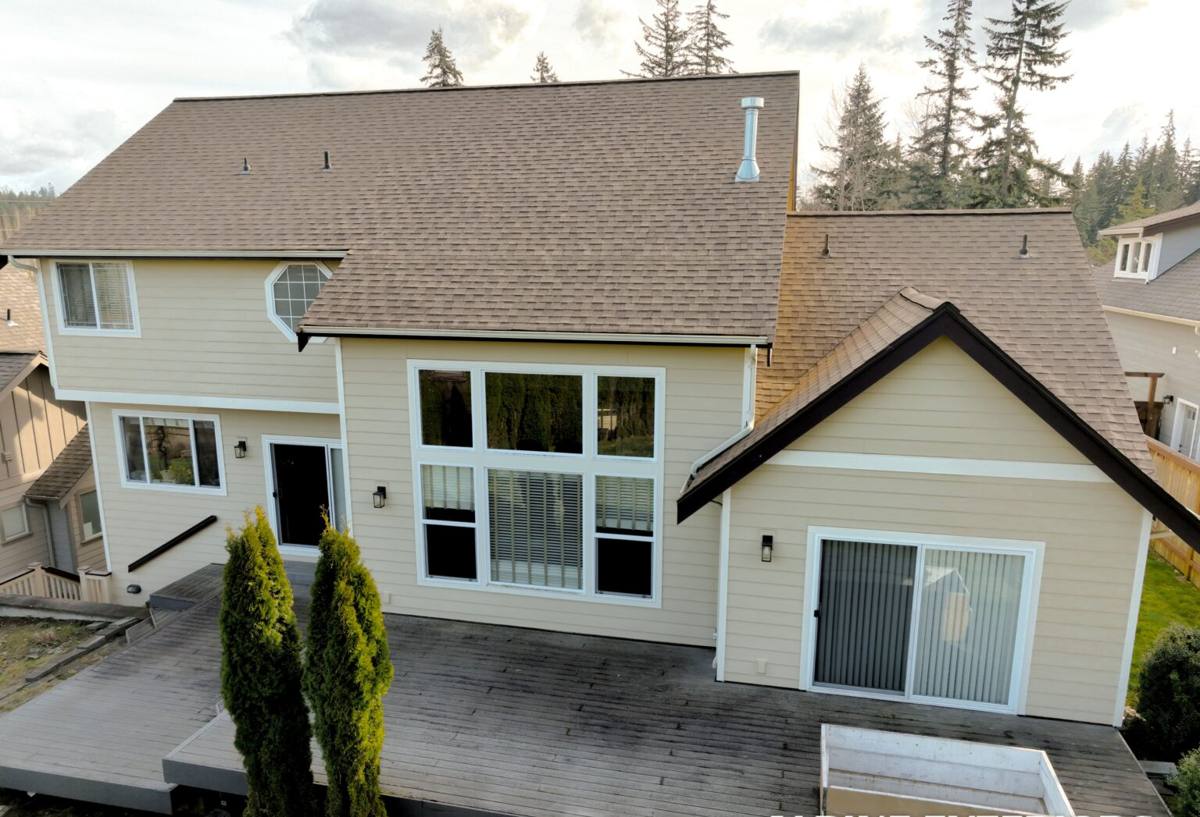
Signs a Repair Job Is Overdue
Most siding problems in this neighborhood don't show up as a dramatic failure. They show up as small signs that get ignored until the underlying damage grows.
What to look for
- Soft or spongy spots when you press on a wall, especially near the bottom courses or under windows
- Cracked, split, or buckled boards, particularly on the side of the house that takes the most wind and rain
- Persistent dark streaking or green-black growth that comes back within weeks of cleaning
- Gaps at seams, corners, or trim where caulk has shrunk, cracked, or pulled away
- Paint or finish that's bubbling, peeling, or chalking heavily in one localized area rather than evenly across the whole house
- A musty smell or visible staining on interior walls that share a plane with damaged exterior siding
Any one of these on its own might be minor. Several clustered in the same area usually means water has been getting behind the siding for a while, which changes the repair from a patch job to something more involved.
Why Localized Damage Spreads
Siding is a water management system, not just a weather-facing surface. Once water gets past the outer layer in one spot, it tends to travel behind the wall covering along the path of least resistance, showing up as damage several feet from where the original breach happened. This is especially true with wood-based and engineered wood products, which absorb moisture and swell before they ever show visible surface damage. By the time a soft spot is obvious from outside, the sheathing behind it may already be compromised.
What a Correct Repair Actually Involves
A siding repair that's done right is not just about matching the new piece to the old one visually. It starts with figuring out how water got in, not just where it shows up.
Tracing the Water Path
Before we touch a single board, we look at flashing above windows and doors, the condition of the house wrap or building paper behind the siding, and how water is being directed away from seams and penetrations. If we replace a damaged section without fixing the flashing or drainage issue that caused it, the same failure comes back in a year or two, just in a slightly different spot.
Removing Damage Without Creating More
Damaged siding, and any compromised sheathing or house wrap behind it, needs to come out cleanly. Rushing this step, or trying to save a few boards that are borderline, tends to shorten the life of the repair. We remove back to solid material, even if that means a slightly larger opening than the original problem suggested.
Matching Material, Profile, and Finish
Mismatched siding is one of the most common complaints homeowners have about past repair work, whether it's a visible seam, a different reveal, or a color that doesn't quite match after a few years of UV exposure. With James Hardie's ColorPlus factory finish, we can typically match existing color families closely because the finish is manufactured to a consistent standard, which is one of several reasons we prefer working with it over field-painted alternatives that drift in color from batch to batch.
Repair or Replace? How We Make That Call
Not every siding problem in Sehome needs a full re-side, and not every siding problem should be patched. The right call depends on how much of the house is affected, what's causing the damage, and what condition the material is in overall.
| Factor | Leans Toward Repair | Leans Toward Replacement |
|---|---|---|
| Extent of damage | Isolated to one or two areas | Recurring across multiple walls or elevations |
| Underlying cause | One-time flashing or seam failure, now fixed | Systemic moisture intrusion or original install defects |
| Age of existing siding | Well within expected service life | Near or past the material's realistic lifespan |
| Material condition elsewhere | Rest of the siding is sound and stable | Widespread swelling, delamination, or finish failure |
| Color and profile match | Close match achievable | Discontinued profile or badly faded existing material |
We'll walk you through where your home falls on that list honestly. If a targeted repair will genuinely hold up through another decade of Whatcom County winters, that's what we'll recommend, even though a full re-side is a bigger job.
Our Repair Process for Sehome Homes
- On-site inspection, including moisture checks around the damaged area and a look at flashing, trim, and adjacent siding
- A written explanation of what's causing the damage, not just what's visible, so you understand what you're paying to fix
- Careful removal of damaged siding and any compromised material behind it
- Correction of the underlying issue, whether that's flashing, sealant, or drainage, before any new siding goes back on
- Installation of matching material, fastened and finished to manufacturer specification
- A final walk-through so you can see exactly what was done and ask questions before we leave
Why We Repair and Install Only James Hardie Fiber Cement
When a repair calls for new material, or when the damage is extensive enough that patching no longer makes sense, we work exclusively with James Hardie fiber cement. That's a deliberate standard, not a default. Fiber cement doesn't absorb water and swell the way wood-based and some engineered wood products do, which matters directly in a climate where siding stays damp for extended stretches. It's also non-combustible, holds a factory-applied ColorPlus finish far more consistently than field-applied paint, and Hardie's HZ product lines are engineered for specific moisture and temperature zones rather than a one-size-fits-all approach.
We don't install vinyl, LP SmartSide, Cemplank, Allura, or primed wood siding, and we're upfront about why: we've made a professional judgment that fiber cement, specifically Hardie's system, gives Sehome homeowners the best combination of moisture resistance, finish durability, and long-term value for this climate. If your existing siding is a different material, we'll still repair it honestly and correctly. But if you're facing a replacement decision, Hardie is what we'll recommend and what we stand behind.
Ongoing Maintenance Between Repairs
A good repair buys you years, but Sehome's climate means siding maintenance is an ongoing job, not a one-time fix. A few habits go a long way toward preventing the next repair call.
- Rinse siding, especially shaded and north-facing walls, at least once or twice a year to keep moss and algae from taking hold
- Trim back vegetation and tree limbs that keep siding shaded and damp longer than necessary
- Check caulking at trim, seams, and penetrations annually, since it degrades faster under constant damp and salt exposure
- Look at gutters and downspouts each fall to make sure water is being carried away from the wall, not dumped against it
- Address small cracks or gaps as soon as you spot them rather than waiting for the next dry stretch to "get to it"
Why Hiring a Crew That Already Works in Sehome Matters
Siding repair in this part of Whatcom County isn't the same job as siding repair in a dry inland climate, and it shows in the details: how flashing is detailed above windows, how much clearance is left at grade, how seams are sealed to handle wind-driven rain instead of just vertical rainfall. A crew that works this neighborhood regularly has already seen how local homes age under salt air, moss, and driving rain, and builds repairs accordingly instead of applying a generic fix that wasn't designed for this exposure.
That local familiarity also means a more accurate diagnosis up front. Knowing which wall orientations in Sehome tend to take the worst weather, or how quickly moss returns on a shaded elevation, helps us spot problems before they turn into bigger ones and set expectations honestly about how long a repair should last.
If you're seeing damage, staining, or soft spots on your siding, we're glad to take a look and give you a straight answer about what's going on and what it will take to fix it right. Reach out for a free, no-pressure estimate, and we'll walk your home with you before recommending anything.