 Chuckanut Exterior
 Why Sehome Roofs Wear Differently Than Roofs Inland
A roof in Sehome doesn't age the same way a roof forty miles inland does. The combination of salt-laden air off the water, long stretches of driving rain, and a moss season that can run most of the year puts a specific kind of stress on asphalt shingles. None of it is dramatic on its own — no single storm usually does the damage — but the cumulative effect on fasteners, granules, and the wood underneath is real, and it shows up faster than most homeowners expect.
Salt Air and Metal Fastener Corrosion
Salt air accelerates corrosion on anything metal: roofing nails, flashing, drip edge, and the metal components in ridge vents and pipe boots. On a lower-grade install, this shows up first as rust streaking below flashing points, then as loosened nails that no longer hold shingles flat. It's one of the reasons we don't cut corners on fastener quality here — a roof that looks fine at year three can start failing at the nail line by year eight if the wrong hardware was used going in.
Moss, Shade, and a Long Wet Season
Whatcom County's tree cover and extended damp months give moss exactly what it needs: shade, moisture, and time. Moss doesn't just sit on the surface — it works into the shingle's granule layer and holds water against the mat underneath, which shortens the life of the shingle and can eventually lift tabs enough to let water in. On north-facing slopes and roofs with heavy tree overhang, moss growth in Sehome is less a matter of "if" than "how soon," which changes how we spec and maintain a roof here compared to a drier part of the state.
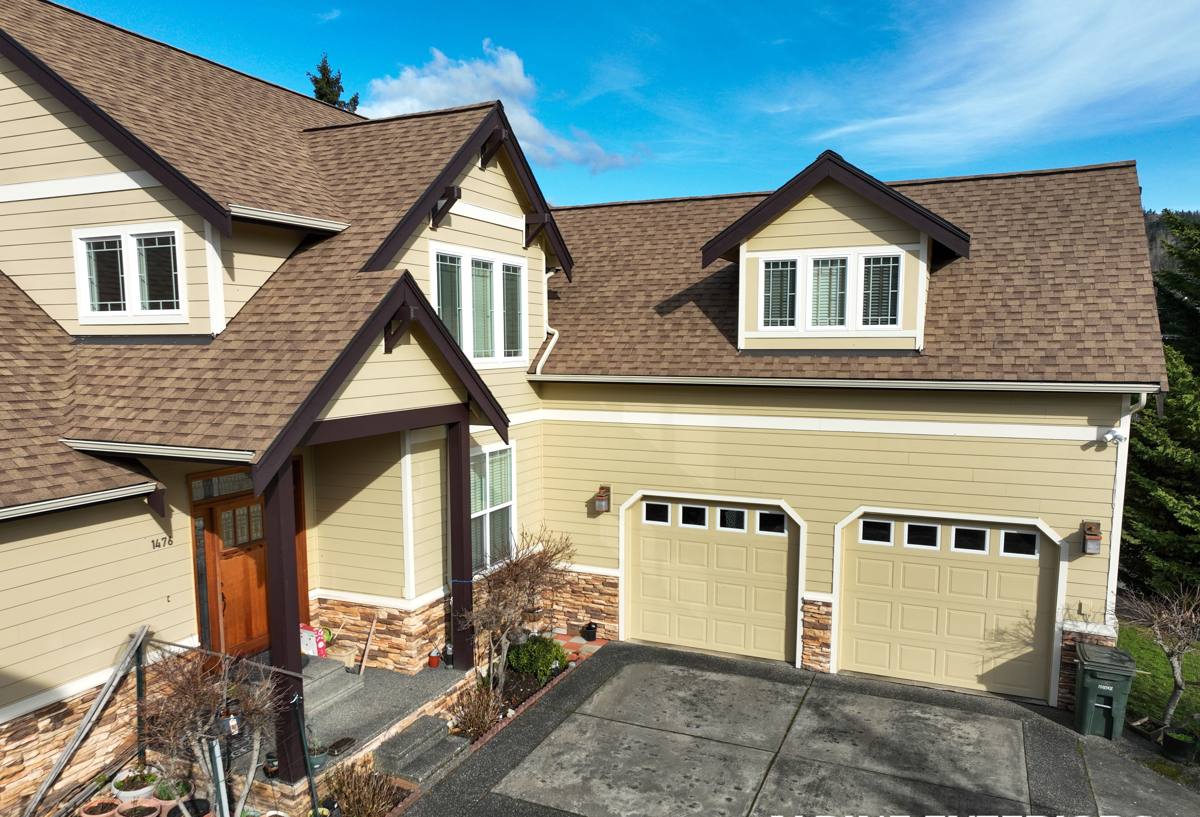
What a Correct Asphalt Shingle Roof Involves in This Climate
"Correct" for a Sehome roof means more than nailing shingles to plywood. The layers underneath the shingles do most of the actual water-management work, and in a climate with driving rain this direction matters as much as material quality.
Underlayment and Water-Entry Protection
Wind-driven rain off the water can push moisture sideways and even slightly uphill under shingle edges during the worst storms. A synthetic underlayment with properly lapped seams, plus self-adhered ice-and-water membrane at eaves, valleys, and any low-slope transitions, is the difference between a roof that sheds that kind of rain and one that eventually leaks through a seam nobody can see from the ground.
Ventilation That Matches the Climate
Balanced intake and exhaust ventilation keeps the attic dry and the roof deck at a stable temperature. In a climate this wet, poor ventilation doesn't just waste energy — it traps moisture against the underside of the deck, which is how you get soft spots and premature deck rot years before the shingles themselves would have failed.
Flashing at Every Transition
Chimneys, skylights, sidewall junctions, and valleys are where the vast majority of roof leaks actually start — not out in the open field of shingles. Step flashing, counterflashing, and valley metal need to be installed (not just caulked) correctly the first time, because in a wet climate a sealant-only fix rarely lasts more than a season or two.
Choosing the Right Shingle for a Sehome Roof
Most quality asphalt shingle lines will hold up structurally in this climate, but the details that matter locally are algae resistance, wind rating, and how the shingle sheds standing moisture. Here's how the common tiers compare for a home in this kind of climate:
| Shingle Type | Algae/Moss Resistance | Wind Rating | Best Fit For |
|---|---|---|---|
| Standard 3-tab | Low unless treated | Lower end of range | Budget-driven projects, less tree cover |
| Architectural (laminate) | Moderate to high with algae-resistant granules | Mid to high | Most Sehome homes — good balance of durability and cost |
| Premium/designer laminate | High, with copper- or zinc-infused granule options | High | Heavily shaded lots, homes with a history of moss recurrence |
For homes with significant tree cover or a north-facing roof plane, we generally steer owners toward an algae-resistant architectural shingle. The upfront cost difference is modest, and it directly addresses the specific problem — moss and algae staining — that this climate causes more than most.
Our Installation Process
The steps don't change much from job to job, but the attention to detail at each one is what separates a roof that performs for its full warranty life from one that needs early repairs.
- On-site inspection of the existing roof, deck, and ventilation before quoting — not a drive-by estimate
- Tear-off to bare deck, with any soft or damaged plywood identified and replaced, not covered over
- Ice-and-water membrane at eaves, valleys, and vulnerable transitions
- Synthetic underlayment installed with correct overlap for this region's wind and rain direction
- New flashing at all penetrations, chimneys, and sidewalls — reused flashing is the exception, not the default
- Balanced ventilation confirmed or corrected as part of the install, not treated as a separate add-on
- Shingle installation to manufacturer nailing pattern, with corrosion-resistant fasteners
- Final walk-through and cleanup, including a magnetic sweep for stray nails
Maintenance: Keeping Moss and Salt Damage From Taking Hold
A well-installed roof still needs periodic attention in this climate. Most of what shortens a roof's life here is preventable with a bit of routine care rather than expensive intervention.
- Keep overhanging branches trimmed back to reduce shade and debris buildup on the roof plane
- Clear gutters and valleys at least twice a year so water doesn't pool against shingle edges
- Have moss physically removed rather than power-washed off — pressure washing strips granules and shortens shingle life
- Watch for granule buildup in gutters, which signals the shingle surface is wearing faster than normal
- Check flashing and sealant points annually, especially after a hard winter storm season
- Address small leaks immediately — in a driving-rain climate, a small entry point becomes a deck problem fast
Repair or Replace? Reading the Signs
Not every roof problem in Sehome means a full replacement. The right call depends on the roof's age, how widespread the issue is, and what's happening underneath the shingles.
Repair is usually the right move when damage is localized — a section of storm-lifted shingles, a single failed flashing point, or moss confined to one shaded slope on an otherwise sound roof. Replacement becomes the more honest recommendation when granule loss is widespread, when there's evidence of moisture reaching the deck in multiple areas, or when the shingles are old enough that patching one section just shifts the next failure a year or two down the road. We'll always tell you which situation you're in and why, rather than defaulting to the larger job.
Why a Crew That Already Works Sehome Matters
Roofing crews that mostly work drier, inland climates don't always adjust their defaults for a place like this. Underlayment choices, fastener grade, ventilation calculations, and even the timing of a tear-off all change when you're planning around Whatcom County's rain patterns instead of a generic regional average. A crew that regularly works Sehome roofs already knows which slopes hold moss, which flashing details tend to fail first in this kind of weather, and how to sequence a tear-off so an open roof deck isn't left exposed when rain rolls in off the water. That local pattern recognition is what keeps a job on schedule and keeps callbacks rare.
What Affects the Cost of Your Roof
Every roof is priced individually after inspection, but the same handful of factors drive most of the variation between jobs in this area:
| Cost Factor | Why It Matters Here |
|---|---|
| Roof size and pitch | Steeper pitches and larger areas require more labor and material, plus additional safety measures |
| Deck condition | Moisture-damaged plywood found during tear-off adds material and labor to replace it properly |
| Shingle tier chosen | Algae-resistant and premium laminate shingles cost more upfront but reduce moss-related maintenance |
| Number of penetrations | Chimneys, skylights, and multiple vents each require individual flashing work |
| Access and tree cover | Limited access or heavy overhanging trees can affect staging, cleanup, and disposal time |
We give straightforward, itemized quotes rather than a single vague number, so you know exactly what you're paying for and why.
Ready for a Straightforward Look at Your Roof?
If your Sehome roof is showing moss, granule loss, or you just want an honest read on how many years it has left, we're happy to take a look. Fill out the form below for a free, no-pressure estimate — we'll tell you what we actually see, not just what sells a job.