 Chuckanut Exterior
 Composite Decking in Sehome: Built for the Climate, Not Just the Look
Sehome sits close enough to the water and the tree line that its decks take a beating most inland homes never see. Between the salt-laden air rolling off the Sound, the long stretches of driving rain that define a Whatcom County winter, and a moss season that can run six months or more, a deck here either gets built to handle that environment or it starts failing within a few years. Composite decking has become the default material for homeowners in this area for a reason, but "composite" isn't a single product with one install method — the difference between a deck that holds up and one that doesn't usually comes down to what's underneath the boards, not the boards themselves.
This page is specifically about composite decking for homes in Sehome and the surrounding Chuckanut area. If you're comparing materials, trying to understand why your last deck failed early, or just want to know what a correct install actually involves in this climate, this is written for that.
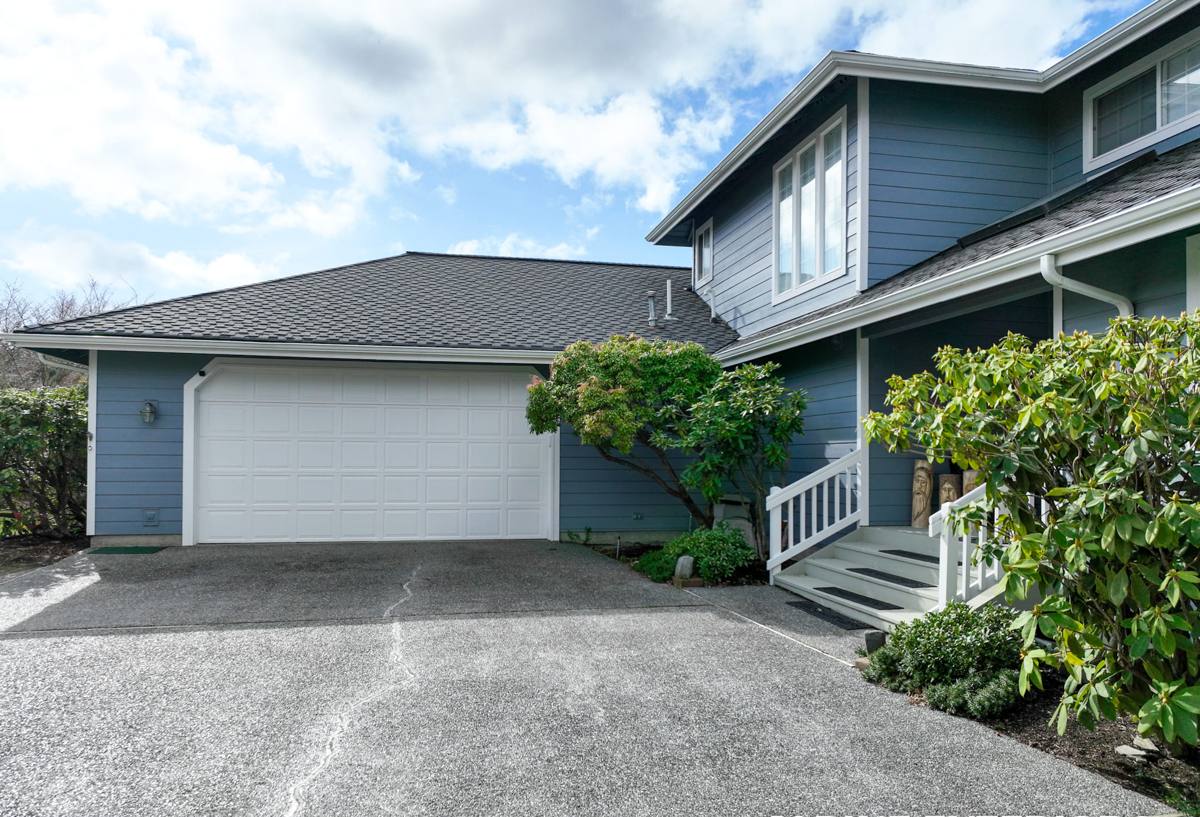
What Salt Air, Driving Rain, and Moss Season Actually Do to a Deck
Salt air and hardware corrosion
Homes closer to the water deal with airborne salt that settles on every exposed metal surface — fasteners, brackets, post bases, railing hardware. Standard galvanized coatings wear down faster in this environment than in a dry inland climate. Once a screw head or joist hanger starts corroding, it doesn't just look bad — it loses holding strength, and on a deck that's a structural problem, not a cosmetic one.
Driving rain and ledger board failures
Rain in this area doesn't just fall straight down — wind-driven rain pushes water sideways and up under trim, flashing, and ledger boards attached to the house. The ledger board, where the deck framing bolts to the house, is the single most common failure point on decks we're called out to repair. Water that gets behind an improperly flashed ledger doesn't dry out between storms for months at a time, which leads to rot in the house's rim joist, not just the deck.
Moss, algae, and shade
Sehome's tree cover and marine humidity mean moss and algae growth on any north-facing or shaded deck surface is close to guaranteed without the right board choice and gap spacing. On solid or poorly ventilated decking, moisture sits under the boards instead of draining and drying, which feeds moss growth on top and can promote rot in the framing below.
What a Correctly Installed Composite Deck Requires Here
Substructure and framing
Composite boards are only as good as what they're screwed into. In this climate we frame with pressure-treated lumber rated for ground contact where it's within range of soil moisture, and we size joists and spacing to the specific composite product being installed — composite decking flexes differently than wood and most manufacturers require tighter joist spacing than a standard wood deck to avoid sagging between boards over time.
Fasteners and connectors
Every fastener, joist hanger, and structural screw on a deck in this area should be rated for coastal or ACQ-treated lumber use — standard electro-galvanized hardware corrodes faster than the wood or composite it's holding together. Hidden-fastener clip systems, which most quality composite boards use, need to be installed to the exact spacing the manufacturer specifies; too wide and boards can rattle loose or gap unevenly as they expand and contract with temperature.
Ledger flashing and waterproofing
Where the deck attaches to the house, we install proper flashing and a waterproof membrane behind the ledger board, lapped correctly so water sheds outward instead of behind the siding. This single detail is the difference between a deck that's dry behind the wall for thirty years and one that causes hidden rot the homeowner doesn't discover until the siding comes off.
Airflow and board spacing
Composite boards need consistent gapping — both between boards and at the perimeter — to let air move underneath and let moisture escape instead of pooling. Skirting or under-deck enclosures still need vents; a sealed-up underside is exactly what turns a shaded Sehome deck into a moss farm.
Composite vs. Wood vs. PVC Decking for This Climate
| Material | Moisture & moss resistance here | Maintenance | Typical lifespan | Rough cost range |
|---|---|---|---|---|
| Pressure-treated wood | Absorbs moisture, moss-prone in shade without regular cleaning/sealing | Annual cleaning, periodic sealing or staining | 10–15 years before major boards need replacing | Lowest upfront cost |
| Composite (wood-plastic blend) | Strong resistance when properly gapped and ventilated | Occasional wash, no sealing or staining | 25–30 years, backed by manufacturer warranty | Mid-to-upper range |
| Cellular PVC | Fully moisture-proof, best for heavy shade or ground-level installs | Lowest maintenance of the three | 25–30+ years | Highest upfront cost |
We install composite most often in Sehome because it lands in the middle: it handles the rain and salt air well when the substructure is done right, resists moss far better than wood, and costs less than full PVC. For heavily shaded, ground-hugging decks with poor airflow, PVC is sometimes the more honest recommendation — we'll tell you that upfront rather than sell you the product with the bigger margin.
Our Process for a Composite Deck Project in Sehome
- On-site assessment. We look at drainage, sun/shade exposure, existing framing condition (if replacing an old deck), and how the house's siding and roofline will interact with the new ledger connection.
- Design and material selection. We walk through board profiles, colors, and hidden vs. face-fastened systems, and size the framing plan to the specific product and local snow/wind load requirements.
- Permitting. Deck permits in Whatcom County depend on height, attachment, and footprint — we handle the application and inspection scheduling.
- Demo and framing. Old decking and, if needed, old framing come out. New posts, footings, joists, and ledger flashing go in to code, sized for the composite product's span requirements.
- Decking and trim installation. Boards are installed with correct gapping and fastener spacing, followed by fascia, stair, and railing work.
- Final walkthrough. We check board spacing, fastener seating, and drainage before calling the job done, and go over care specific to your deck's sun exposure.
Living With a Composite Deck Through Moss Season
A properly built composite deck in this climate needs far less upkeep than wood, but "low maintenance" isn't "no maintenance," especially under tree cover. A short seasonal routine keeps moss from getting a foothold in the first place:
- Sweep leaves and organic debris off the deck regularly through fall — decomposing leaves hold moisture against the board surface longer than rain alone.
- Rinse shaded or north-facing sections a few times through the wet months, even if the rest of the deck looks clean.
- Keep gutters and downspouts near the deck clear so runoff isn't dumping extra water onto one section.
- Check that under-deck vents or skirting gaps haven't been blocked by landscaping, storage, or debris buildup.
- If moss does start to form, use a manufacturer-approved cleaner rather than a pressure washer on high setting — too much pressure can strip the board's surface texture and void the warranty.
Why Hiring a Crew That Already Works in Sehome Matters
Deck-building fundamentals don't change from town to town, but the details that actually matter — how much ledger flashing overlap you need for this area's wind-driven rain, which fastener grade actually holds up near the water, how much shade a given lot really gets through the winter — come from having built and repaired decks in this specific stretch of Whatcom County. A crew that's only worked drier inland climates will often frame and flash a deck exactly like they would anywhere else, and it shows up as a ledger leak or a moss problem within a couple of seasons. We also know what Whatcom County's permitting office actually wants to see on a deck application, which keeps the project moving instead of stalling on paperwork.
Getting the Cost Question Right
Composite decking cost depends less on the brand name and more on the scope of the substructure work. A deck going onto solid, code-compliant existing framing costs meaningfully less than a full tear-off and rebuild with new footings. Board profile (standard capped composite vs. premium multi-tone lines), railing style, stair count, and any built-in features like lighting or skirting all move the number. We're straightforward about where your money is going — substructure and flashing aren't the visible part of the job, but they're the part that determines whether the deck is still solid in twenty years.
If you're weighing composite decking for a home in Sehome, we're happy to come take a look, walk the site with you, and put together a clear, no-pressure estimate — just fill out the form below.