 Chuckanut Exterior
 Deck Repair Built for Columbia's Weather, Not a Generic Climate
If you own a deck in the Columbia area of Chuckanut, you already know it doesn't age like a deck in a drier part of the state. Whatcom County sits right up against saltwater and marine weather patterns that push moisture into wood and metal all year long. Salt-laden air accelerates corrosion on fasteners and hardware. Driving rain finds its way into joints, end grain, and any spot where two boards meet. And the long moss season here means organic growth gets a real foothold on shaded or north-facing decks, holding moisture against the wood far longer than a quick rain shower ever would.
None of that means your deck is doomed — it means deck repair in this neighborhood has to account for things a generic "deck fix" checklist skips. We've repaired enough decks in this immediate area to know which failure points show up first, and which ones homeowners tend to miss until they turn into bigger, more expensive problems.
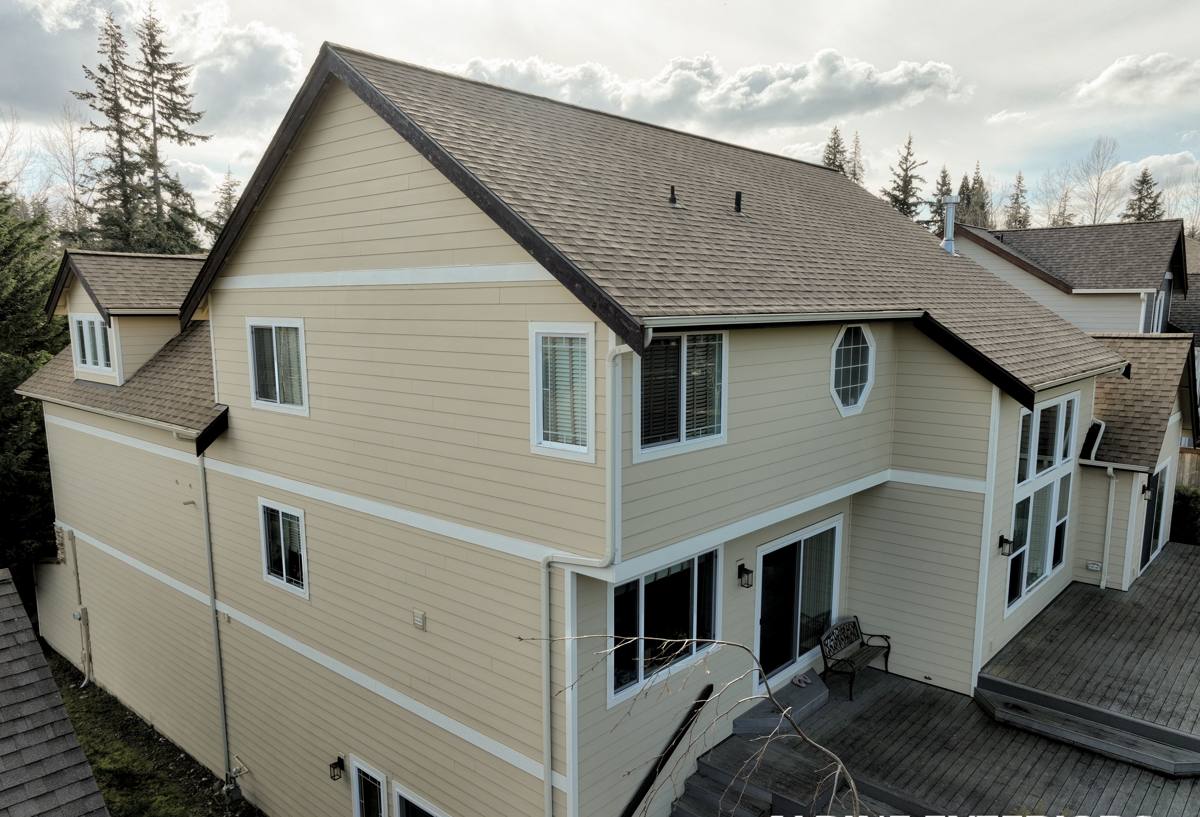
Signs a Columbia Deck Needs Repair
Most deck failures don't happen overnight. They show up as small warning signs first. Here's what we tell homeowners to watch for between now and their next full inspection:
- Soft or spongy spots when you walk across the decking, especially near the house or along the rail line
- Green or black staining that doesn't scrub off — a sign moss or algae has been sitting on damp wood for a while
- Rust streaks running down from screw heads, joist hangers, or bolts
- Boards that have cupped, crowned, or separated more than a small gap at the seams
- A railing or post that flexes or wiggles when you lean on it
- Visible daylight or a gap where the ledger board meets the house
- Stairs that feel bouncy or a stringer that looks like it's pulling away from the frame
If you're seeing two or more of these, it's worth having someone look underneath the deck, not just at the walking surface. A lot of the real damage happens where you can't see it from the top.
Where We Find the Damage Most Often
Ledger Board and Rim Joist Rot
The ledger board — where the deck attaches to the house — is one of the most common failure points we find on repairs in this area. Driving rain gets pushed sideways by wind off the water, and if the flashing behind the ledger isn't doing its job, water tracks down behind the siding and sits against that board. By the time it shows on the surface, there's often already soft wood underneath.
Fastener and Hardware Corrosion
Salt air is hard on metal, full stop. Standard galvanized screws and joist hangers can start showing rust streaks well before the wood around them fails. Once a fastener corrodes, it loses holding strength, and that's a structural issue, not a cosmetic one — even if the only visible sign is a rust stain on the board.
Decking Board Cupping and Splitting
Wood decking that stays wet longer than it should — often because of shade, moss buildup, or poor drainage between boards — cups, crowns, or splits at the fastener points. This is one of the most common repair calls we get, and it's usually fixable board-by-board rather than requiring a full deck rebuild.
Post Base and Substructure Rot
Posts that sit close to grade, or footings that don't drain well, tend to wick moisture up into the base of the post over years. Combined with a long moss season keeping the ground damp, this is a slow-developing problem that's easy to miss until a post feels loose.
Railing and Baluster Failure
Railings take constant flexing from everyday use, plus the same moisture exposure as the rest of the structure. Loose posts, cracked balusters, and failed connection points are a safety issue we prioritize on every inspection, not just an appearance item.
Repair or Replace? How We Actually Decide
Not every damaged deck needs to be torn out. A lot of what looks like a "the whole thing is shot" situation is actually isolated damage that can be repaired at a fraction of the cost of a full rebuild. We look at the extent of the damage, whether it's contained or spreading, and whether the core structure is sound. Here's the general framework we use:
| Factor | Usually Points to Repair | Usually Points to Replacement |
|---|---|---|
| Structural framing | Solid, with isolated soft spots | Widespread rot in joists or beams |
| Ledger board | Sound, or damage limited to a section | Rot along most of its length |
| Decking boards | Some cupped, cracked, or stained boards | Majority of boards failing or delaminating |
| Posts and footings | Stable, minor surface wear | Loose, rotted, or undersized for current code |
| Age of structure | Under 15-20 years, maintained | Older, never sealed or maintained |
| Fasteners/hardware | Localized corrosion | Corrosion throughout the connection system |
We'll always tell you honestly which category your deck falls into, and we're not going to talk you into a rebuild if a targeted repair will hold up. On the flip side, we won't patch something that's structurally compromised — that's not a repair, it's a liability.
Our Deck Repair Process
1. Full Inspection, Top and Bottom
We start underneath the deck, not on top of it. That's where rot, corrosion, and moisture damage actually start, and it's the part most homeowners never see. We check the ledger connection, joists, posts, footings, and hardware before we ever look at the decking surface.
2. Structural Repairs First
Anything load-bearing gets addressed before cosmetic work starts. That means sistering or replacing damaged joists, correcting flashing at the ledger board, resetting or replacing failing posts, and swapping out corroded hardware for fasteners rated to hold up in coastal, salt-air conditions.
3. Surface and Railing Repair
Once the structure is sound, we replace individual damaged boards, address split or cupped decking, and repair or rebuild railing sections that have failed. We match materials and spacing to the existing deck wherever possible so repaired sections blend in rather than looking patched.
4. Seal and Protect
A repair that isn't sealed properly will fail again in a season or two, especially with the amount of driving rain this area sees. We finish repairs with an appropriate sealant or finish for the material, and we'll tell you honestly how often that needs to be refreshed given your deck's sun and shade exposure.
Materials We Use — and Why It Matters Here
For structural repairs, we match lumber grade and treatment to what the framing requires, not just what's cheapest. For fasteners and hardware, we lean toward stainless steel or coated fasteners rated for coastal exposure — standard hardware corrodes faster in salt air, and re-doing a repair because a fastener failed early costs more than doing it right the first time.
For decking board replacement, we'll talk through the honest trade-offs between wood and composite repair boards: wood is easier to match to an older deck and can be refinished, but needs more regular maintenance in a moss-prone climate. Composite resists moisture and moss better but can be harder to blend seamlessly into an existing wood deck, and replacement boards need to be matched carefully to avoid a patchwork look. We'll give you our honest read on which fits your deck and your maintenance preferences — not a one-size-fits-all pitch.
Keeping a Repaired Deck From Failing Again
A good repair should last. But this area's long moss season and steady rain mean a little upkeep goes a long way toward protecting the work. A few habits make a real difference:
- Sweep debris and leaves off the deck surface regularly, especially in shaded areas where moisture lingers
- Rinse off moss and algae growth before it gets a foothold, rather than after it's staining the wood
- Keep gutters and downspouts clear so runoff isn't dumping directly onto or under the deck
- Check the ledger board area yearly for gaps, staining, or peeling paint on the siding above it
- Reseal wood decking on the schedule appropriate for its sun and shade exposure, not just "every couple years" by default
None of this requires a major time investment, but skipping it is exactly how a small, cheap repair turns into a structural one a few years later.
Why Local Experience Matters for This Kind of Repair
Deck repair looks straightforward until you're standing under one that's been exposed to Chuckanut's mix of salt air, driving rain, and moss for a decade or more. A crew that mostly works inland decks may not think twice about standard fasteners or skip a close look at ledger flashing — and in this climate, that's exactly where problems start. Working regularly on decks in this area means we already know where to look first, what corrosion and rot patterns to expect, and how to make a repair that's built for the conditions your deck actually faces, not just textbook conditions.
We'd rather walk your deck, tell you plainly what's structural and what's cosmetic, and give you options — repair, partial rebuild, or full replacement — than push one answer before we've even looked underneath. If your deck in the Columbia area is showing soft spots, rust staining, moss buildup, or railing that doesn't feel as solid as it used to, we're glad to take a look. Reach out for a free, no-pressure estimate using the form below.