 Chuckanut Exterior
 Board & Batten Siding Built for Columbia's Coastal Climate
Board and batten has become one of the most requested siding profiles for homes in the Columbia area of Chuckanut, and it's easy to see why. The vertical lines read as clean and modern on newer builds, but they also sit comfortably on older Whatcom County homes with a more traditional Pacific Northwest character. What most homeowners don't realize until they start pricing the job is that the look is the easy part. The material underneath the boards and battens is what determines whether this siding holds up to twenty years of coastal weather or turns into a maintenance headache by year eight.
This page is specifically about board and batten siding for houses in Columbia — not a general overview of the profile. The weather this neighborhood deals with, the way moisture moves through this part of Whatcom County, and the realities of maintaining a home this close to the water all change what "correct installation" actually means here.
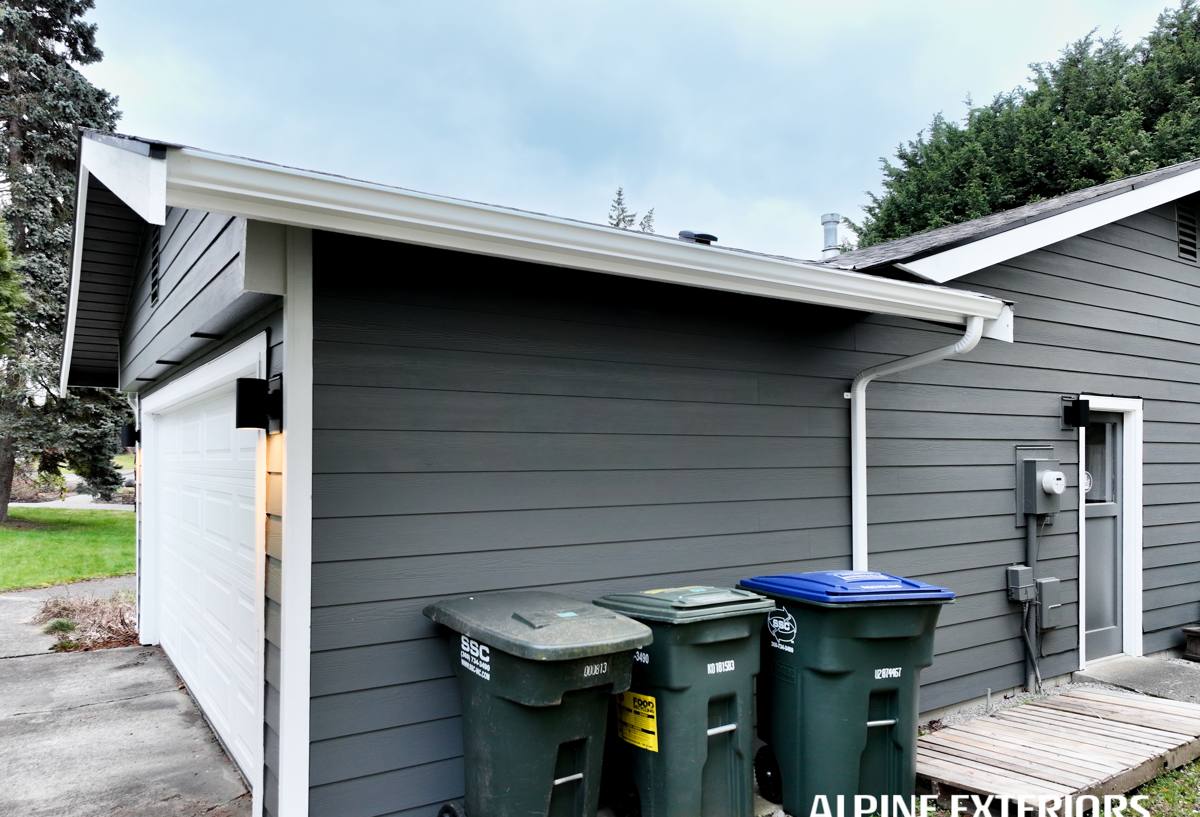
What Salt Air, Driving Rain, and Moss Season Do to Vertical Siding
Board and batten siding has more seams than a standard lap profile — every batten strip creates a joint where water, wind, and salt-laden air can find a way in if the assembly isn't detailed correctly. In Columbia, that matters more than in a lot of inland markets.
Salt air
Homes in Chuckanut sit close enough to the water that airborne salt is a real factor in material selection. Salt accelerates corrosion on fasteners and metal flashing, and it degrades some paint and coating systems faster than manufacturers' standard weathering tests assume. A siding material that isn't engineered for a marine-influenced climate will show it first at the fastener heads and cut edges.
Driving rain
Whatcom County storms don't just fall straight down — wind-driven rain off the water pushes moisture sideways into vertical seams and batten joints. Board and batten is more exposed to this than lap siding because the battens create more edges and more places for wind-driven water to test the assembly. Correct flashing and a properly built drainage plane behind the siding are what keep that water moving out instead of in.
Moss season
The long, wet stretch of the year in this part of Washington means shaded walls, north-facing elevations, and anything under tree cover stay damp for extended periods. That's exactly the environment moss and algae need to take hold. Siding that absorbs moisture gives moss something to grip and feed on; siding that stays dimensionally stable and doesn't wick water resists it far better.
Why Not Every "Board and Batten" Material Is Built for This
Board and batten can be built from several different materials, and the marketing often looks similar across all of them. The performance in a climate like Columbia's does not.
- Vinyl board and batten is inexpensive and low-maintenance in mild climates, but it expands and contracts significantly with temperature swings, can warp or bow over time, and isn't rigid enough to hold crisp batten lines the way fiber cement does. Salt air also tends to chalk and fade vinyl finishes faster than advertised.
- Cedar board and batten looks excellent when new and is a traditional choice in the Pacific Northwest, but real wood requires ongoing refinishing, is a food source for moss and mildew in a damp climate, and is combustible — a real consideration as wildfire smoke seasons have become more common even on the wet side of the state.
- Primed spruce or engineered wood panels (including LP SmartSide) use a wood-strand core with a resin/wax treatment and a factory coating. They hold up reasonably well when the coating and caulking are maintained on schedule, but any breach at a cut edge, fastener, or joint lets moisture into the wood-based core, and repair is not always cosmetic once that happens.
- Cemplank and Allura are both fiber cement products and share the core material advantages of the category — noncombustible, dimensionally stable, resistant to moisture-driven decay — but they are not the product line we install. Our standard is James Hardie specifically, for reasons covered below.
This is our professional standard, not a claim that every other product fails. We've simply concluded, after years of installing and servicing siding on homes exposed to this exact kind of weather, that one system gives Columbia homeowners the best combination of durability, appearance retention, and warranty backing.
Why We Install James Hardie Board and Batten — and Nothing Else
Chuckanut Exterior Companies installs James Hardie fiber cement exclusively. For board and batten specifically, that means HardiePanel vertical siding paired with HardieTrim batten strips, finished in a factory-applied ColorPlus coating.
What that gives a Columbia home
- Noncombustible material — fiber cement doesn't feed a fire the way wood or wood-composite siding can.
- Climate-engineered formulation — Hardie's HZ product lines are formulated for specific climate zones, including the wet, moderate-temperature conditions of the Pacific Northwest, rather than a one-size-fits-all mix.
- Factory-cured ColorPlus finish — the color and topcoat are baked on under controlled conditions, which holds up better against UV, salt air, and moisture than most field-applied paint, and it carries its own finish warranty separate from the substrate.
- Dimensional stability — fiber cement doesn't expand, contract, warp, or cup the way wood and some engineered panels can, which matters for keeping batten lines straight over decades, not just years.
- A strong, transferable warranty — meaningful if you sell the home, and a sign of how the manufacturer stands behind the product long-term.
None of that matters, though, if the installation is wrong. Fiber cement board and batten is unforgiving of shortcuts — it needs to be installed to Hardie's published specifications, not "close enough."
What a Correctly Installed Board and Batten Job Involves
Board and batten is a system, not just a finish material nailed to the wall. Every layer matters, especially in a climate that sees this much rain.
The drainage plane
Behind the siding, a correctly lapped weather-resistive barrier and a rainscreen gap (typically furring strips or a purpose-built drainage mat) let any moisture that gets past the cladding drain and dry out instead of sitting against the sheathing. This is arguably the single most important part of the assembly in a wet coastal market like Chuckanut.
Flashing at every transition
Windows, doors, deck ledgers, roof-to-wall intersections, and the bottom termination of the siding all need proper flashing and kick-out details. Board and batten's vertical seams make careful flashing at horizontal transitions especially important — water running down a batten joint needs somewhere to go besides behind the panel.
Fastening and batten spacing
James Hardie specifies fastener type, spacing, and placement for a reason — get it wrong and you either void the warranty or create points where water can track in. Batten spacing also needs to follow the panel manufacturer's engineering, not just visual preference.
Caulking and gaps
Fiber cement needs to breathe and move slightly with temperature and moisture changes. Over-caulking every seam traps moisture; under-caulking at the wrong joints lets it in. Knowing which gaps get sealant and which get left as designed drainage points is a judgment call that comes from experience, not a checklist alone.
Cost Factors for Board and Batten Siding
Every board and batten quote is different depending on the home's size, existing wall condition, and how much prep work is needed, but the factors below are what actually move the price on a Columbia project.
| Factor | Why It Matters Here |
|---|---|
| Existing wall condition | Homes with hidden water damage from years of driving rain often need sheathing repair before new siding goes on — this is common enough near the water that it's worth budgeting for as a possibility, not a certainty. |
| Wall height and complexity | Multi-story walls, dormers, and articulated facades all add labor time for precise batten layout and cutting. |
| Panel vs. true board-and-batten build-up | HardiePanel with battens is the standard approach; custom board widths or non-standard batten spacing add material and labor. |
| Rainscreen/drainage detailing | A proper rainscreen gap adds a step most low-bid installers skip — it's not optional in a climate this wet. |
| Trim and color | ColorPlus factory finishes and custom trim packages affect material cost but reduce long-term maintenance. |
Comparing Your Siding Options for a Columbia Home
| Material | Moisture/Moss Resistance | Maintenance | Fire Resistance |
|---|---|---|---|
| James Hardie fiber cement | Strong — dimensionally stable, doesn't wick water into a wood core | Low — factory finish, occasional wash | Noncombustible |
| Vinyl | Moderate — doesn't rot, but can trap moisture behind loose panels | Low, but finish fades and chalks over time | Combustible, can deform in heat |
| Cedar | Weak in shaded/damp areas without diligent upkeep | High — refinishing, sealing, moss treatment | Combustible |
| Primed spruce / engineered wood | Moderate — depends on coating integrity at every seam | Moderate — coating and caulk maintenance on schedule | Combustible |
Our Process for a Columbia Board and Batten Project
Working in this neighborhood repeatedly has taught our crew where problems tend to show up on these homes — which elevations take the worst of the driving rain, where moss builds up fastest, and what the existing wall assemblies on older Chuckanut-area houses usually look like underneath the surface.
- On-site assessment — we inspect existing siding, sheathing, and trim for hidden moisture damage before quoting, so the estimate reflects reality rather than guesswork.
- Detailed proposal — panel layout, batten spacing, color, trim package, and a clear scope of any prep or repair work, in plain language.
- Weather-resistive barrier and rainscreen installation — done to manufacturer spec, not shortcut for speed.
- Flashing at every penetration and transition — windows, doors, roof lines, and the base of the wall.
- HardiePanel and batten installation — fastened and spaced to James Hardie's published requirements to keep the warranty intact.
- Final walkthrough — we go over the finished work with you before calling the job done.
Why Hiring a Crew That Already Works in Columbia Matters
Siding installation isn't identical everywhere in Whatcom County. A crew that mostly works drier, inland markets can still do competent work, but they may not automatically account for the extra drainage detailing, the salt-air fastener considerations, or the moss-prone shaded walls that are routine on Columbia jobs. A crew that already works this specific area has seen how these homes actually perform over multiple wet seasons — not just how they look on installation day.
Maintaining Board and Batten Siding in a Wet Coastal Climate
Correct installation does most of the work, but a little homeowner attention keeps a James Hardie board and batten system looking right for decades.
- Rinse the exterior annually, focusing on shaded and north-facing walls where moss and algae are most likely to start.
- Walk the exterior after major storms and check for anything that looks loose, cracked, or separated at trim and batten joints.
- Keep gutters clear so overflow doesn't run down the wall face and concentrate moisture on specific siding sections.
- Trim back vegetation and tree cover that keeps walls shaded and damp longer than necessary.
- Have caulking and sealant joints checked periodically — sealant has a shorter service life than the siding itself.
If you're weighing board and batten siding for a home in Columbia, we're happy to take a look and give you a straightforward, no-pressure estimate — just fill out the form below.