 Chuckanut Exterior
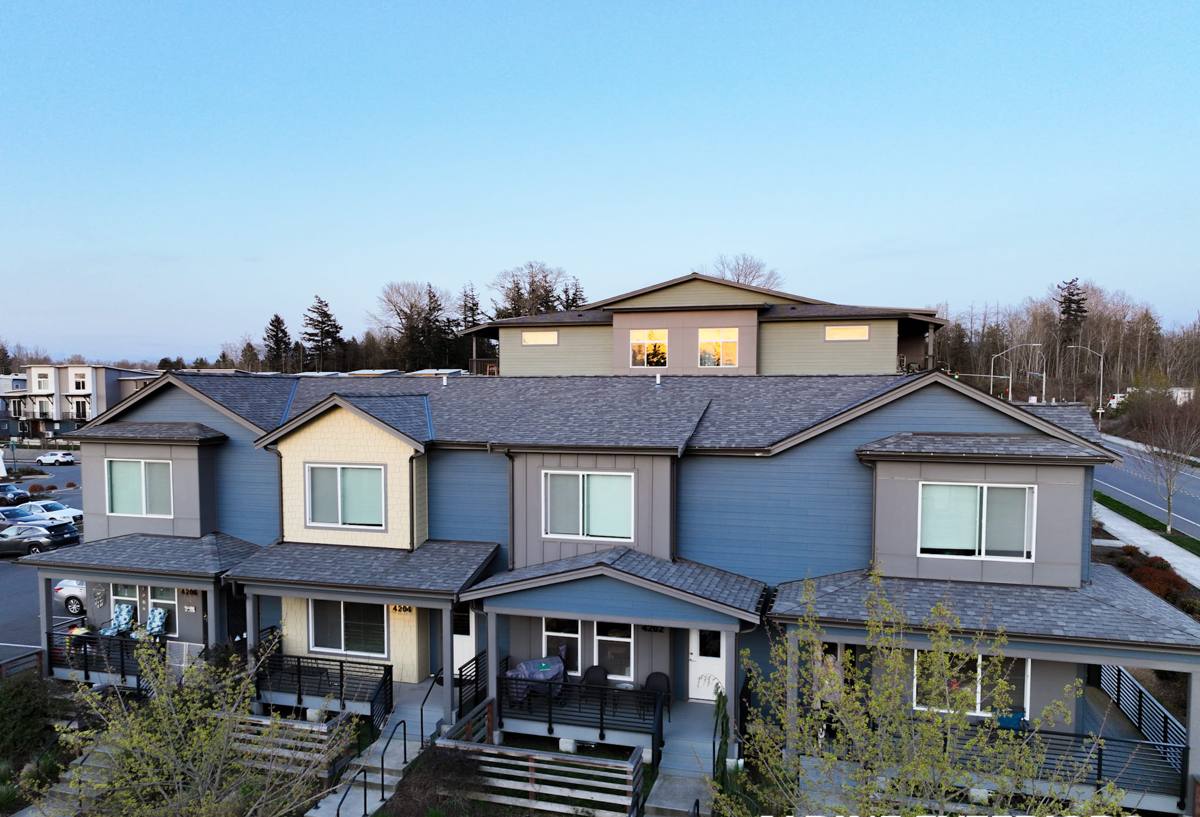
 Windows Take a Beating in Columbia's Coastal Climate
Homes in the Columbia area near Chuckanut sit close enough to the water and the weather patterns that roll off it that windows work harder here than they do a few miles inland. Salt-laden air corrodes hardware and dulls finishes faster than dry climates ever would. Driving rain, pushed sideways by wind off the water, finds any gap in a sill or frame and works it wider over time. And the long, damp stretch of the year that Whatcom County calls moss season doesn't stop at the roofline — it settles into window tracks, sits on horizontal trim, and keeps wood and lower-grade vinyl wet for weeks at a stretch.
None of that means windows in Columbia need to be exotic or overbuilt. It means the fit, the flashing, and the material choices need to match what the neighborhood actually experiences, not a generic national spec sheet. That's the difference between a window that looks good at install and one that still operates smoothly, seals well, and resists rot ten winters later.
What "Custom" Actually Means on a Window Job
Custom doesn't mean unusual shapes or premium upgrades — most of the time it simply means the window is built to the actual opening in your house rather than forced into a stock size. Older Whatcom County homes, and plenty of newer ones, settle unevenly over the years. Openings go slightly out of square, out of level, or out of plumb, sometimes by less than a quarter inch, sometimes by more. A correct job accounts for that instead of papering over it with extra caulk.
Measuring for a Correct Fit
We measure every opening individually — width and height in at least two places each, plus diagonal measurements to check for square. If the rough opening has shifted or the sill has soft spots, that gets addressed before a new window ever goes in. Installing a tight, well-built window into a bad opening just relocates the problem; it doesn't solve it.
Frame Material Options
Material choice matters more here than in a drier climate, because whatever you pick will spend months a year sitting in damp, salt-touched air. There's no single "best" material for every home — it depends on your home's style, your maintenance appetite, and your budget.
| Frame Material | Moisture & Salt Air Behavior | Maintenance | Typical Fit |
|---|---|---|---|
| Vinyl | Won't rot or corrode; performs well near saltwater | Low — occasional cleaning | Most homes, best value |
| Fiberglass | Very stable in wet/salt exposure, minimal expansion or contraction | Low | Larger openings, higher-exposure walls |
| Wood-clad | Interior wood needs protection from any moisture intrusion; exterior cladding shields it | Moderate — watch for seal failure at cladding joints | Homes prioritizing an interior wood look |
| Aluminum | Prone to corrosion and condensation in coastal moisture | Higher — we generally steer clients away from this near the water | Not our first recommendation in this area |
Problems We Commonly See in Columbia-Area Homes
A lot of window calls in this neighborhood follow a similar pattern. Recognizing it early can save a homeowner from a bigger repair later.
- Fogging between panes — a failed seal on an insulated glass unit lets moisture in; once it fogs, the glass unit needs replacing, not just cleaning.
- Soft or spongy sills — usually a sign that wind-driven rain has been getting past the exterior seal for a while, especially on walls that face the prevailing weather.
- Moss and algae staining — common on horizontal trim and lower sashes that stay shaded and damp through the wet months.
- Sticking or hard-to-latch sashes — often frame swelling or corrected corrosion on older aluminum hardware.
- Persistent drafts — original weatherstripping breaking down faster than expected due to constant damp-dry cycling.
Some of these are a sign a window needs replacing outright; others are a sign the flashing and sealant details around a perfectly good window need to be redone. Part of a proper assessment is telling you honestly which one you're dealing with.
Our Installation Process, Step by Step
- On-site assessment — we look at every opening, note framing condition, sill condition, and existing flashing, not just glass condition.
- Accurate measurement — individual measurements per opening, accounting for any out-of-square conditions.
- Material and glass selection — matched to that wall's exposure, not a one-size spec for the whole house.
- Removal of the old unit — done carefully to expose the rough opening and framing underneath for inspection.
- Repair of any hidden rot or damage — found before the new window goes in, not discovered after.
- Flashing and moisture barrier installation — sequenced correctly so water sheds outward and down, never trapped behind the window.
- Setting and shimming the new window — leveled, squared, and secured per the manufacturer's fastening schedule.
- Sealing and insulating — low-expansion foam and exterior sealant rated for the joint, not generic caulk applied heavy to hide gaps.
- Interior and exterior trim finish — matched to the home and sealed at every joint that faces the weather.
- Final operation check — every sash opens, closes, and locks the way it should before we call the job done.
Flashing and Moisture Management Matter More Than the Window Itself
A high-end window installed with poor flashing will fail before a modest window installed correctly. This is the part of the job that's invisible once trim goes back on, and it's also the part most likely to get rushed by crews unfamiliar with this climate. Water needs a continuous path down and out — house wrap or building paper lapped correctly, sill pan flashing under the opening, and window flange integration that doesn't create a dam where water can pool. In a climate with sustained wind-driven rain, a single reversed lap or a skipped sill pan is often the exact spot where a slow leak starts, sometimes not showing up as visible damage for a year or more.
Glass and Performance Packages for This Climate
Glass selection affects comfort, energy use, and condensation resistance — all things that matter through a wet Whatcom County winter. Double-pane insulated glass with a low-E coating and argon fill is a solid baseline for most Columbia homes. Triple-pane adds further insulating value and can help reduce interior condensation on colder mornings, which matters on walls with more shade or less airflow. The right choice depends on the specific wall's sun exposure, wind exposure, and how the room behind it is used.
Whatever glass package you choose, it's the whole assembly — glass, spacer, frame, and installation — that determines how the window actually performs over years of damp weather, not any single spec on its own.
What Affects the Cost of a Custom Window Job
Every home is different, so we won't quote a number without seeing the openings, but these are the factors that typically move a project's cost up or down.
| Factor | Effect on Cost |
|---|---|
| Number and size of openings | Largest driver — more or larger windows means more material and labor |
| Frame material | Vinyl is generally most economical; fiberglass and wood-clad cost more upfront |
| Glass package | Triple-pane and specialty coatings add cost over standard double-pane low-E |
| Condition of existing openings | Rot repair or reframing adds labor beyond a straightforward swap |
| Access and height | Upper-story or hard-to-reach windows take longer and may need staging |
| Trim and finish work | Custom interior/exterior trim matching adds finish carpentry time |
Maintaining Your Windows Through Moss Season
New or existing, windows in this climate last longer with a small amount of regular attention. Most of it takes minutes and prevents problems that take days to fix.
- Clear debris and moss from tracks, sills, and weep holes before the wet season builds up.
- Rinse salt film off exterior glass and frames periodically, especially on wind-facing walls.
- Check exterior caulking annually for cracking or separation and re-seal any gaps promptly.
- Operate every sash a few times through the year so hardware doesn't seize from disuse and damp.
- Watch for soft spots or paint failure on wood sills and trim, and address them before they spread.
- Keep gutters and downspouts clear so roof runoff isn't sheeting directly down onto window heads.
Why a Crew That Already Works in Columbia Makes a Difference
A contractor who works this neighborhood regularly already knows which exposures take the worst of the weather, what the older housing stock in the area tends to need, and how to sequence work around a wet forecast instead of getting caught by it. That familiarity shows up in small decisions — where to add extra flashing detail, which material holds up better on a given wall, how to schedule so fresh sealant isn't curing in the rain. It's the difference between a crew executing a generic install and one making judgment calls specific to Chuckanut's weather and Columbia's homes.
If you're dealing with a drafty window, a foggy pane, or you're simply ready to plan ahead of the next wet season, we're happy to take a look and talk through honest options. Use the form below to request a free, no-pressure estimate for your Columbia home.