 Chuckanut Exterior
Windows in Columbia Face a Different Set of Problems
Energy-efficient windows get marketed as a single product with a single benefit: lower heating bills. That's true almost everywhere, but it's only half the story in Columbia. This pocket of Chuckanut sits close enough to the water that salt-laden air, wind-driven rain, and a long stretch of damp, low-light months all work on a window at the same time as it's trying to hold heat in. A window that's rated efficient in a lab test in a dry climate can still fail early here if it wasn't built or installed with this kind of exposure in mind. We work on homes throughout this part of Whatcom County, and the pattern repeats: the windows that fail first aren't always the oldest ones — they're the ones that were installed without accounting for what the local climate actually does to a building envelope.
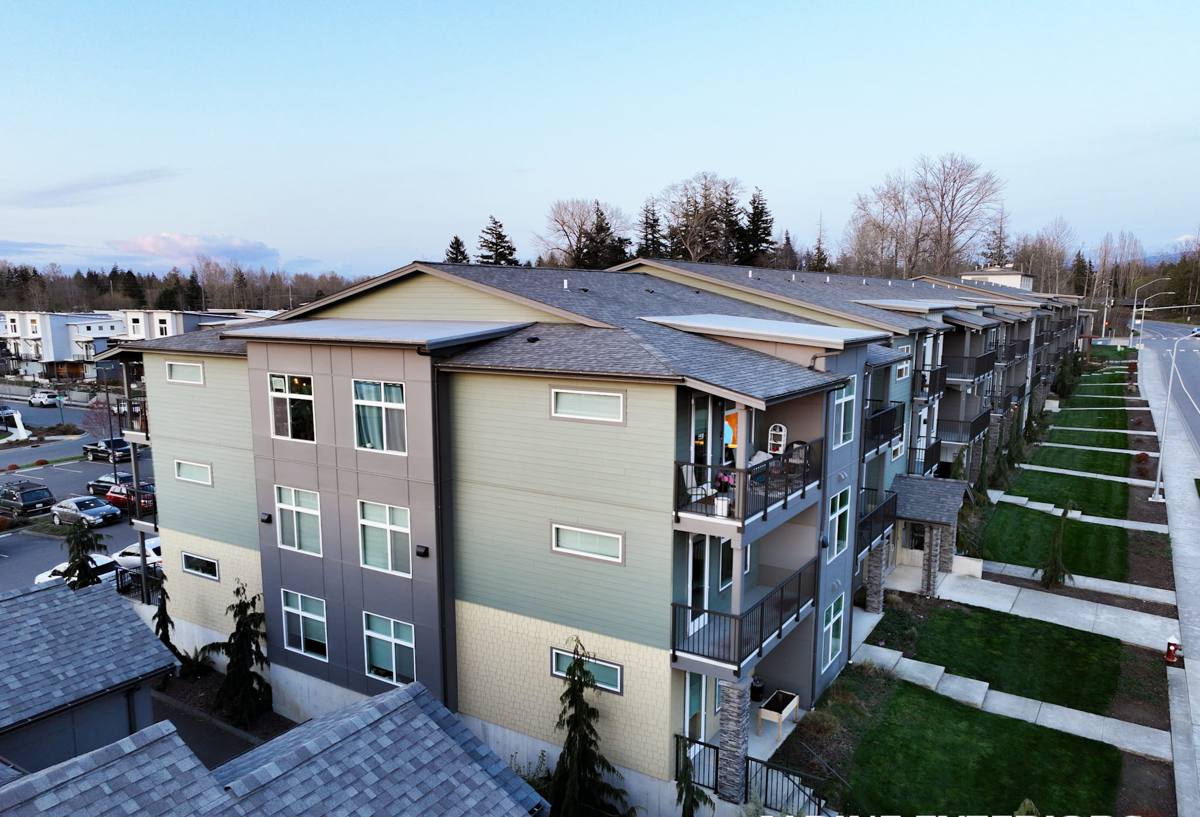
What Salt Air, Rain, and Moss Season Do to Windows Over Time
Salt Air and Hardware
Homes near the water deal with airborne salt that settles on metal surfaces even at a distance from the shoreline. Over years, that accelerates corrosion on window hardware — hinges, locks, and especially the fasteners holding a frame to the wall. Cheaper hardware finishes corrode faster, which shows up as stiff locks, windows that won't stay open on their hardware, or streaking on the sill from rusting screws.
Wind-Driven Rain and the Weak Points
Rain that falls straight down is easy to shed. Rain that's pushed sideways by wind finds every gap in a poorly flashed window — around the frame, under the sill, and at the corners where trim meets siding. In Chuckanut, storms often bring rain at an angle for hours at a time, and that's exactly the condition that exposes a window installed without proper flashing and sealant detailing. The failure usually isn't visible from outside; it shows up later as soft drywall, peeling paint, or a musty smell near the window.
Moss, Shade, and Slow-Drying Wood
Whatcom County's wet season runs long, and homes with tree cover or north-facing walls stay damp for weeks at a stretch. Wood sills and trim that don't get a chance to dry out are where moss and algae take hold first, and that constant moisture is also what accelerates wood rot around a window opening. Vinyl and fiberglass frames don't rot, but the wood framing and trim around them still can if water gets behind the window.
What "Energy-Efficient" Should Actually Mean Here
U-Factor Matters More Than Solar Heat Gain in This Climate
Efficiency labels list several numbers, but not all of them carry equal weight in a marine climate. Solar Heat Gain Coefficient (SHGC) matters more in sunny, hot climates where blocking solar heat is the priority. In Chuckanut, where overcast skies are common for much of the year, U-factor — a measure of how well the window resists heat loss — usually matters more for keeping heating costs down. A contractor who leads with SHGC numbers on a Columbia home is often quoting a spec built for a different climate.
Air Infiltration Rating and Wind-Driven Rain
The air infiltration rating on a window's label tells you how much air leaks through the frame under test pressure. In a windy, rain-heavy area, a window with a poor air infiltration rating isn't just a comfort problem — under storm conditions the same gaps that let air through can let water in. This is one of the few efficiency numbers that also functions as a durability number here, which is why we weigh it heavily when recommending products for this area.
| Frame Material | Moisture Tolerance | Maintenance | Typical Lifespan |
|---|---|---|---|
| Vinyl | Good — won't rot, but seams and welds need to be well-made | Low | 20–30 years |
| Fiberglass | Very good — dimensionally stable in wet/dry cycles | Low | 30-plus years |
| Wood-clad | Depends on cladding integrity; interior wood vulnerable if seals fail | Higher | 20–25 years with upkeep |
| Aluminum | Prone to condensation and corrosion near salt air unless thermally broken | Moderate | Varies widely |
None of these materials is automatically wrong for a home in Columbia — the deciding factor is usually how well the specific product is built and how correctly it's installed, not the material category alone.
What a Correct Installation Actually Involves
Checking What's Behind the Old Window First
Before a new window goes in, the old one has to come out — and that's the point where we can actually see the condition of the framing, sheathing, and any water staining that's built up over the years. Skipping this step and installing a new window over hidden rot just seals the problem behind a nicer face.
Flashing and Drainage Details
A correct installation builds in a path for any water that gets past the window to drain back out, rather than sit against the framing. That means proper flashing at the head, jambs, and sill, lapped in the right order with the house's weather-resistive barrier, and a sill pan under the rough opening in most cases. This is the detail that matters most in a wind-driven-rain climate, and it's also the detail that's easiest to shortcut if a crew is moving fast.
Air-Sealing and Insulation Around the Frame
A window can have an excellent U-factor and still perform poorly if the gap between the frame and the rough opening isn't sealed and insulated correctly. Low-expansion foam or backer rod and sealant, applied correctly, closes that gap without bowing the frame out of square — which matters for both energy performance and long-term operation of the window.
How We Handle a Columbia Window Project
- On-site assessment of existing windows, framing condition, and exposure (sun, wind, shade) for each opening
- Product recommendations based on that specific home's exposure, not a one-size default
- Written estimate covering materials, labor, disposal of old windows, and any framing repair found along the way
- Removal of old units with an inspection of the opening before anything new goes in
- Installation with proper flashing, sill pans, and air-sealing at every opening
- Final walkthrough so you can see how each window operates and locks before we consider the job done
Signs Your Current Windows Are Already Losing the Battle
- Fogging or a hazy film between the panes of a double-pane window (a sign the seal has failed)
- Noticeable drafts near the frame, especially during windy weather
- Windows that are hard to open, close, or lock, or that have started sagging in the frame
- Moss, algae, or dark streaking building up on sills or trim faster than the rest of the exterior
- Soft or discolored wood at the corners of the frame or trim
- Condensation forming on the inside of the glass regularly during cold, wet weather
- A musty smell near a window that doesn't go away with cleaning
Any one of these can be minor. Several together, especially on the same window, usually mean water has been getting behind the frame for a while.
Glass and Hardware Choices Worth Paying For
Not every upgrade on a window quote is worth the money for this climate, but a few consistently are. Low-E coatings reduce heat loss through the glass and are worth having on nearly every window in this area. Warm-edge spacers — the material separating the panes of glass — reduce condensation risk at the edge of the glass, which matters during the long damp stretches of the year. Argon or krypton gas fill between panes adds a modest efficiency boost for a small cost difference. On the hardware side, look for corrosion-resistant finishes on locks and hinges; it's a small line item that directly addresses the salt-air problem specific to homes near the water.
What Drives Cost on a Project Like This
| Cost Factor | Why It Matters |
|---|---|
| Frame material and glass package | Fiberglass and upgraded glass packages cost more upfront but often cost less over the life of the window |
| Number and size of openings | Larger or custom-sized openings, common in older homes, cost more than standard sizes |
| Condition behind the existing window | Hidden rot or water damage found during removal adds repair time before installation can proceed |
| Access and floor level | Second-story or hard-to-reach windows take longer and may need additional equipment |
| Disposal of old windows | Older single-pane or aluminum-frame windows require proper disposal, which is typically included but varies by volume |
We don't quote a flat per-window price sight unseen, because the condition of the opening and the home's exposure change what's actually needed. A fair estimate accounts for what we find, not just a catalog number.
Why Local Experience in Columbia Actually Matters
A crew that only occasionally works this area will spec windows the way they would anywhere else. A crew that regularly works homes in Chuckanut and the surrounding parts of Whatcom County has already seen how salt air, wind-driven rain, and moss season play out on real houses over real years — which framing details hold up, which hardware finishes corrode too fast, and which shortcuts show up as callbacks two winters later. That experience shows up in the recommendations we make and the way we detail the installation, not just in the brand of window on the truck.
If you're weighing whether it's time to replace windows on a home in Columbia, we're happy to take a look and give you an honest read on what your home actually needs — no pressure, no inflated scope. Use the form below to request a free estimate.