 Chuckanut Exterior
 New Roofs in Columbia: Built for a Marine Climate, Not a Catalog Climate
Homes in the Columbia area near Chuckanut sit close enough to the water and the tree line that they take a different kind of beating than roofs twenty miles inland. Salt-laden air corrodes metal faster, driving rain off the water finds every weak seam, and the deep shade from surrounding evergreens keeps roof surfaces damp long after a storm has passed. A new roof installed here needs to be specified and installed with that combination in mind — not just installed to a generic manufacturer minimum.
We install roofs across Whatcom County, and Columbia jobs get treated differently from the start. The material choices, fastener grades, flashing details, and ventilation plan we recommend for a Columbia home reflect what we've actually seen fail — and what's actually held up — on roofs in this specific pocket of the county.
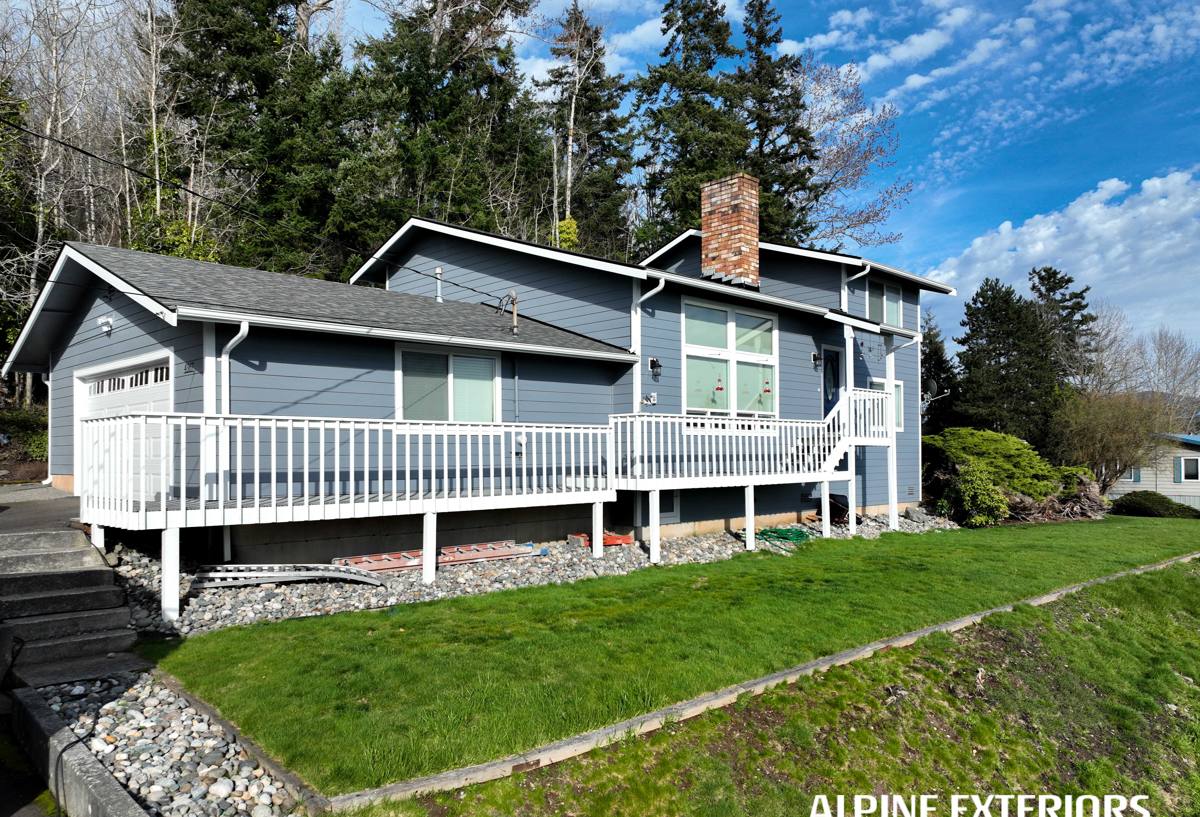
What Columbia's Climate Actually Does to a Roof
Salt Air
Airborne salt accelerates corrosion on any exposed metal — nail heads, flashing, drip edge, gutter hardware. On a roof installed with standard-grade fasteners, that shows up as rust streaking and early fastener failure years before the shingles themselves are worn out. It's one of the most common causes of premature roof problems we find on homes near the water, and it's almost entirely preventable with the right materials at install time.
Driving Rain
Storms coming off the water tend to drive rain sideways rather than straight down. That means water gets pushed up under laps, into valleys, and against vertical surfaces like walls and dormers with more force than a typical rain event. A roof detailed for vertical rainfall alone will eventually leak here — the underlayment, valley treatment, and flashing all need to account for wind-driven water finding its way sideways and upward.
Moss Season
Between the tree cover and the long stretch of damp, mild months, Columbia roofs spend a large part of the year holding moisture. Moss and algae take hold fast on any surface that stays shaded and wet, and once established, moss roots work their way under shingle tabs and lift them, creating entry points for water that has nothing to do with the shingle's age or quality.
What a Correct New Roof Installation Involves
A new roof is more than laying new shingles over what's there. Done correctly, it's a system — deck, underlayment, flashing, ventilation, and roofing material all working together. Skipping any one piece shows up as a leak or premature failure later, usually in the exact conditions Columbia sees most: wind-driven rain and sustained moisture.
Full Tear-Off and Deck Inspection
We remove the existing roofing down to the deck on every new install. This isn't optional in our process — it's the only way to actually see the condition of the sheathing underneath. Damp, shaded roofs like many in Columbia are more prone to hidden deck rot around valleys, chimneys, and eaves, and that damage has to be found and replaced before anything new goes down. Roofing over a compromised deck just hides the problem for another owner to find later.
Underlayment Suited to Wind-Driven Rain
Standard felt underlayment is adequate in dry, low-wind conditions. For a Columbia roof, we lean toward synthetic or self-adhering underlayment in vulnerable zones — eaves, valleys, and roof-to-wall intersections — because it resists the wind-driven water intrusion this area actually experiences, not just the straight-down rain a basic install is designed for.
Flashing Detail
Flashing is where most roof leaks actually start, not in the field of the shingles. Every valley, chimney, skylight, and wall intersection gets step flashing, counter-flashing, or valley metal sized and lapped correctly for water moving sideways under wind pressure, not just gravity.
Ventilation
A roof deck that can't breathe stays damp from the underside even if the top surface sheds water perfectly. Balanced intake and exhaust ventilation keeps the deck dry, extends the life of the roofing material, and reduces the moisture that feeds moss growth from below.
Choosing a Roofing Material for a Columbia Home
There's no single "best" roofing material — the right choice depends on how much maintenance a homeowner wants to do, how long they plan to own the home, and how much shade and salt exposure the specific roof gets. Here's how the common options compare for this area specifically.
| Material | Salt Air Resistance | Moss Resistance | Typical Lifespan | Maintenance |
|---|---|---|---|---|
| Architectural asphalt shingle | Good with coastal-grade fasteners | Moderate — benefits from zinc/copper strips | 25–30 years | Periodic moss treatment recommended |
| Standing seam metal | Very good with proper coating and fastener spec | Very good — sheds moss naturally | 40–50+ years | Low |
| Cedar shake | Fair — needs regular treatment near salt air | Poor without ongoing maintenance | 20–30 years with upkeep | High |
| Composite/synthetic shake | Good | Good | 30–50 years | Low to moderate |
For most Columbia homes, we steer conversations toward architectural asphalt with upgraded coastal fasteners, or standing seam metal for owners who want to minimize long-term moss and maintenance work. Cedar shake can look great here, but given the shade and moisture this area holds, it asks for a maintenance commitment that not every homeowner wants to take on — that's a trade-off worth being upfront about, not a knock on the material itself.
Fastener and Flashing Grade Matters More Here
On a roof away from the water, standard galvanized fasteners and flashing hold up fine. In Columbia's salt air, we upgrade to stainless steel or heavier-gauge coated fasteners in exposed locations, and use corrosion-resistant flashing metals rather than the minimum-spec versions. It's a modest cost difference at install time and a meaningful difference in how the roof looks and performs ten and twenty years out.
Building Moss Resistance Into the Install, Not Bolting It On Later
Moss treatment as an annual maintenance chore is a lot of ongoing work for a homeowner. We'd rather reduce the problem at installation:
- Zinc or copper control strips near the ridge, which release trace metals that inhibit moss and algae growth as rain washes over them
- Correct ventilation so the deck and shingle underside dry out between rain events instead of staying damp
- Material selection that accounts for how much shade the specific roof gets from surrounding trees
- Proper valley and flashing work so water actually sheds instead of pooling in low spots where moss gets a foothold
None of this eliminates the need for occasional roof cleaning in a heavily shaded lot, but it meaningfully slows how fast moss re-establishes after a cleaning.
Our Installation Process
1. On-Site Assessment
We look at the whole roof system — deck condition, existing ventilation, flashing points, tree cover, and drainage — before recommending a material or scope. A roof estimate that skips this step is guessing.
2. Written Scope and Material Plan
You get a clear breakdown of what's being torn off, what deck repair is anticipated, what underlayment and flashing grade is specified, and what the finished material and warranty look like — no vague "and materials" line items.
3. Tear-Off and Deck Repair
Full removal down to the deck, with any damaged sheathing replaced and documented before we cover it up.
4. Underlayment, Flashing, and Ventilation Install
This is the part of the job that determines whether the roof leaks in year three or holds for its full service life. We don't rush this stage.
5. Roofing Material Install
Installed to manufacturer spec plus our own coastal-condition upgrades on fasteners and flashing.
6. Final Walkthrough and Cleanup
Magnetic sweep for stray nails, gutter and downspout check, and a walkthrough so you know what was done and what to watch for going forward.
What to Ask Before Hiring Any Roofing Contractor in This Area
Whoever you hire, these are the questions worth asking before signing anything — they separate a contractor who understands this climate from one who's applying a generic install everywhere:
- Do you do a full tear-off, or do you ever install over existing layers?
- What underlayment do you use at eaves and valleys, and why?
- What fastener and flashing grade do you use on homes with salt air exposure?
- How do you handle ventilation — intake and exhaust, not just a ridge vent?
- What's your plan if you find deck damage once tear-off starts?
- Is the warranty backed by both the manufacturer and your own workmanship guarantee?
- Can you show proof of licensing and insurance specific to roofing work in Washington?
A contractor who answers these clearly and specifically, without hedging, is one who's actually thought about roofs in this environment.
Why a Crew That Already Works Columbia Matters
Roofing crews that mostly work drier, inland areas don't always default to coastal-grade fasteners or wind-driven-rain underlayment details — because most of their jobs don't require it. A crew that regularly works Columbia and the surrounding Chuckanut area builds those upgrades into the standard scope, because we've seen what happens when they're skipped: early fastener corrosion, moss establishing in the first couple of shaded seasons, and leaks at flashing points that a straight-down-rain detail wasn't built to handle. Local, repeated experience with this specific stretch of Whatcom County climate is the difference between a roof that's technically installed to code and one that's actually built for where it sits.
Timeline and What to Expect
Most residential tear-off and re-roof jobs in this area run a few days to just over a week depending on roof size, deck condition, and weather windows — driving rain means we plan installs around forecast gaps rather than pushing through a storm. We'll walk you through a realistic timeline for your specific roof once we've seen it in person, including how weather in your particular install window might affect scheduling.
If your roof is due for replacement, or you just want a straight answer about its condition, we're happy to take a look. Reach out for a free, no-pressure estimate using the form below — we'll walk the roof, explain what we find, and give you options without any obligation.