 Chuckanut Exterior
 Why Columbia Homes Ask About Windows Sooner Than Most
Homes in the Columbia area of Chuckanut sit close enough to the water and the tree line that their windows work harder than windows almost anywhere else in Whatcom County. Salt-laden air off the bay corrodes hardware and pits aluminum finishes faster than inland exposure ever would. Driving rain, pushed sideways by wind off the water, finds every gap in a tired seal. And the long moss season here doesn't just grow on roofs — it holds moisture against siding and trim, which means window openings stay damp longer than homeowners expect. Put those three things together and you get a simple reality: windows in Columbia fail earlier than the manufacturer's brochure suggests, and when they fail, they tend to fail at the seal and the frame corners first.
We're not telling you this to sell fear. We're telling you because it changes what "correct installation" actually means here. A window that's fine in a dry inland neighborhood can underperform in Columbia within a handful of years if it isn't detailed for this specific exposure.
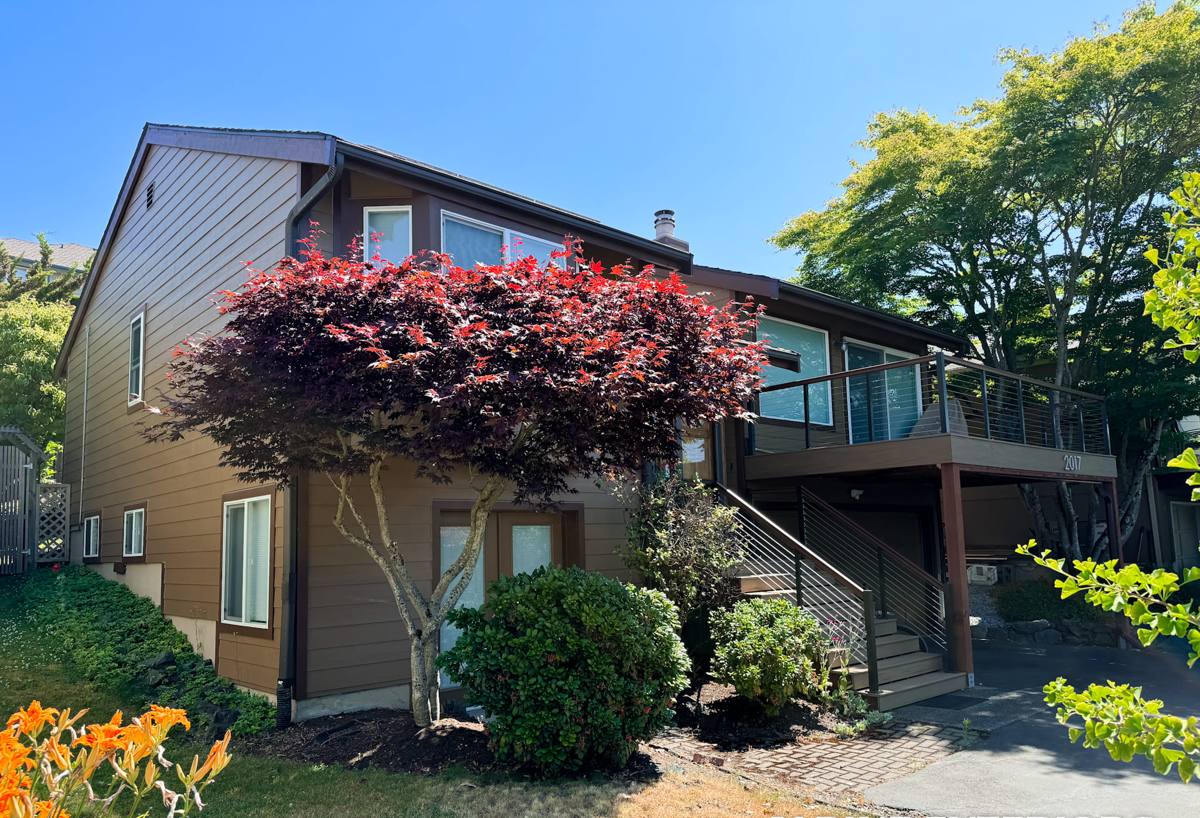
Signs Your Columbia Home's Windows Are Telling You Something
Most window failure doesn't show up as a broken pane. It shows up quietly, and homeowners often live with it for a season or two before calling anyone. Here's what we look for, and what you can check yourself:
- Condensation or fogging between the panes of a double- or triple-glazed unit — the seal has failed and the gas fill is gone
- Soft or discolored wood, or bubbling paint, on the interior sill or exterior trim
- A draft you can feel with your hand near the frame on a windy day, even with the window latched
- Difficulty opening, closing, or locking a window that used to move freely
- Visible corrosion, pitting, or a chalky white residue on aluminum frames or hardware — a common sign of salt air exposure
- Green or black staining at the bottom corners of the frame, often tied to moss and algae holding moisture against the exterior
- Noticeably higher heating bills in winter without any other explanation
Any one of these on its own might just mean a re-caulk or a hardware adjustment. Several of them together, especially on a home more than 15-20 years old, usually means the windows have reached the end of their useful service life.
What a Correct Window Replacement Job Actually Involves
It's Not Just the Window — It's the Opening
The window unit itself is often the easy part. The part that determines whether the job holds up through a Whatcom County winter is everything around it: the flashing, the sill pan, the sealant, and how water is directed back out if it ever gets past the first line of defense.
A correct installation in this climate includes:
- Removing the old unit and inspecting the rough opening for hidden rot or moisture damage before anything new goes in
- Installing a sloped sill pan so any water that reaches the opening drains outward, not into the wall
- Flashing tape or membrane integrated with the home's existing weather-resistive barrier, layered shingle-style so water always moves down and out
- Backer rod and a quality exterior sealant rated for movement and UV exposure, not just a bead of caulk over the trim
- Shimming and fastening per the manufacturer's specification so the frame isn't racked or under stress, which is what causes premature seal failure
- Interior air-sealing with low-expansion foam or backer rod, so conditioned air isn't leaking out around the frame
Skip any of these steps and the window can look perfect for a year or two while water quietly works its way behind the trim. We've opened up enough old openings in this area to know that a rushed install is often worse than an old, honest window — at least the old window's problems were visible.
Choosing the Right Window for Salt Air and Coastal Exposure
Material choice matters more in Columbia than it would a few miles inland. We steer homeowners toward frame materials and hardware finishes that hold up against salt and moisture, and we're upfront about the trade-offs of each option rather than pushing one product line.
| Frame Material | Salt Air / Moisture Performance | Maintenance | Best Fit |
|---|---|---|---|
| Vinyl | Good — won't corrode, but can become brittle over decades of UV exposure | Low — rinse off salt residue periodically | Most Columbia homes on a straightforward budget |
| Fiberglass | Very good — dimensionally stable, resists pitting and corrosion | Low | Homes with direct wind/water exposure wanting a longer service life |
| Wood-clad (clad exterior, wood interior) | Fair — the clad exterior protects the wood, but any breach in the cladding invites rot | Moderate — interior finish maintenance, and the cladding seal needs periodic inspection | Homeowners prioritizing interior wood aesthetics who accept more upkeep |
| Aluminum | Poor in this exposure without marine-grade hardware — standard finishes pit and corrode | Higher — hardware and finish need regular attention | Generally not our first recommendation this close to the water |
We're not saying aluminum or standard wood windows are bad products everywhere — they're just not our first recommendation for a Columbia exposure unless the hardware and finish are specifically upgraded for a marine environment. That's a maintenance-burden conversation we'd rather have honestly up front than after a homeowner has spent money on a frame that starts pitting in five years.
Glass Packages Worth Understanding
Beyond the frame, the glass package affects both comfort and how well the window handles our weather:
- Double-pane with low-E coating — the standard baseline for this climate; reduces heat loss and cuts UV fading of interior furnishings
- Triple-pane — better sound dampening and insulation, worth considering for rooms facing prevailing wind and rain, though it adds cost and weight
- Argon or krypton gas fill — improves insulating performance between panes; this is the seal that fails and causes the foggy-window symptom over time
- Impact-resistant or laminated glass — an option worth discussing for homes with more direct wind exposure, though it's not required by code here
Grid Style and Sightlines
Beyond performance, a lot of Columbia homes have an established architectural character — we pay attention to matching grid patterns, sightlines, and trim profiles to the home's existing style rather than defaulting to whatever's easiest to order.
Our Process, Start to Finish
- On-site assessment — we look at every window being considered, check the rough openings where accessible, and note any moisture or rot issues before quoting anything
- Honest recommendation — we tell you which windows genuinely need replacing now, which can wait, and which just need resealing or hardware repair
- Written estimate — clear pricing by window, no vague lump sums, so you can see exactly what you're paying for
- Precise measurement and ordering — we order to the actual opening, not a catalog assumption
- Installation — old unit removal, opening inspection and repair if needed, sill pan and flashing installed correctly, new window set, sealed, and insulated
- Interior and exterior finish work — trim, caulking, and touch-up so the job looks finished, not just functional
- Walk-through — we open, close, and lock every window with you before we consider the job done
- Cleanup — old windows and debris hauled away, work area left clean
What Affects the Cost
Every home is different, and we won't quote a number without seeing the openings, but these are the factors that move the price up or down:
| Factor | Why It Matters |
|---|---|
| Frame material | Vinyl, fiberglass, and wood-clad carry different material costs and different long-term maintenance |
| Window size and configuration | Large picture windows, bays, and custom shapes cost more than standard double-hungs |
| Condition of the rough opening | Hidden rot or water damage found during removal adds repair time before a new window can go in |
| Number of windows | Whole-house replacement typically reduces the per-window cost versus one-off replacements |
| Access and height | Second-story or hard-to-reach windows take more time and equipment |
| Trim and finish work | Matching existing exterior trim profiles or interior wood finishes adds labor |
Broadly, homeowners in this area should expect a wide range depending on these factors — a straightforward vinyl double-hung replacement costs meaningfully less than a large custom fiberglass unit with rot repair and trim matching. We'll always give you the real number in writing before any work starts.
Why a Crew That Already Works Columbia Matters
There's a real difference between a contractor who's driving in from out of the area for a one-off job and a crew that already knows this stretch of Whatcom County. We know which directions the driving rain typically comes from here, how moss season affects drainage around openings, and how salt air behaves on hardware and finishes over a few winters. That knowledge shapes small decisions — where extra flashing detail matters, which sealants actually hold up, which hardware finishes are worth the upgrade — that a generic installation crew might not think to make.
It also means we're not disappearing after the invoice is paid. If a seal needs attention two years down the road, we're still working in this area and can come back.
Caring for New Windows Through a Whatcom County Winter
New windows still need a little seasonal attention here, especially given the moss and moisture we deal with:
- Rinse exterior frames periodically to clear salt residue, especially after storms
- Check weep holes (the small drainage openings at the base of the frame) to make sure they're clear of debris, moss, or dirt
- Inspect exterior caulking once a year — UV and temperature swings can eventually break down even quality sealant
- Keep gutters and nearby vegetation trimmed back so water and moss don't sit against window trim
If your Columbia home's windows are drafty, fogged, or just tired, we're happy to take a look and give you a straightforward, no-pressure estimate — no obligation, just an honest read on what your windows actually need. Use the form below to get started.