 Chuckanut Exterior
 Building a Deck That Belongs in Columbia
The Columbia area sits close enough to the water that its homes deal with a different set of conditions than decks built twenty miles inland. Salt-laden air moves through the neighborhood on a regular basis, rain comes in sideways during winter storms, and the shaded, damp stretches of many yards stay wet long after the sun comes back out. A deck built without those conditions in mind will look fine for a season or two and then start showing problems — soft spots, rusted fasteners, slick moss buildup, boards that cup or split. A deck built correctly for this specific pocket of Whatcom County holds up for decades instead.
This page covers what we actually do differently when we build a deck for a Columbia property, why it matters, and what you should expect from the process if you're planning one.
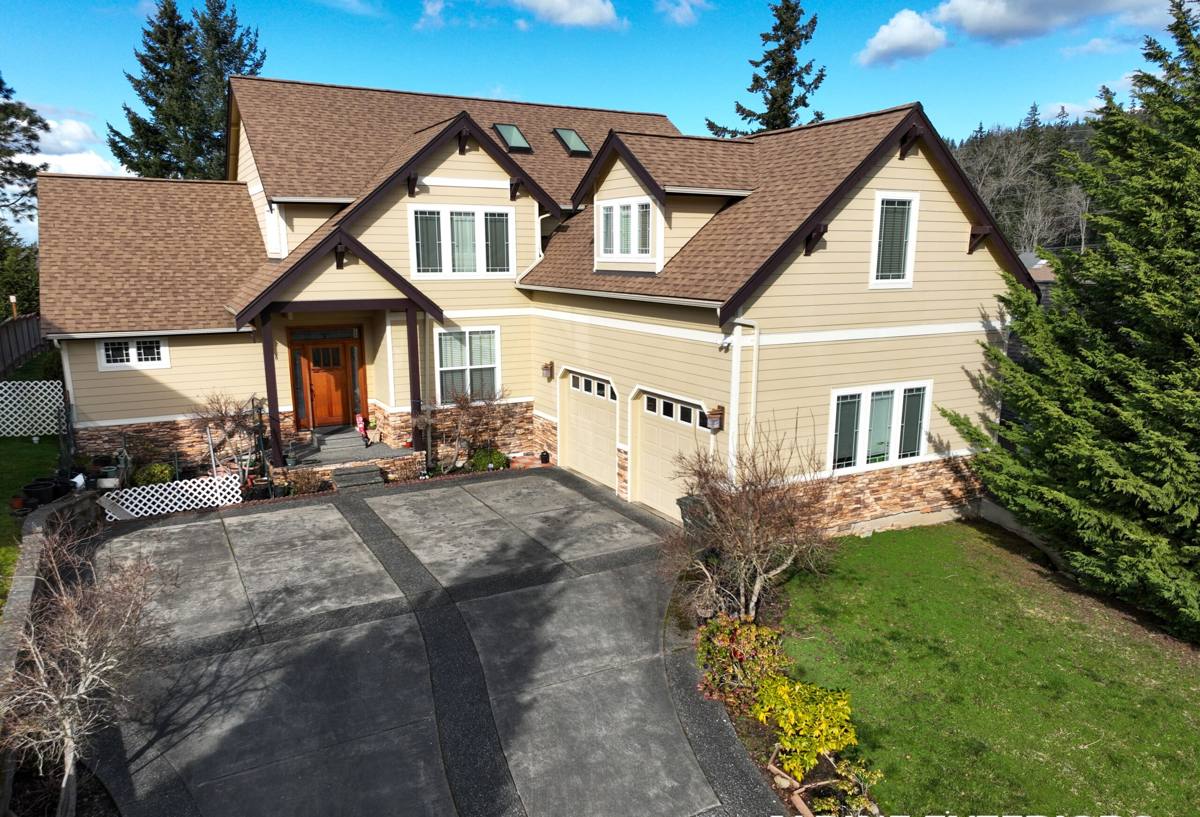
What Columbia's Climate Does to a Deck
Three things drive almost every deck problem we see in this neighborhood:
Salt Air
Proximity to Puget Sound and Bellingham Bay means airborne salt settles on everything, including deck hardware. Standard zinc-coated screws and generic joist hangers corrode faster here than they would in a dry inland climate. Rust doesn't just look bad — it weakens the connection between boards, joists, and ledger over time, which is exactly where deck failures start.
Driving Rain
Storms off the water tend to come in at an angle rather than straight down, which pushes water into places a deck built for calmer weather doesn't account for — under railing posts, behind ledger boards, into end-grain cuts that weren't sealed. Standing water and trapped moisture are the two things that shorten a deck's life the fastest.
Long Moss Season
Shaded yards, tree cover, and consistent damp air add up to a moss season that runs much longer here than in drier parts of the county. Moss holds moisture against the decking surface, and on wood decking it accelerates rot in exactly the spots you can't see from a casual glance — the underside of boards and the gaps between them.
What a Correctly Built Deck Actually Involves
A deck is a structure, not a surface — the parts nobody sees matter more than the boards on top. For Columbia properties, that means paying close attention to:
Footings and Framing
Footings need to sit below frost depth and bear on solid, undisturbed soil. In yards with drainage issues — common in shadier, lower-lying parts of the neighborhood — that sometimes means going deeper or using a different footing approach than a textbook build would call for. Joists and beams should be sized for the actual span and load, not just whatever lumber was on hand.
The Ledger Connection
If the deck attaches to the house, the ledger board is the single most important connection on the whole structure, and it's also the spot most prone to hidden water damage. It needs proper flashing that directs water away from the house sheathing, not just a bead of caulk. We treat this connection as the place where a rushed job shows up ten years later as rot in the rim joist.
Fasteners and Hardware
Given the salt air here, we use fasteners and structural hardware rated for coastal or high-corrosion environments — stainless steel or heavy-duty coated hardware rather than the basic galvanized fasteners that are fine in drier inland areas. It costs a little more up front and saves the deck's structural integrity down the road.
Decking Material
Wood and composite decking both work in this climate, but they behave differently and need different maintenance habits.
| Material | Upfront Cost | Maintenance | How It Handles This Climate |
|---|---|---|---|
| Pressure-treated wood | Lowest | Annual cleaning, periodic sealing/staining | Prone to moss and moisture staining if not resealed regularly; needs airflow underneath |
| Cedar | Moderate | Regular sealing to hold color and resist moisture | Naturally more rot-resistant than pine framing lumber, but still needs upkeep in a wet climate |
| Composite decking | Higher | Occasional washing, no sealing/staining | Resists moisture absorption and moss staining better, but needs proper spacing and airflow to avoid trapped moisture underneath |
Drainage and Airflow — The Part Most Decks Get Wrong
A deck that can't shed water and breathe underneath is a deck that's already on a shorter clock, no matter what material sits on top. For Columbia builds we pay particular attention to:
- Proper board spacing so water and debris don't pool between boards
- Grading and drainage under the deck so water doesn't collect and sit against footings or posts
- Enough clearance between the decking surface and the ground for airflow, which is one of the biggest factors in how fast moss and mildew take hold
- Keeping vegetation and soil from building up against ledger boards and posts, where moisture gets trapped against wood
- Sloping the deck surface slightly away from the house so water runs off instead of pooling near the foundation
None of this is visible once the deck is finished, which is exactly why it's worth asking a contractor about before work starts rather than after a problem shows up.
Permits and Code in Whatcom County
Most new decks and significant deck rebuilds in this area require a permit, and inspections typically happen at the footing stage and again once framing is complete, before decking goes down. Requirements can vary depending on deck height, whether it attaches to the house, and railing specifications. We handle the permit process as part of the job rather than leaving it for the homeowner to sort out — it's one less thing to manage, and it means the finished deck is documented as built to code, which matters if you ever sell the house.
How Our Process Works
- Site visit and assessment. We look at drainage, shade patterns, existing structure (if replacing a deck), and how the space will actually be used before recommending a design or material.
- Design and honest material recommendation. We'll tell you which materials make sense for your specific spot in Columbia — a sun-exposed deck and a heavily shaded one don't need the same approach.
- Permitting. We pull the necessary permits and coordinate inspections so the work is documented and code-compliant.
- Framing and footings. This is where we spend the extra care on ledger flashing, footing depth, and coastal-rated fasteners described above.
- Decking, railing, and finish work. Boards, railing, stairs, and any final sealing or finishing get installed with attention to proper spacing and drainage.
- Final walkthrough. We go over the finished deck with you, including what maintenance it actually needs going forward — not a generic checklist, but what your specific deck and yard will need.
What Drives the Cost of a Deck Project
Every deck is different, but the same handful of factors move the price up or down. Broad honest ranges depend heavily on size, material, and site conditions, so the real number comes from a site visit rather than a phone estimate.
| Factor | Why It Matters |
|---|---|
| Size and footprint | More square footage means more materials, footings, and labor |
| Decking material | Composite generally costs more upfront than wood but needs less ongoing maintenance |
| Height and elevation | Taller decks need more substantial framing, stairs, and railing, and more inspection scrutiny |
| Site access and slope | Difficult access or a sloped yard adds labor time and sometimes changes the footing approach |
| Attachment to the house | Ledger-attached decks require flashing work that freestanding decks don't |
| Railing and stair design | Custom railing or multiple stair sections add both material and labor cost |
Maintaining a Deck in This Climate
Whatever material you choose, a Columbia deck holds up longest with a bit of regular attention:
- Sweep off leaves, needles, and debris regularly, especially in fall and through the wet months — trapped organic matter is what feeds moss and mildew
- Wash the surface at least once a year to remove early moss and algae growth before it takes hold
- Check and reseal or restain wood decking on the schedule the product calls for — skipping a cycle in this climate shows up faster than it would somewhere drier
- Keep gutters and downspouts near the deck clear so runoff isn't dumping extra water onto or under the structure
- Inspect fasteners, railing posts, and stair connections periodically for rust or looseness, particularly after a hard winter
- Trim back vegetation that's shading the deck or holding moisture against it
Why It Matters to Hire a Crew That Already Works in Columbia
A contractor who mostly builds decks in drier, inland parts of the county isn't necessarily thinking about salt-rated hardware, ledger flashing detail, or moss-driven maintenance schedules — because they don't need to, most of the time. A crew that regularly works in Columbia and the surrounding Chuckanut area already knows which yards drain poorly, which spots stay shaded most of the day, and what corrosion actually looks like on hardware that was rated for the wrong environment. That local familiarity shows up in fewer callbacks and a deck that's still solid well past when a generic build would start needing repairs.
If you're planning a new deck or thinking about replacing one that's showing its age, we're happy to come take a look and talk through what makes sense for your yard. There's no pressure and no obligation — just a straightforward assessment and a free estimate based on your specific property. Fill out the form below and we'll get in touch.